• No results
ElementalAmplified
Manuscript
Notes
#
The Pulter Project
pulterproject.northwestern.edu
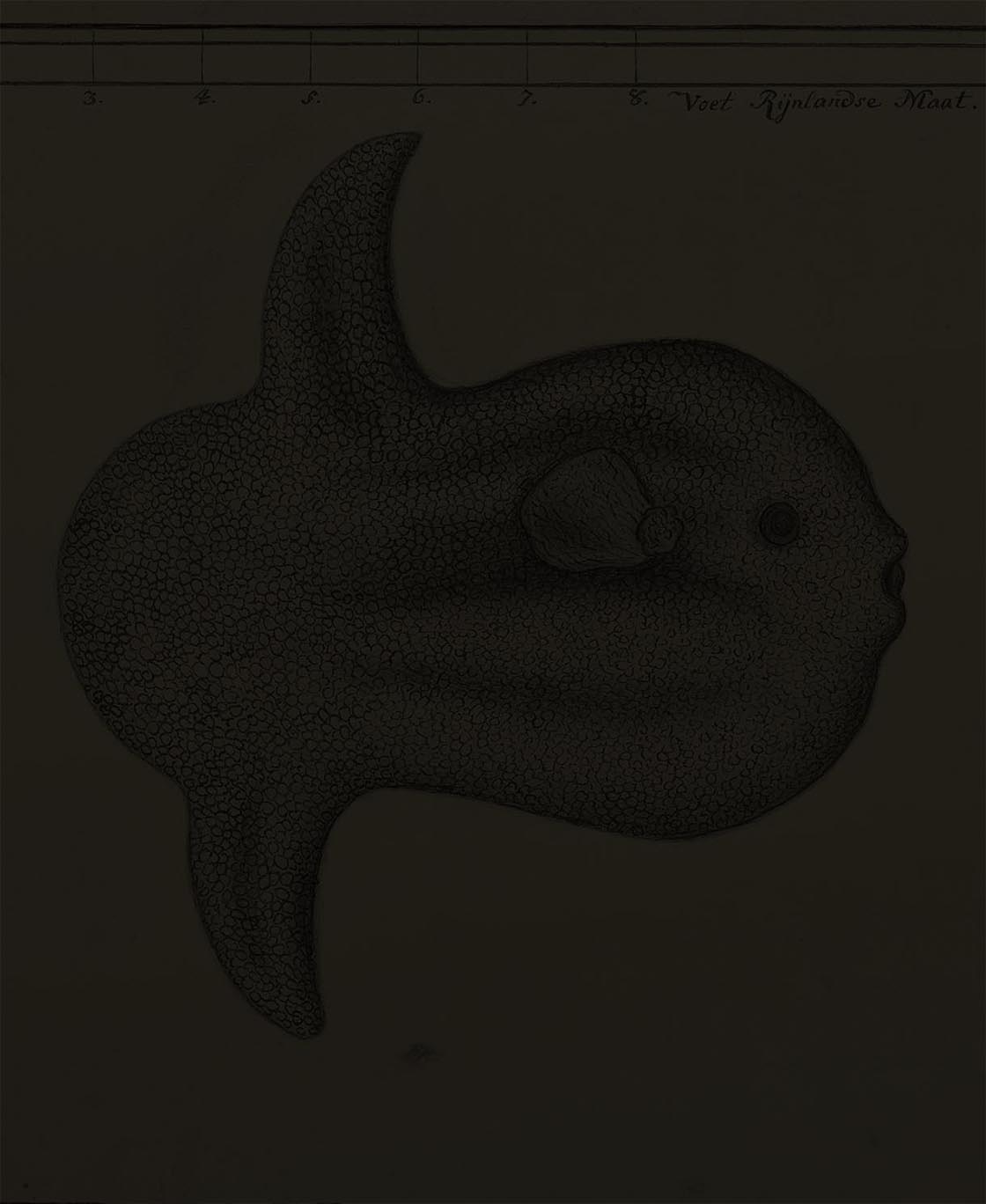
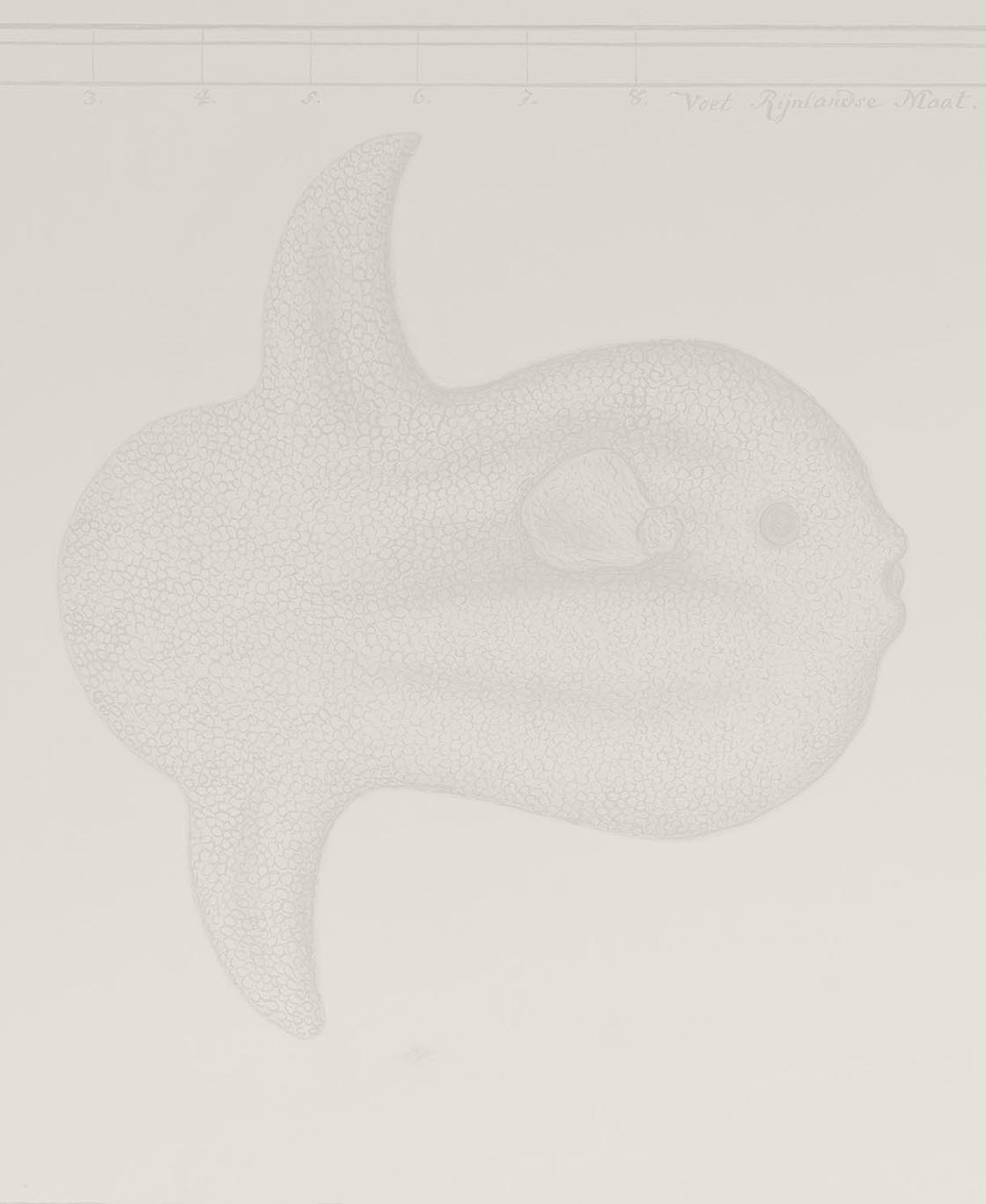
Poem 100

This Horizontal Bird
(Emblem 35)

Edited by Leah Knight and Wendy Wall
A footless bird and upturned fish eyes are the unlikely sources of inspiration in this emblem. The unique anatomy (imaginary or not) of two obscure creatures enables apparently spiritual behavior in them which the poet proffers as a model for her readers. The close parallels between this poem’s counsel to constancy and that in many other items in Pulter’s manuscript, far from being a sign of redundancy, is in fact thematically sound in a poem about the resounding virtue of each creature remaining “the same she was before.” However grounded it might be in biology, such a rehearsal is also construed here as a mimetic performance, an art form not unrelated to the verse in which it is both described and inscribed. The beauty as well as difficulty of imitating abstractions and animals alike (“this soul, that bird, and fish”) should galvanize readers to be steadfast in keeping their sights firmly above the earthly fray.
Compare Editions
i
1Seest thou
this horizontal bird1
, whose eyes
2Are fixed, immovable, upon the skies,
3Though night obscures the radiant
Delia’s2
rays,
4Though clouds do muffle his bright face
adays3
?
5Whether she goes, or feeds, or breeds, or flies,
6Yet still to Heav’n she rolls her longing eyes.
7So doth the
sunfish4
, whose fair eyes are fixed
8On Heav’n alone; her love sure is
unmixed5
,
9Although the sea works high, and billows swell
10Almost to Heav’n, then down as low as Hell.
11Though
hurricanians6
make the
welkin7
roar,
12And mariners their woeful
wracks8
deplore9
,
13Yet she is still the same she was before.
14E’en so those souls whose hopes and joys above
15Are only placed,
reverberates10
that love
16To Heav’n from whence they had
irradiation11
,
17Performing so the
end12
of their creation.
18So imitate this soul, that bird, and fish,
19And though things answer not thy hopes or wish,
20Yet look towards Heav’n, on God alone depend:
21He will thy suff’rings mitigate or end.
22And trust not Fortune, nor her amorous smiles;
23For when she courts us most, she most
beguiles13
.
24Nor fear her frowns, for there is one on high
25At whose bright footstool Fate and Fortune lie:
26To Him alone, to Him for comfort
fly14
.
Macron symbol indicating the end of a poem.

Elemental Edition,

edited by Leah Knight and Wendy Walli

Editorial Note

The aim of the elemental edition is to make the poems accessible to the largest variety of readers, which involves modernizing spelling and punctuation as well as adding basic glosses. Spelling and punctuation reflect current standard American usage; punctuation highlights syntax which might otherwise be obscure. Outmoded but still familiar word forms (“thou,” “‘tis,” “hold’st”) are not modernized, and we do not modernize grammar when the sense remains legible.

After a brief headnote aimed at offering a “way in” to the poem’s unique qualities and connections with other verse by Pulter or her contemporaries, the edition features a minimum of notes and interpretative framing to allow more immediate engagement with the poem. Glosses clarify synonyms or showcase various possible meanings in Pulter’s time. Other notes identify named people and places or clarify obscure material. We rely (without citation) primarily on the Oxford English Dictionary (OED), the Oxford Reference database, and the King James Version (KJV) of the Bible. When we rely on Alice Eardley’s edition of Pulter’s work, we cite her text generally (“Eardley”); other sources are cited in full. The result is an edition we consider a springboard for further work on Pulter’s poetry.

See the full conventions for the elemental edition here.

Macron symbol indicating the end of a poem.
  • Leah Knight, Brock University
  • Wendy Wall, Northwestern University
  • this horizontal bird
    perhaps the manucodiat or bird of paradise, which Pulter invokes elsewhere (see “The Manucodiats” [Emblem 5]71). Her account may draw on Simon Goulart’s A Learned Summary Upon the Famous Poem of William of Saluste Lord of Bartas, where the birds are described as being “remain[ing] always in the air” and even as having “no feet” (London, 1621), 1.241; the fact that they are always flying might explain Pulter’s epithet of “horizontal.”
  • Delia’s
    Apollo’s, the sun god’s; for a figure usually called Delius (so named because he was from the island of Delos)
  • adays
    in the daytime
  • sunfish
    A number of fish species (called stargazers) have eyes atop their heads; others, sunfish, bask on their sides near the surface and so appear to stare at the sky. Pulter’s account here may draw on that of Goulart’s summary of Du Bartas (cited above), on the gaping fish, whose Greek name means “beholding the Heaven, because he hath two eyes planted above his head” (1.221).
  • unmixed
    pure, undiluted
  • hurricanians
    seemingly, hurricanes
  • welkin
    sky
  • wracks
    wrecked ships
  • deplore
    lament
  • reverberates
    sends back, returns
  • irradiation
    a beaming forth of spiritual light
  • end
    purpose
  • beguiles
    deceives; disappoints, foils
  • fly
    flee
The Pulter Project

Copyright © 2023
Wendy Wall, Leah Knight, Northwestern University, others.

Except where otherwise noted, this site is licensed
under a Creative Commons CC BY-NC-SA 4.0 License.

How to cite
About the project
Editorial conventions
Who is Hester Pulter?
Resources
Get in touch