• No results
ElementalAmplified
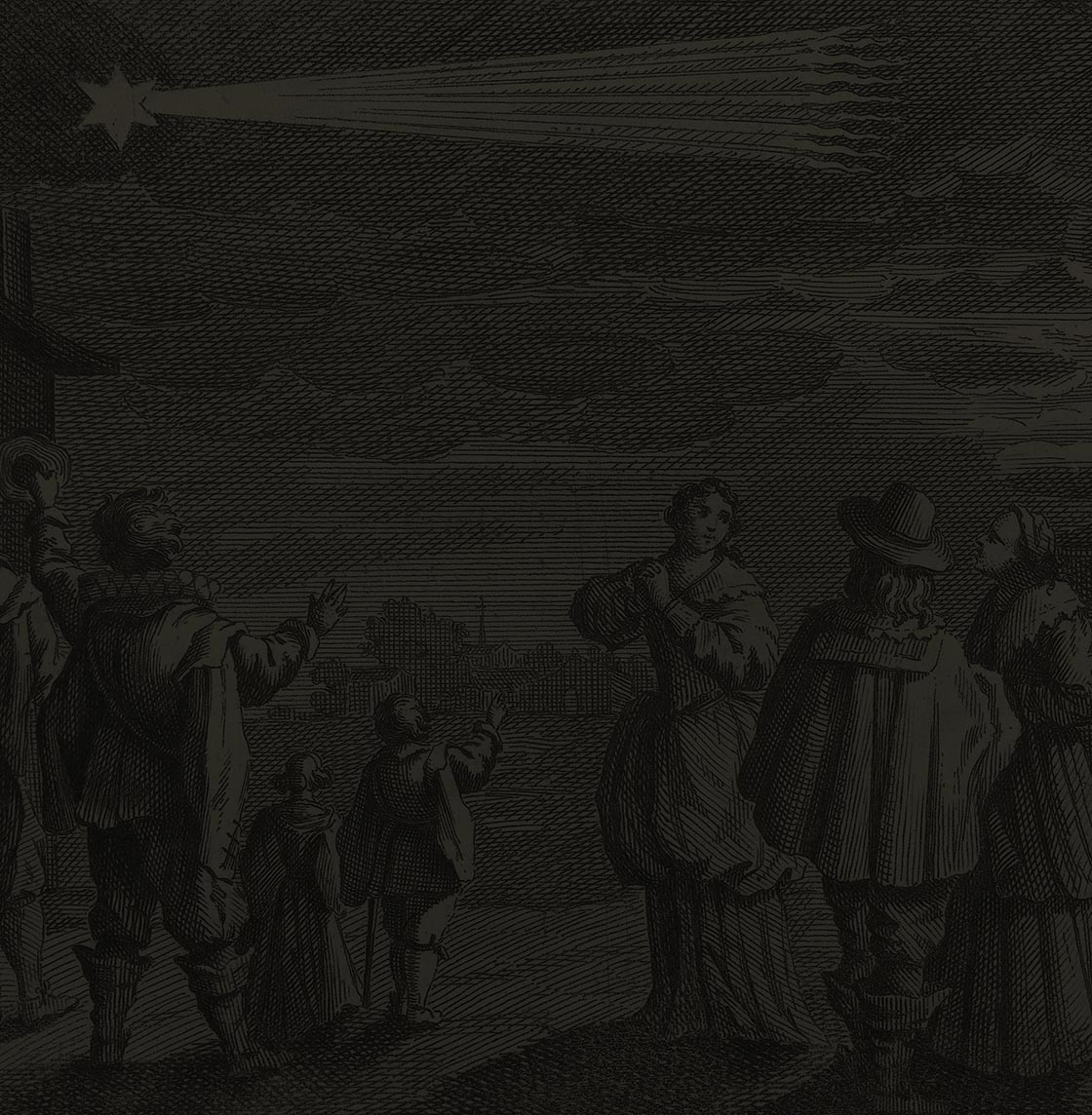
Manuscript
Notes
#
The Pulter Project
pulterproject.northwestern.edu
Poem 61

The Weeping Wish1

Edited by Leah Knight and Wendy Wall

Each octave of “The Weeping Wish” expresses the speaker’s desire to transform her tears into something more powerful: comets to illuminate the night; flowers which would make her famous; medicine for her friends. She also wishes that the sighs accompanying those tears might reach God. In her tearful seeking of such connections with God, posterity, and friends, the speaker appears alone in a sadness which, by the poem’s end, appears life-threatening.

The poem’s preoccupation with how tears might “turn”—the root of “verse”—into something more links to its self-reflexive concern with the speaker’s “story,” in which her sighs might be identified with poems like this one (since her emblems are figured, a few pages later, as the “sighs of a sad soul”). Similarly, her imagined tear-formed flowers would have been recognizable to her readers as both poetic and medicinal. It seems possible, then, that a poem that first seems hopelessly ambitious in its desire not only to brighten the speaker’s dark mood but speak to God, immortalize her memory, and remedy her friends, might actually (if figuratively) accomplish many if not all of its aims.

Compare Editions
i
1O, that the tears that trickle from mine eyes
2Were placed as blazing comets in the skies:
3Then would their numerous and
illustrous2
rays
4Turn my sad nights into the brightest days.
5O, that the sighs that breathe from my sad soul
6Might fly above the highest star or
pole3
,
7Unto that God that views my dismal story,
8Even He that crowns my dying hopes with glory.
9O, that my tears that fall down to the earth
10Might give some noble, unknown flower birth:
11Then would
Hadassah’s4
more resplendent fame
12Outlive the famous
Artimitius’s5
name.
13The iris trickles tears from her sad eyes
14And, from their salt,
her offspring doth arise6
;
15But my
abortive7
tears descend in vain,
16For I can never see those joys again.
17
Hart’s briny tears, a bezoar doth condense8
;
18O, let mine eyes whole flood of tears dispense,
19That I a
cordial9
to my friends may give;
20Then, though I die, yet I may make them live.
21I gladly would this good to them impart,
22Though in the doing it, it breaks my heart;
23Then let my dying tears a cordial prove,
24Seeing I my friends above my life do love.

Macron symbol indicating the end of a poem.

Elemental Edition,

edited by Leah Knight and Wendy Walli

Editorial Note

The aim of the elemental edition is to make the poems accessible to the largest variety of readers, which involves modernizing spelling and punctuation as well as adding basic glosses. Spelling and punctuation reflect current standard American usage; punctuation highlights syntax which might otherwise be obscure. Outmoded but still familiar word forms (“thou,” “‘tis,” “hold’st”) are not modernized, and we do not modernize grammar when the sense remains legible.

After a brief headnote aimed at offering a “way in” to the poem’s unique qualities and connections with other verse by Pulter or her contemporaries, the edition features a minimum of notes and interpretative framing to allow more immediate engagement with the poem. Glosses clarify synonyms or showcase various possible meanings in Pulter’s time. Other notes identify named people and places or clarify obscure material. We rely (without citation) primarily on the Oxford English Dictionary (OED), the Oxford Reference database, and the King James Version (KJV) of the Bible. When we rely on Alice Eardley’s edition of Pulter’s work, we cite her text generally (“Eardley”); other sources are cited in full. The result is an edition we consider a springboard for further work on Pulter’s poetry.

See the full conventions for the elemental edition here.

Macron symbol indicating the end of a poem.
  • Leah Knight, Brock University
  • Wendy Wall, Northwestern University
  • The Weeping Wish
    This poem is in a different hand from that of the main scribe, probably Pulter’s. Below the title is the date “January, 1665” also in Pulter’s hand.
  • illustrous
    luminous
  • pole
    The pole is the point of reference in the sky around which stars appear to revolve, or the point at which the earth’s axis meets the heavens (derived from Ptolemy).
  • Hadassah’s
    The poet takes Hadassah as her pseudonym in the manuscript; the name is the Hebrew version of Esther, which is, in turn, a version of Hester.
  • Artimitius’s
    This name is possibly in reference to the ruler in the 4th century BCE who memorialized her husband (Mausolus) with the Mausoleum at Halicarnassus, which was renowned as one of the Seven Wonders of the ancient world
  • her offspring doth arise
    Eardley notes the early modern tendency to conflate the iris with the lily; of the latter, Philemon Holland writes in his translation of Pliny’s natural history, “they will come up of the very liquor that distilleth and droppeth from them.” The History of the World (London, 1601), 2.84. In alchemy, “salt” was supposed to be one of the ultimate elements of all substances.
  • abortive
    fruitless
  • Hart’s briny tears, a bezoar doth condense
    A bezoar is a hard substance that forms in the stomach or intestines of some animals (like the “hart,” or deer, here) and was considered an antidote to poison.
  • cordial
    medicine
The Pulter Project

Copyright © 2023
Wendy Wall, Leah Knight, Northwestern University, others.

Except where otherwise noted, this site is licensed
under a Creative Commons CC BY-NC-SA 4.0 License.

How to cite
About the project
Editorial conventions
Who is Hester Pulter?
Resources
Get in touch