• No results
ElementalAmplified
Manuscript
Notes
#
The Pulter Project
pulterproject.northwestern.edu
Poem 82

The Cockatrice
(Emblem 16)

Edited by Leah Knight and Wendy Wall
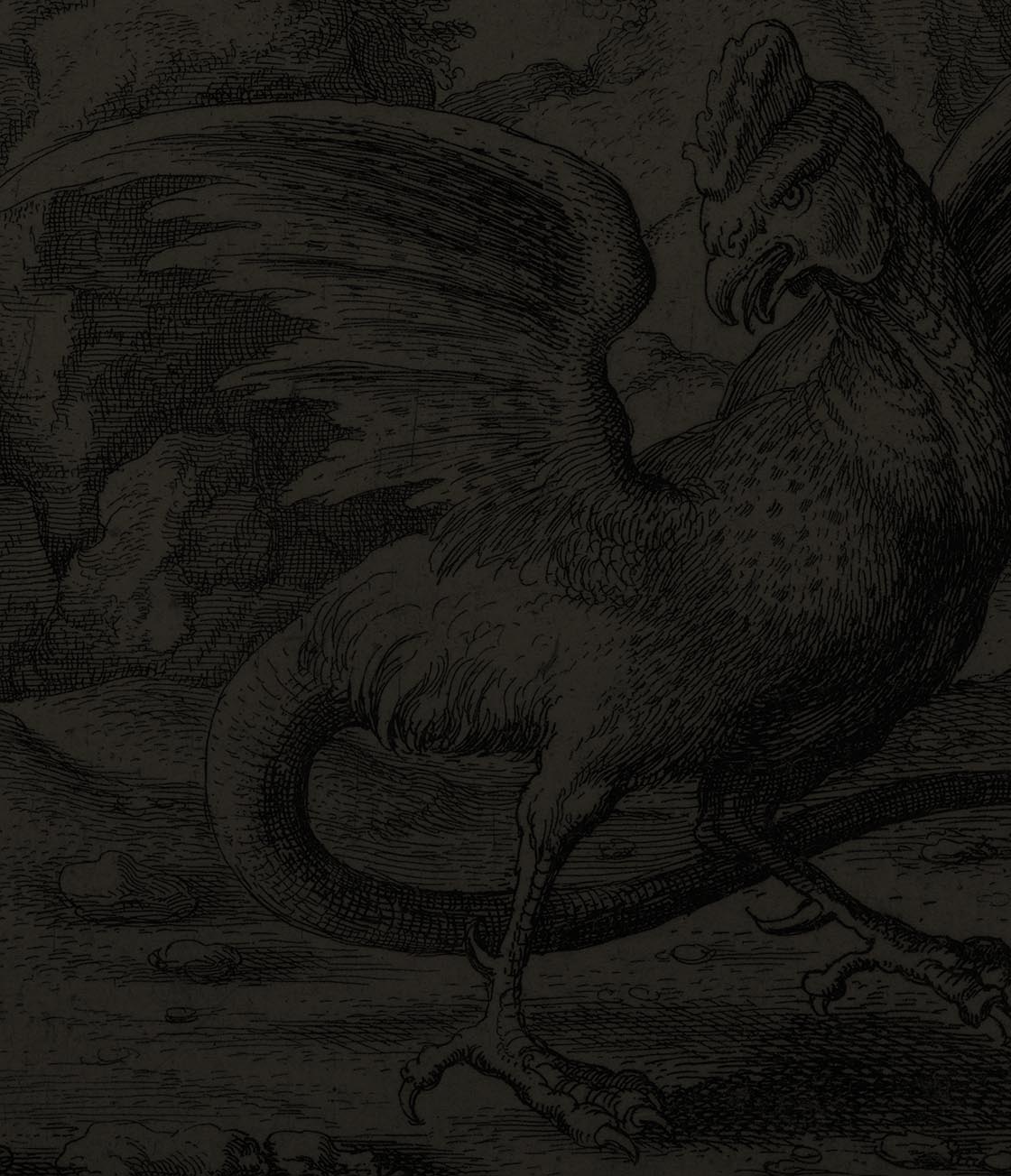
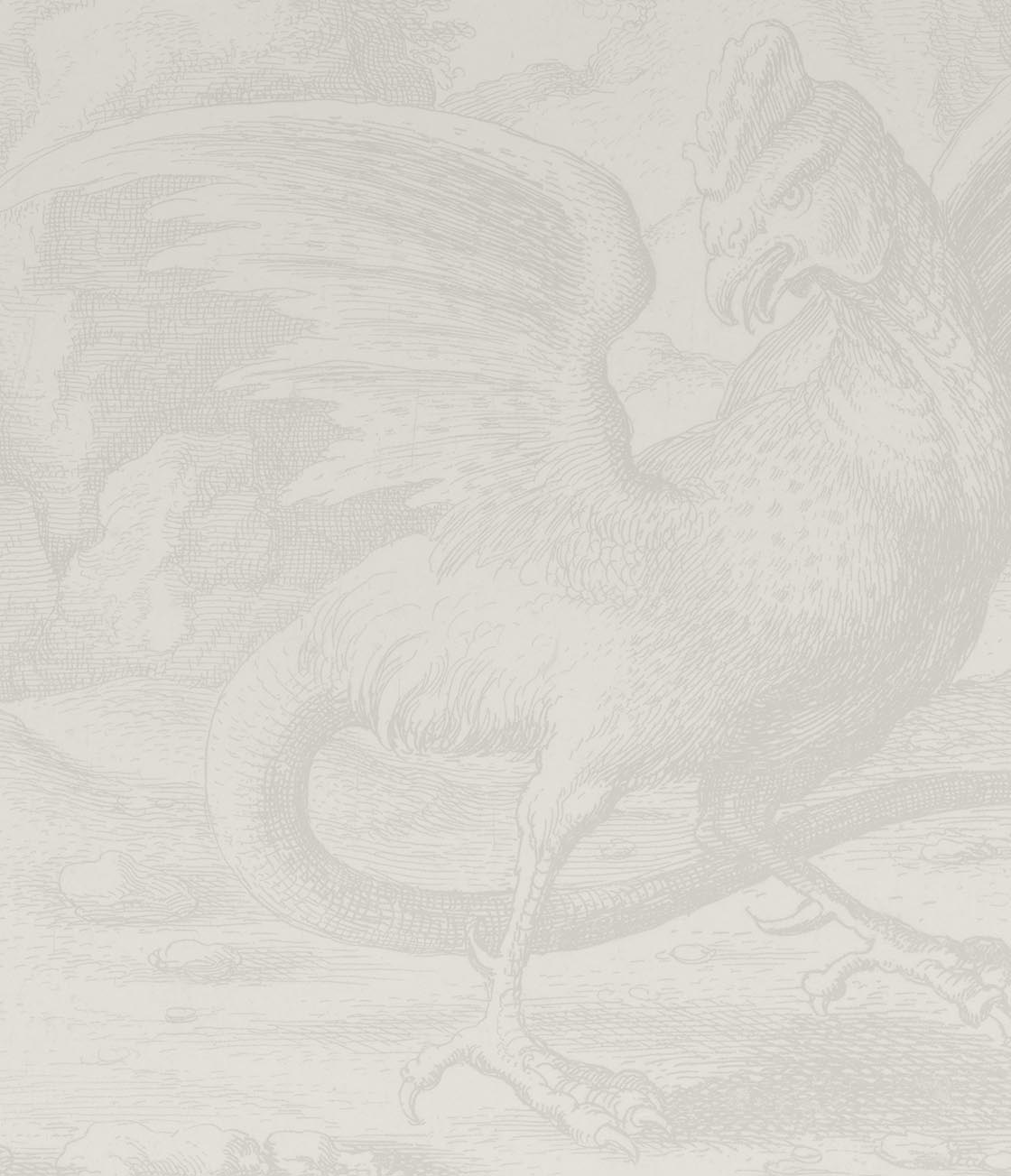
What do a basilisk, Medusa, and sin have in common? In this emblem grappling with the boundaries between internal and external domains, Pulter explains that each has the power to injure, and may only be repulsed by a shield used to mirror back that injury. Blending natural history, mythology, and biblical citation, Pulter weaves a fable explaining the need for Christian faith, conventionally symbolized as a shining shield. Just as Perseus had to use his armor to reflect and return Medusa’s deadly glance, and the reader of the poem (addressed as “you”) must protect against a cockatrice (a legendary serpent able to kill by its “visual beams”), the good Christian must invert evil’s force and return it to its source. Appropriate for a poem about mirroring, the speaker suddenly redirects her gaze, in line 19, back onto herself: rather than teaching the reader a lesson, she shows herself in need of her own instruction. Here she beseeches God for the power to abort an embryonic sinful temptation before it comes to fruition. Only if this destruction fails will she need the shield of Christ’s sacrifice to enable her to face an externalized Sin.
Compare Editions
i
1The
cockatrice1
, as
vulgarly2
received,
2Is, against nature, by a
cock3
conceived,
3Whose eggs a toad doth to perfection bring,
4Whence comes the
basilisk4
, the serpent’s king.
5If this fierce animal doth first see you,
6Prepare, my friend, to bid this world
adieu5
.
7But if you see him first, you are secure,
8If with this
crystal6
you yourself
immure7
.
9The visual beams which issue from his eyes
10
Reverberates8
his poison, so he dies.
11So Perseus with his sister’s shining shield
12
Made proud Medusa and the Gorgons yield9
.
13Sin is this curséd, killing cockatrice;
14If you discover its deceits, it dies,
15But if you don’t, nought but the splendent shield
16
Of faith10
will make this hellish monster yield.
17Then with the Christian armor arm you,
18And all the powers of Hell shall never harm you.
19But, O, let me dispose my thoughts so well
20That I may crush this
embryon11
in the shell;
21Yet if I do to sinful motions yield,
22Be Thou to me, dear God,
a sun and shield12
,
23Then as enslaved to sin and death I lie,
24I’ll on the
brazen13
serpent cast mine eye:
25
Who14
conquered Death and Hell on
Calvary15
.
Macron symbol indicating the end of a poem.

Elemental Edition,

edited by Leah Knight and Wendy Walli

Editorial Note

The aim of the elemental edition is to make the poems accessible to the largest variety of readers, which involves modernizing spelling and punctuation as well as adding basic glosses. Spelling and punctuation reflect current standard American usage; punctuation highlights syntax which might otherwise be obscure. Outmoded but still familiar word forms (“thou,” “‘tis,” “hold’st”) are not modernized, and we do not modernize grammar when the sense remains legible.

After a brief headnote aimed at offering a “way in” to the poem’s unique qualities and connections with other verse by Pulter or her contemporaries, the edition features a minimum of notes and interpretative framing to allow more immediate engagement with the poem. Glosses clarify synonyms or showcase various possible meanings in Pulter’s time. Other notes identify named people and places or clarify obscure material. We rely (without citation) primarily on the Oxford English Dictionary (OED), the Oxford Reference database, and the King James Version (KJV) of the Bible. When we rely on Alice Eardley’s edition of Pulter’s work, we cite her text generally (“Eardley”); other sources are cited in full. The result is an edition we consider a springboard for further work on Pulter’s poetry.

See the full conventions for the elemental edition here.

Macron symbol indicating the end of a poem.
  • Leah Knight, Brock University
  • Wendy Wall, Northwestern University
  • cockatrice
    legendary serpent reputed to be able to kill by its mere glance and hatched from a cock’s egg; named as such because of the mark on its head resembling a crown; also known as a basilisk.
  • vulgarly
    commonly
  • cock
    rooster
  • basilisk
    cockatrice
  • adieu
    farewell
  • crystal
    mirror
  • immure
    fortify
  • Reverberates
    repels
  • Made proud Medusa and the Gorgons yield
    In Greek mythology, the gorgons were three female creatures (Stheno, Euryale, and Medusa) with snakes for hair and the ability to turn anyone to stone who looked at them. Perseus decapitated Medusa by refusing to look directly at her, using instead her reflection in a shield.
  • Of faith
    see Ephesians 6:13;16: “Wherefore take unto you the whole armour of God, that ye may be able to withstand in the evil day … Above all, taking the shield of faith, wherewith ye shall be able to quench all the fiery darts of the wicked.”
  • embryon
    embryo, unborn offspring
  • a sun and shield
    in the left margin is a citation to Psalms 84:11. “For the Lord God is a sun and shield: the Lord will give grace and glory: no good thing will he withhold from them that walk uprightly.”
  • brazen
    strong, shameless
  • Who
    Thou who
  • Calvary
    place outside ancient Jerusalem where Jesus was crucified; his resurrection was said to release humans from eternal death and conquer Satan.
The Pulter Project

Copyright © 2023
Wendy Wall, Leah Knight, Northwestern University, others.

Except where otherwise noted, this site is licensed
under a Creative Commons CC BY-NC-SA 4.0 License.

How to cite
About the project
Editorial conventions
Who is Hester Pulter?
Resources
Get in touch