• No results
ElementalAmplified
Manuscript
Notes
#
The Pulter Project
pulterproject.northwestern.edu
Poem 42

Pardon Me, My Dearest Love

Edited by Leah Knight and Wendy Wall
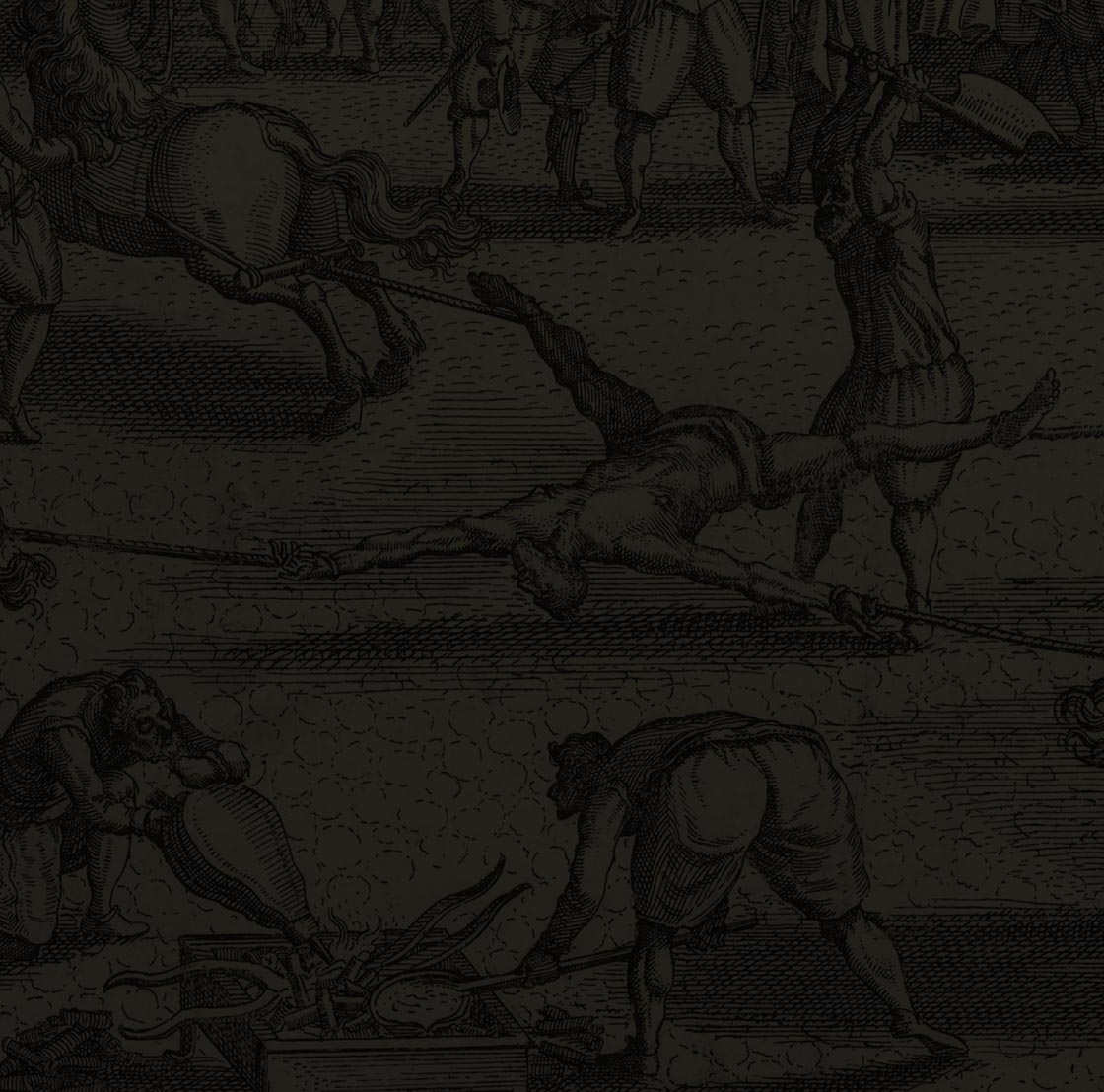
Pulter’s only poem written to her husband consists of an apology for courting another “love.” In this poem, she unusually acknowledges her romantic and marital commitments by describing herself as her husband’s “poor turtledove,” a creature famed for virtuous and lifelong fidelity. Conceding that her husband has a right to her care and attention while she is on earth, she asks his pardon for her constant preoccupation with the allures of Heaven, her flights of fancy that allow her to activate the “sparkle” of heavenly essence in her soul and seemingly abandon “this dirty, dunghill earth.” The world materializes as a place of excrement, violent dismemberment, and sin, with the glories of heaven drawing out a “love” that Pulter represents as rivalling (rather than complementing) her romantic attachments on earth.
Compare Editions
i
1Pardon me, my dearest love,
2That I place my thoughts above.
3What’s
subsolary1
is yours
4And so shall be while life endures.
5Only my aspiring mind
6No felicity can find
7In this dirty,
dunghill2
earth.
8My soul remembers still her birth,
9She being a sparkle of that
Light3
10Which ne’er shall set in death or night.
11Nothing here is worth her love;
12Her
summum bonum4
is above.
13But this body shortly must
14Melt and moulder into
dust5
.
15This due debt can’t be denied;
16The
elements6
must me divide.
17Thus, like traitors
quartered out7
,
18Are
old Adam’s rebel rout8
.
19Then shall my
enfranchised9
spirit
20Those eternal joys inherit,
21Which from me shall never part:
22With these thoughts, I cheer my heart.
23Then pardon thy poor
turtledove10
24That hath placed her thoughts above
25Where is endless joy and love.

Macron symbol indicating the end of a poem.

Elemental Edition,

edited by Leah Knight and Wendy Walli

Editorial Note

The aim of the elemental edition is to make the poems accessible to the largest variety of readers, which involves modernizing spelling and punctuation as well as adding basic glosses. Spelling and punctuation reflect current standard American usage; punctuation highlights syntax which might otherwise be obscure. Outmoded but still familiar word forms (“thou,” “‘tis,” “hold’st”) are not modernized, and we do not modernize grammar when the sense remains legible.

After a brief headnote aimed at offering a “way in” to the poem’s unique qualities and connections with other verse by Pulter or her contemporaries, the edition features a minimum of notes and interpretative framing to allow more immediate engagement with the poem. Glosses clarify synonyms or showcase various possible meanings in Pulter’s time. Other notes identify named people and places or clarify obscure material. We rely (without citation) primarily on the Oxford English Dictionary (OED), the Oxford Reference database, and the King James Version (KJV) of the Bible. When we rely on Alice Eardley’s edition of Pulter’s work, we cite her text generally (“Eardley”); other sources are cited in full. The result is an edition we consider a springboard for further work on Pulter’s poetry.

See the full conventions for the elemental edition here.

Macron symbol indicating the end of a poem.
  • Leah Knight, Brock University
  • Wendy Wall, Northwestern University
  • subsolary
    beneath the sun
  • dunghill
    excrement-like
  • Light
    originary divine spirit; see John 1:9: “That was the true Light, which lighteth every man that cometh into the world.”
  • summum bonum
    supreme good
  • dust
    fine particles, esp. of disintegrating dead body; also, formative physical elements; see Genesis 2:7: “And the Lord God formed man [of] the dust of the ground, and breathed into his nostrils the breath of life; and man became a living soul.”
  • elements
    in ancient and premodern theory, the four constitutive substances of which all material bodies are compounded: earth, fire, air, and water
  • quartered out
    A judicial penalty for high treason in England was “quartering” (or dividing) the body of the convicted person.
  • old Adam’s rebel rout
    Adam, the first human in the Judeo-Christian creation story, and an emblem of sin; a “rout” is a crowd.
  • enfranchised
    freed, privileged
  • turtledove
    A bird known for its affection for its mate and soothing songs.
The Pulter Project

Copyright © 2023
Wendy Wall, Leah Knight, Northwestern University, others.

Except where otherwise noted, this site is licensed
under a Creative Commons CC BY-NC-SA 4.0 License.

How to cite
About the project
Editorial conventions
Who is Hester Pulter?
Resources
Get in touch