• No results
ElementalAmplified
Manuscript
Notes
#
The Pulter Project
pulterproject.northwestern.edu
Poem 32

Aletheia’s Pearl

Edited by Leah Knight and Wendy Wall
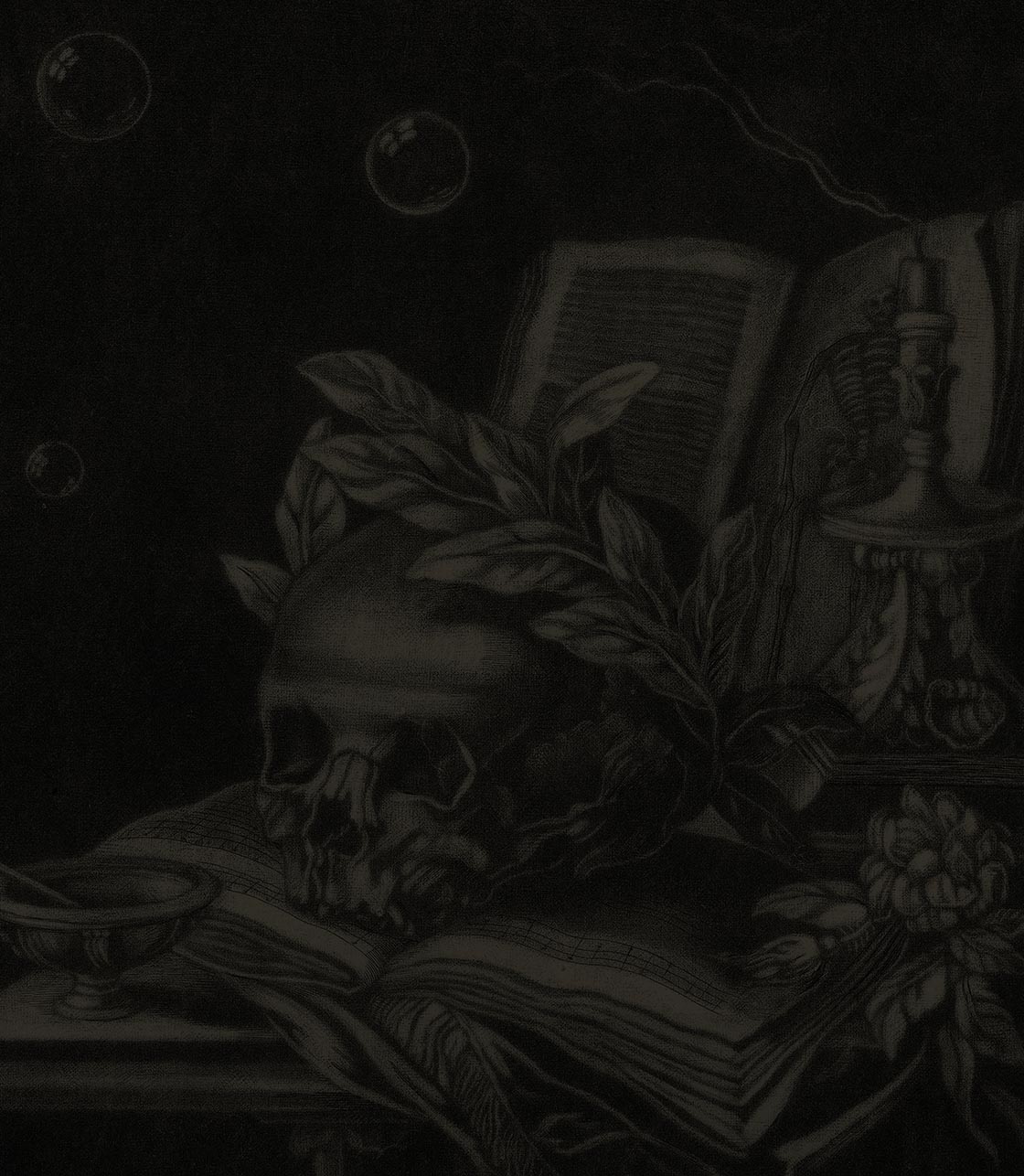
Pulter’s fascination with spherical forms—elsewhere, suns and stars—is evinced here in two competing images: the gleaming pearl of truth and the bubble of her life, the latter brittle but obstinately refusing to break. These key images are surrounded by a pageant of allegorical female figures central to the life story recounted in the poem. As a virginal girl, the speaker accepts a pearl from Aletheia, the goddess of truth, in exchange for everything she owns—a daring trade, which is described here much like a wedding. But the speaker (“puffed up with prosperity,” and so with pride) wants still more: not satisfied with Truth, she wants Peace and Joy to join their menage. She disregards Truth’s warnings against their deceptive, unreliable nature, as well as her prophecy of the speaker’s future misery—incompatible with either quality—and her own suggested guests: Patience and Hope, criticized by the speaker as dull. Although she is briefly dazzled by the magnificent appearance of Peace and Joy, the happy occasion of their presence is brief: they flee by morning, with their places taken by Sorrow and Fear. Now Truth’s introduction of Patience and Hope is accepted; along with Faith, they are charged to defend the speaker against the depredations of an internal civil war. This poem is linked to other Pulter poems featuring a conflict-ridden mythological cosmos dominated by female bonds, but is unusual in its very deliberate allegory and in the speaker’s appeal to the guidance of a female mentor (rather than a more conventional Christian god).
Compare Editions
i
1Fair
Aletheia1
(when I was a girl)
2One Sunday offered me an
orient2
pearl,
3But for it I must part with all I had;
4I, of the bargain, was extremely glad.
5Then being so directed from above,
6She, smiling, asked me if I could her love.
7I, seeing her so far transcend all other,
8And more resplendent than her radiant
mother3
,
9Said I with her would gladly live and die.
10Celestial Love the true love’s knot did tie;
11Reciprocally promising ne’er to depart,
12
She4
took possession of my
virgin5
heart.
13In earnest of her love she gave a kiss,
14Saying she would lead me to eternal bliss;
15So should I shun the paths of endless
error6
,
16And have an innocent soul still free from terror.
17She bid me fear no trouble in my
story7
,
18For love would crown me with immortal glory.
19Thus innocently I passed my youthful days,
20Seeing more and more of her
refulgent8
rays.
21Thus, being puffed up with prosperity,
22The world in every star I thought to
buy9
,
23And oft I did my virgin guide entreat,
24To make my happiness on earth complete,
25That Peace (that stately dame) she would invite
26To dwell with us, to
consummate10
delight.
27For then, I said, that Joy would follow after:
28Get but the mother, and you have the daughter.
29That blest
triumviri11
might I once
enjoy12
,
30I should esteem this world a trifling
toy13
.
31My fair directress, smiling, then did say,
32That those two jolly ladies would not stay
33Long in a place, nor were they as they seemed:
34As all that
glisters14
is not gold esteemed,
35There’s no true peace, nor joy, below the sun;
36Nor can we know it till this life is done.
37Nay more, being at the
Parcae’s15
house of late,
38Turning the volumes of the book of fate
39To see what might advance th’Eternal’s glory,
40
She16
hap’d17
to cast an eye on my sad story,
41And by my destiny she saw my life,
42At which she sighed: both infant,
maid18
, and wife
43Would be involved and filled with inward trouble,
44But yet as
brittle19
as the tenderest bubble,
45And looking further on from page to page,
46She found I would live a tedious
pilgrimage20
;
47But yet to comfort me in my sad story,
48My troubles all would end in endless glory.
49Therefore she did advise, for my relief,
50A modest matron to allay my grief,
51One not so
brave21
but of as ample
fame22
52And noble birth (the daughter of the
dame23
53Who doth defend the faithful with her shield
54And makes them still victorious in the field);
55Patience her name, who said she would invite
56Her sister Hope to further my delight.
57I said of those two damsels I had been told,
58But yet I thought till I grew sick or old
59Their sad and tedious stories would deject
60My
sprightly24
soul; them I did not
affect25
.
61Truth, sighing said, not many days would go,
62
Ere26
I would wish for those I slighted so,
63But all her counsel was to me in vain,
64For I invited home that gallant train:
65Peace in a purple
mantle27
wrought28
with gold,
66Where groves,
fanes29
, cities, you might there behold;
67Which cast a luster to my wondering eye;
68Joy, in an
azure30
vesture31
like the sky,
69Studded with gems, which dazzled so my sight,
70That now (methought) my pearl was not so bright
71As it
was wont32
, but looked both dim and sad.
72Thus of my guests I was extremely glad.
73Peace sweetly smiled; Joy, giggling, laughed outright,
74And thus in mirth we passed the time till night.
75Then tired with laughing, we went all to bed,
76But by the morn my cheerful guests were fled;
77And none but Sorrow left, tearing her hair,
78And Fear who, trembling, askéd for Despair.
79My blesséd guide, seeing me in tears
dissolved33
,
80And with such woeful company involved,
81Asked me if Patience I did yet desire.
82I said without her I should soon expire.
83At last she came, with slow and modest pace;
84Wiping the the tears from my pale,
blubbered34
face,
85She told me many a sad and dismal story,
86Which ever ended in the sufferer’s glory.
87These tears
sure35
washed the films from off my sight,
88For now I found my pearl was far more bright,
89Than all the gems I ever yet did view;
90Behold the power of
penitential dew36
!
91I laid my pearl close to my trembling breast,
92And on an
anchor37
laid my head to rest,
93That Hope (in love to me) before had
laid38
94Me to sustain; that fair and blessed maid,
95Whom fair Aletheia brought to take my part,
96To sway the
factions39
in my troubled heart;
97And gave
them40
charge, ever to hold in awe
98Sorrow and Fear, and never to withdraw
99Their best assistance, to keep out Despair,
100Who with her cursed associates would
repair41
101Me to afflict, which would me much affright,
102’Cause the black
brood of Acheron and Night42
103Would also come, who only were addicted
104To
add43
afflictions to the most afflicted.
105Just as she spake, in came that horrid
train44
,
106Which caused a trembling throughout every vein
107Of my sad heart; down fell I in a
sound45
,
108Till that
brave damsel46
raised me from the ground,
109Who just then came triumphant from the field;
110Then, with her bright impenetrable shield,
111She all those hellish monsters did oppose
112(Thus was I safe delivered from my foes);
113Then, leaving Hope and Patience by my side,
114Commanding them both with me to abide,
115Counselling me to follow my fair guide,
116Who would, through all the trouble of my story,
117Lead me at last to everlasting glory.
118Thus have I lived a sad and weary life,
119Thirteen a maid, and thirty three a wife.
120All I found true my Alethie did speak,
121But yet (ay me!) the
bubble47
will not break.
Macron symbol indicating the end of a poem.

Elemental Edition,

edited by Leah Knight and Wendy Walli

Editorial Note

The aim of the elemental edition is to make the poems accessible to the largest variety of readers, which involves modernizing spelling and punctuation as well as adding basic glosses. Spelling and punctuation reflect current standard American usage; punctuation highlights syntax which might otherwise be obscure. Outmoded but still familiar word forms (“thou,” “‘tis,” “hold’st”) are not modernized, and we do not modernize grammar when the sense remains legible.

After a brief headnote aimed at offering a “way in” to the poem’s unique qualities and connections with other verse by Pulter or her contemporaries, the edition features a minimum of notes and interpretative framing to allow more immediate engagement with the poem. Glosses clarify synonyms or showcase various possible meanings in Pulter’s time. Other notes identify named people and places or clarify obscure material. We rely (without citation) primarily on the Oxford English Dictionary (OED), the Oxford Reference database, and the King James Version (KJV) of the Bible. When we rely on Alice Eardley’s edition of Pulter’s work, we cite her text generally (“Eardley”); other sources are cited in full. The result is an edition we consider a springboard for further work on Pulter’s poetry.

See the full conventions for the elemental edition here.

Macron symbol indicating the end of a poem.
  • Leah Knight, Brock University
  • Wendy Wall, Northwestern University
  • Aletheia
    goddess or spirit of truth
  • orient
    oriental; from the Eastern part of the world; radiant; associated with the part of the heavens in which the sun rises
  • mother
    Truth was proverbially the daughter of Time.
  • She
    Aletheia
  • virgin
    pure, chaste
  • error
    wandering, mistake
  • story
    life
  • refulgent
    radiant
  • buy
    possess
  • consummate
    to bring to completion; make perfect; also to give sexual expression to a relationship
  • triumviri
    “triumvirie” added by a hand that is probably Pulter’s, in a blank space left by the scribe; a triumvir is a ruling body of three people, derived from the Latin triumviri, a coalition of three Roman magistrates; here the speaker refers to Peace, Joy, and Truth.
  • enjoy
    have the benefit of; find pleasure in
  • toy
    trivial thing
  • glisters
    glitters
  • Parcae’s
    one of three female Fates’
  • She
    one of the Fates
  • hap’d
    happened
  • maid
    unmarried woman
  • brittle
    fragile
  • pilgrimage
    journey, sometimes toward a holy place
  • brave
    finely dressed
  • fame
    reputation
  • dame
    Faith is personified with a shield, derived from Ephesians 6:16: “Above all, taking the shield of faith, wherewith ye shall be able to quench all the fiery darts of the wicked.” On Faith as the mother of Patience, see Robert Rollock, Lectures Upon the First and Second Epistles of Paul to the Thessalonians (London, 1606), 2.11.
  • sprightly
    cheerful, animated
  • affect
    like, want
  • Ere
    before
  • mantle
    garment
  • wrought
    embellished
  • fanes
    temples
  • azure
    blue
  • vesture
    garment
  • was wont
    used to be
  • dissolved
    melted, undone
  • blubbered
    flooded with tears
  • sure
    assuredly
  • penitential dew
    tears of remorse, for sin
  • anchor
    in Christian tradition, a symbol of hope; see Heb. 6:19: “Which hope we have as an anchor of the soul.”
  • laid
    laid down for
  • factions
    competing political groups
  • them
    She charges Patience and Hope (“them”) to make Sorrow and Fear be in awe of them.
  • repair
    return; habitually assemble
  • brood of Acheron and Night
    offspring, which include Doom, Fate, Death, Dreams, Blame, Misery, the Hesperides, the Destinies (or Parcae), Nemesis, Deceit, Lovemaking, Old Age, and Strife. Hesiod, The Poems of Hesiod: Theogony, Works and Days, and the Shield of Herakles (2017), 42, 45.
  • add
    adding
  • train
    procession, ensnaring treachery
  • sound
    faint, swoon
  • brave damsel
    Faith
  • bubble
    her fragile and vexing earthly life
The Pulter Project

Copyright © 2023
Wendy Wall, Leah Knight, Northwestern University, others.

Except where otherwise noted, this site is licensed
under a Creative Commons CC BY-NC-SA 4.0 License.

How to cite
About the project
Editorial conventions
Who is Hester Pulter?
Resources
Get in touch