• No results
ElementalAmplified
Manuscript
Notes
#
The Pulter Project
pulterproject.northwestern.edu
Poem 61

The Weeping Wish, January, 16651

Edited by Lara Dodds
“The Weeping Wish” consists of three, eight-line stanzas, each of which explores a different component of the speaker’s wish that her tears might be transformed into a force powerful enough to intercede on behalf of herself and others. In the first stanza, the speaker wills her tears to become comets, numerous enough to transform the night sky into the brightest of days, a function that Pulter elsewhere attributes to the intercessor figure, To Aurora [1]22. The second and third stanzas explore the life-giving power of tears. In the second stanza, the speaker desires the power of two pagan gods (Apollo and Iris), whose tears each have the power to create life, and in the third, the speaker’s “dying” tears become a cordial that promises life to her friends through her death, a desire that positions the speaker as a Christ figure. “The Weeping Wish” suggests a reconsideration of the metaphysical conceit; while the poem can be read as an extended metaphor, the speaker’s wishes seek to confound distinctions between literal and figurative.
Compare Editions
i
1Oh that the tears that trickle from mine eyes
2Were placed as
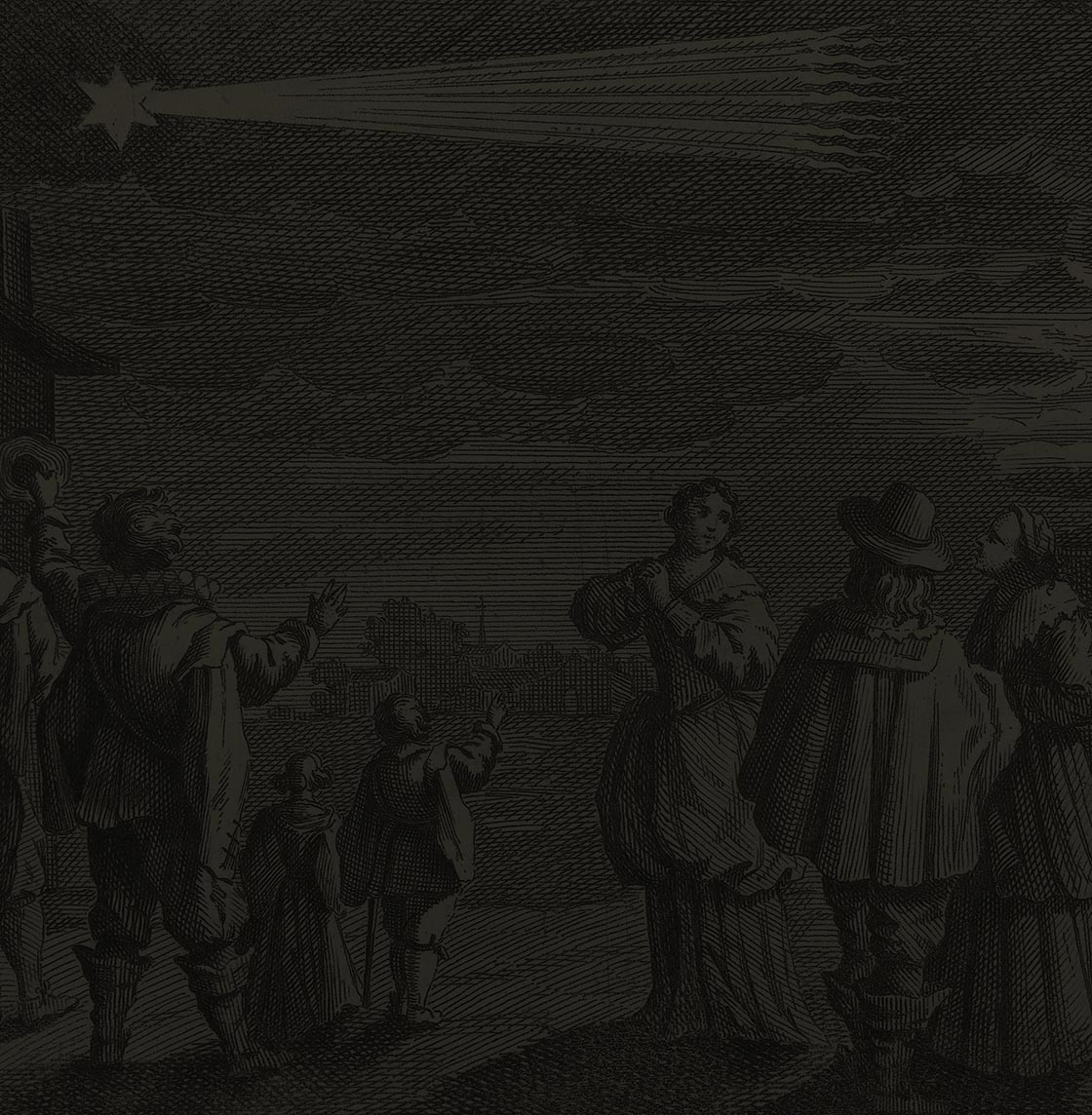
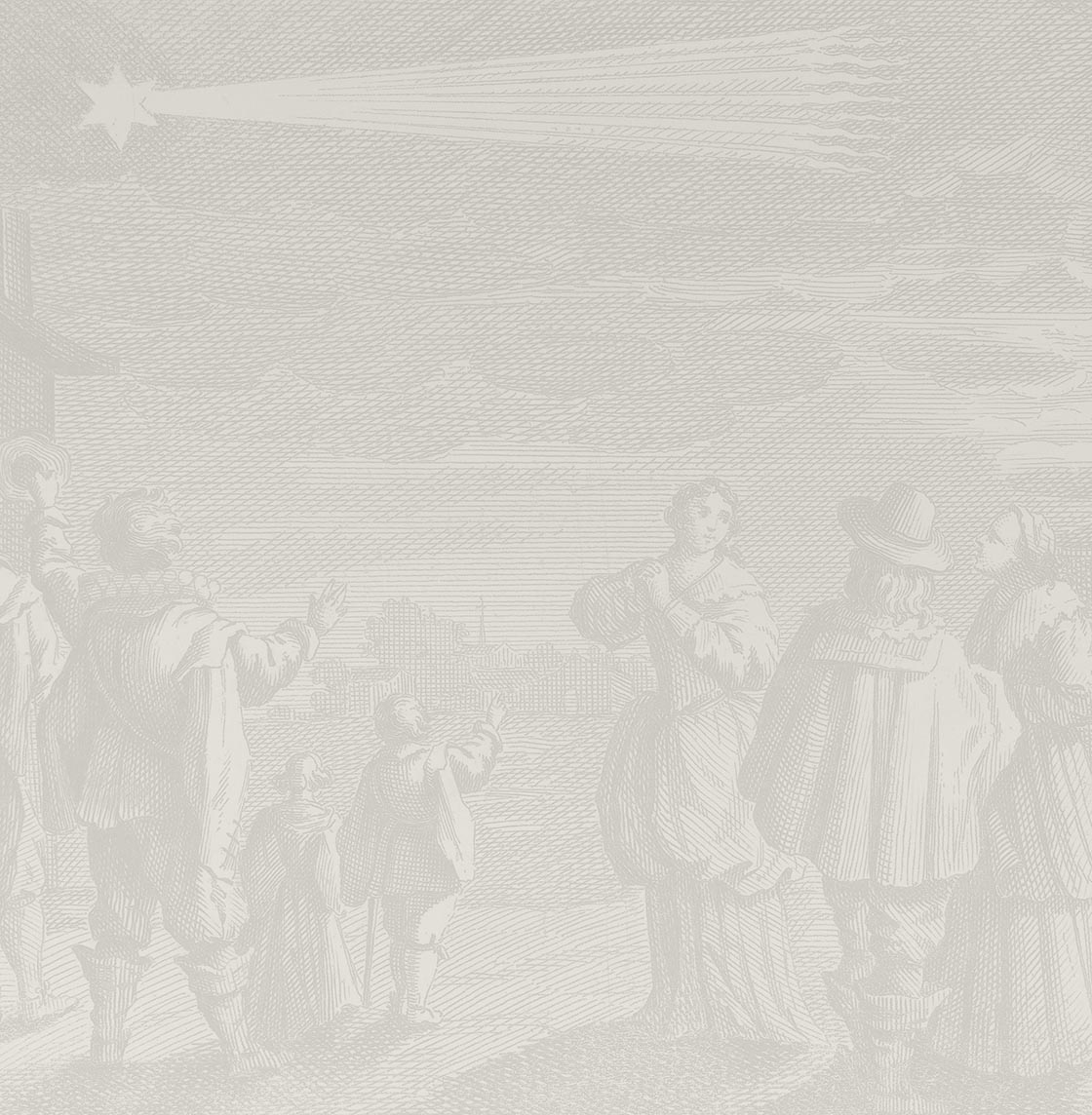
blazing comets in the skies2
;
3Then would their numerous and
illustrous3
rays
4Turn my sad nights into the brightest days.
5Oh that the sighs that breath from my sad soul
6Might fly
above the highest star or pole4
7Unto that God that views my
dismal story5
,
8Even He that crowns my dying hopes with glory.
9Oh that my tears that fall down to the earth
10Might give some noble
unknown flower birth6
;
11Then would
Hadassah’s7
more resplendent fame
12Outlive the
famous Artemisia’s8
name.
13
The iris trickles tears9
from her sad eyes,
14And from their salt her offspring doth arise;
15But my abortive tears descend in vain,
16
For I can never see those joys again10
.
17
Hart’s briny tears a bezoar doth condense11
,
18Oh let mine eyes whole flood of tears dispense
19That I a cordial to my friends may give;
20Then though I die, yet I may make them live.
21I gladly would this good to them impart,
22Though in the doing it, it breaks my heart;
23Then let my dying tears a
cordial12
prove,
24Seeing I my friends above my life do love.

Macron symbol indicating the end of a poem.

Amplified Edition,

edited by Lara Doddsi

Editorial Note

I have modernized spelling and punctuation in this poem with the aim of enhancing clarity and readability. The notes gloss unfamiliar words and provide cultural and literary contexts. The notes gloss unfamiliar words and provide cultural and literary contexts.
Macron symbol indicating the end of a poem.
  • Lara Dodds, Mississippi State University
  • The Weeping Wish, January, 1665
    “The Weeping Wish” appears in a different hand than the main scribe of the manuscript. This is one of several poems labeled with a date, though it is unclear whether this poem commemorates a specific event. The Hope65, which is an apostrophe to Death, is also dated January 1665. Compare also to The Wish52, which combines astronomical imagery with wishing to very different effect.
  • blazing comets in the skies
    Pulter’s speaker wills her tears to be transformed into comets. Comets were often considered bad omens, and their periodicity was not understood by European scientists until the predictions of Edmond Halley in the eighteenth century. Pulter’s speaker, however, far from identifying the comet as a bad omen, imagines her comet-tears to be so numerous that they will transform night into day. In this respect, Pulter’s image resembles Margaret Cavendish’s description of the sky of the Blazing World in her utopian text, The Description of a New World Called the Blazing World (1666): “But they answer’d, that they could perceive in that World none other but Blazing-Stars, and from thence it had the name that it was called the Blazing-world; and these Blazing-stars, said they, were such solid, firm, and shining bodies as the Sun and the Moon, not of a Globular, but of several sorts of figures, some had tails, and some other kinds of shapes.” (Paper Bodies: A Margaret Cavendish Reader. Ed. Sylvia Bowerbank and Sara Mendelson. (Broadview, 2000), p. 167.)
  • illustrous
    brilliant or luminous and manifest or evident (see OED illustrious, adj. 1 and 2)
  • above the highest star or pole
    one of two points in the sky about which the stars appear to revolve (see OED pole, n.2. 2.)
  • dismal story
    Pulter frequently aestheticizes the events of her life as a “story.” For one of many examples, see Aletheia’s Pearl32 where the speaker’s patron, Aletheia (Truth), reads her “sad story” in the book of fate.
  • unknown flower birth
    Pulter references Apollo’s transformation of Hyacinth into a flower after his death. In Ovid’s Metamorphoses, Apollo’s tears stain the flower’s petals (10.143–219).
  • Hadassah’s
    The manuscript in which this poem is found is titled “Poems Breathed Forth by The Noble Hadassah,” a pen-name that refers to Pulter’s own name (Hester) as well as the Biblical heroine Queen Esther. The Book of Esther tells how Queen Esther revealed Haman’s plot against the Jews. As a result, the king ordered Haman to be hanged and the Jews were saved. Esther is celebrated as a hero of her people, and her actions are commemorated in the holiday of Purim. Here Pulter’s speaker suggests that if her tears could have the power to give life—as Apollo’s did when he transformed a dead boy into a living flower—her fame would exceed that of Artemisia, who was known for her exemplary mourning.
  • famous Artemisia’s
    This is likely a reference to Artemisia II (d. 350 BCE) who was famous for her extraordinary grief after her husband’s death. She constructed the Mausoleum at Halicarnassus, one of the Seven Wonders of the Ancient World, and was reputed to have mixed his ashes into her drink. Boccaccio included her biography in De mulieribus claris (“On Famous Women”), praising her as a model of chaste widowhood.
  • The iris trickles tears
    Iris is the name of the Greek goddess of the rainbow and of a common genus of flowering plant. Pulter explores the lore of the iris, including the legend that the “tears” of the iris propagate new plants, in The Garden, or The Contention of the Flowers12.
  • For I can never see those joys again
    Pulter’s speaker acknowledges that her tears do not have the miraculous effect of her wish. Instead her tears are “abortive” (“failing to produce viable offspring” and “unsuccessful; useless, wasted” OED adj. 1c.; 2.) and unable to assuage a past grief. The references to flowers and unsuccessful birth in this stanza suggest that the “lost joys” Pulter’s speaker will not see again refer to Pulter’s deceased daughters, who are associated with flowers in The Garden, or The Contention of the Flowers12 as well as in the elegy Upon the Death of my Dear and Lovely Daughter, Jane Pulter10.
  • Hart’s briny tears a bezoar doth condense
    referring specifically to a “stone” created in the organs of certain animals, including the deer. The term bezoar now refers to a mass formed as a reaction to indigestible material in almost any animal (including humans), but in the early modern period, the bezoar was highly valued because it was believed to act as an antidote or counter-poison. See Maria Do Sameiro Barrosa, “Bezoar stones, magic, science, and art” in A History of Geology and Medicine, ed. C.J Duffin et. al. (Geological Society of London, 2013), pp. 193–207. Recent testing shows that bezoars can remove certain poisons because some compounds in arsenic bind with the sulphur compounds in the degraded hair that is a component of many bezoars (Barrosa 206).
  • cordial
    “A food or (esp. alcoholic) drink with medicinal or health-giving properties, esp. one that is thought to invigorate the heart, stimulate the circulation, or provide comfort (now historical)” (OED, n. A.1.a.) The speaker imagines that her tears will produce a “cordial” that will do her friends “good” as the bezoar does.
The Pulter Project

Copyright © 2023
Wendy Wall, Leah Knight, Northwestern University, others.

Except where otherwise noted, this site is licensed
under a Creative Commons CC BY-NC-SA 4.0 License.

How to cite
About the project
Editorial conventions
Who is Hester Pulter?
Resources
Get in touch