• No results
ElementalAmplified
Manuscript
Notes
#
The Pulter Project
pulterproject.northwestern.edu
Poem 102

Emblem 37

Edited by Rachel Zhang

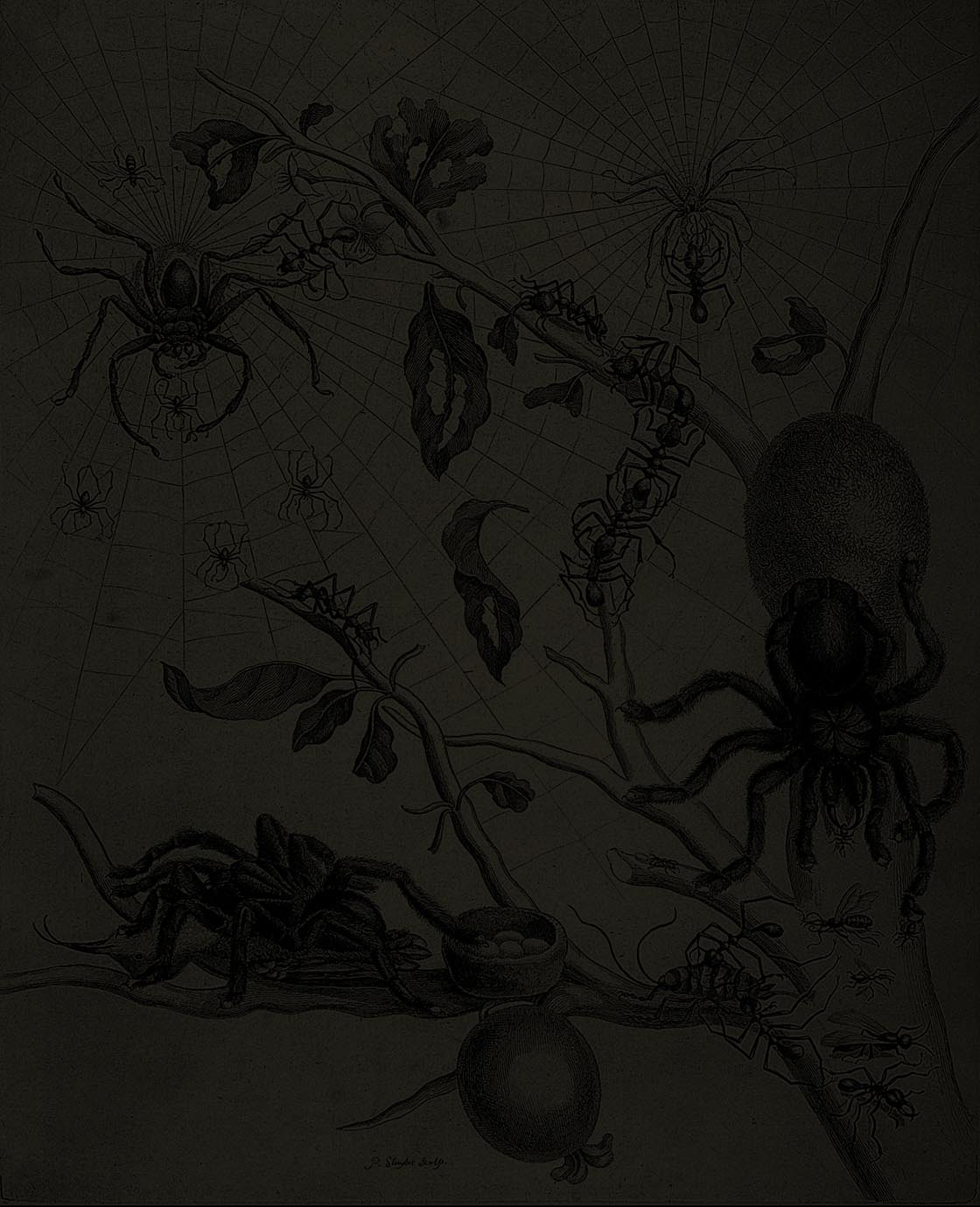
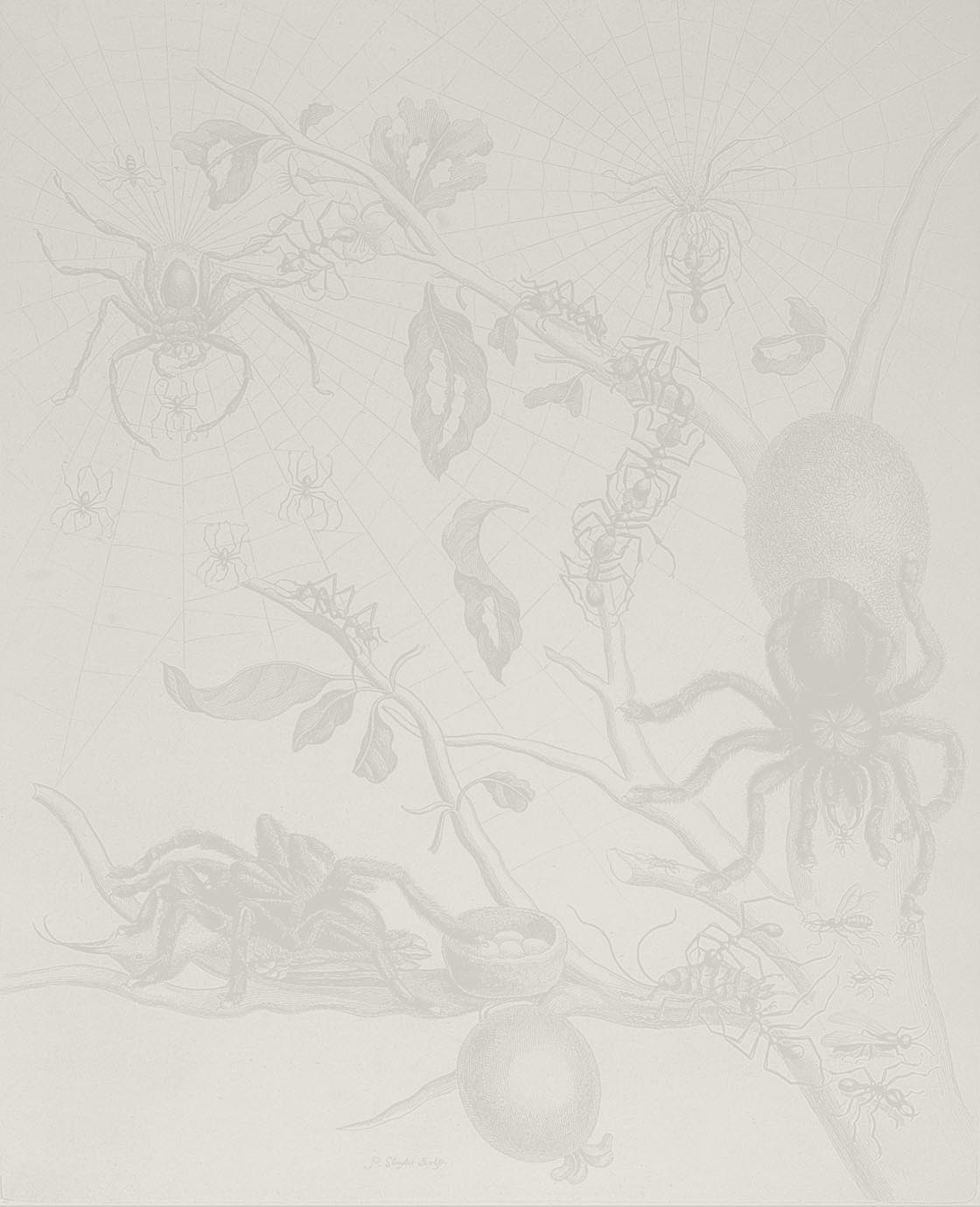
This poem exemplifies Pulter’s strategy of complicating and even undercutting her own emblematic images. The poem initially analogizes human tyrants to a female spider, in order remind the reader that even tyrants succumb to death. Yet Pulter undermines the analogy in the poem’s subsequent lines. First, while the spider is female (perhaps an echo of classical and renaissance depictions of tyrants as unstable and effeminate), the only human tyrants she mentions are male.1 More significantly, Pulter rejects the spider as a suitable analogy for human tyranny altogether at line 25, stating that man is far worse than the spider, and it is unfair to the spider to make the comparison. She even terms humans unique in their cannibalistic tendencies (seemingly ignoring other examples in her own emblem poems of animals eating their own kind). In so undercutting the poem’s initial premise, Pulter rejects the principle of analogy upon which emblem poems are based. Traditionally, readers are asked to identify with and learn from the emblematic image, based on that image being an analogue of some aspect of contemporary human life. In this poem, however, Pulter rejects the spider emblem as inadequate to the task of representing humanity’s tyrannical tendencies.

Pulter’s reference to “he that hath three Kingdoms in his power,” i.e., the three kingdoms comprising Great Britain, suggests that events of Pulter’s own time are the inspiration for this reconfiguration of conventional emblem form. The British reference—likely referencing Oliver Cromwell—invites contemporary readings in a poem previously reliant on classical and biblical allusions. It may not be coincidental, therefore, that this hitherto anomalous contemporary reference immediately precedes the rejection of the spider analogy. Pulter suggests that where conventional emblem principles may have been suitable for previous historical contexts, events like the English civil wars require a reimagining of emblem poems’ formal premises.

Perhaps it should not be surprising, therefore, that the second half of the poem introduces themes and texts seemingly out of character with the neoclassical bent of the earlier part of the poem. As Pulter moves from tyranny to cannibalism to praise of vegetarianism, the distance we have come thematically from the beginning of the poem is indexed by the difference between her earlier classical allusions and the Hindu Indian traders of her own time (“now”) lauded at line 34. Pulter likely draws her description of these “Banians” from Samuel Purchas’ Purchas his Pilgrimage (1626), a beloved work of travel writing which also inspired Pulter’s romance, The Unfortunate Florinda. Pulter lauds these traders so extensively that the speaker literally has to remind herself to control her sympathies in the succeeding (and final) couplet.

The final couplet thus struggles to instill order on a poem that in many ways embraces disorder. Biblical allusions in these final lines assert a Christian natural order of being, with God over man and man over animals, thereby licensing mankind’s killing of animals for food. Yet this licensing appears weak, even resigning, following the poem’s earlier promotion of vegetarianism. Moreover, the closing couplet underscores the distance the poem has traveled from its initial discussion of tyranny. Discussion of Britain’s own tyrant remains unresolved, along with the personal vitriol evinced by the speaker herself.

  • 1. See Rebecca Bushnell’s discussion of tyranny in Tragedies of Tyrants: Political Thought and Theatre in the English Renaissance (Ithaca: Cornell University Press, 1990).
Compare Editions
i
1Behold how many Cobwebs doth invest
2This ugly
Spider1
in her nasty Nest
3Where Barricado’d She in Ambush lies
4
Domitian-like2
to Murder Sportive Flies
5Yet Such A Monstrous Spider once I Saw
6That would with Ease, Flies, Wasps and Hornets draw
7Most Cruelly into her Dusty Nest
8Then Tyrant-Like She on their Blood would feast
9Yet did I See A Slender Azure Fly
10Make this blood Sucking Monster fall and die
11So the most impious Tyrants in the World
12Even in A moment to the Grave are Whorled
13That
King of Terrors3
doth by Sentence Just
14
Grind even their very Skeletons to dust4
15When he upon the
pale Horse5
doth appear
16A
Julianus6
then begins to fear
17Throwing his blood and Spirits in the Skies
18Confessed yet died in his Apostasies
19What by the Wars was Alexander’s gains
20When guilt his Conscience,
poison Stung his veins7
21So
he that hath three Kingdoms in his power8
22What Comfort will they Yield that fatal hour
23When as that
Sea of Innocent blood9
Shall Roar
24To Heaven for vengeance, who can but implore
25But why do I blame Spider’s Tyranny
26Who forced by Hunger Kills a silly fly
27When Man’s the greatest
Beast of prey10
of all
28His house a Shamble is or Butcher’s Stall
29In
all those Books which I have Read11
I find
30There’s
none but Man doth Kill and Eat his Kind12
31The
Antediluvian Patriarchs13
happy were
32That lived by what the Earth did freely bear
33The
Pithagorions14
no blood would spill
34The
Banians15
now no Animals do Kill
35But Such as Murderers they do Esteem
36And oft will buy those Creatures to
Redeem16
37But Stay my Pen write no more then is
meet17
38Least I forget
Noah’s License, Peter’s Sheet18
.
Macron symbol indicating the end of a poem.

Amplified Edition,

edited by Rachel Zhangi

Editorial Note

Though the syntax, diction, capitalization, and spelling of Pulter’s poems may not conform to modern standards, it is analytically productive for the modern reader to consider the these elements as they appear in the manuscript; they may, for instance, create links between different parts of the text, emphasize particular words, or create syntactical slippage that encourages multiple interpretations. In order to retain Pulter’s unique poetic voice, as well as maintain the possibility of multiple interpretations created by her text, I take a conservative editorial approach. I have chosen not to modernize grammar, capitalization, or punctuation, and adhere to the original spelling in cases where doing so retains a particular tone or analytical complexity that would be lost in modernization (e.g. “then” in line 37, which if modernized to “than” would efface an alternate reading of the line).
Macron symbol indicating the end of a poem.
  • Rachel Zhang
  • Spider
    A common inspiration for emblem poems. See e.g., Emblem XVIII of Book 1 of George Wither’s A Collection of Emblemes (1635), which compares spiders to men who “without touch, of Conscience or Compassion, / Seeke how to be enricht by others wants, / And bring the Poore to utter desolation” (18).
  • Domitian-like
    Roman emperor Domitian (51–96 CE) was known for his autocratic rule, imposing harsh morality laws and executing members of his own family. He is also cited as an example of tyranny in Peacham, Minerva Britanna (1612), 144.
  • King of Terrors
    Bildad warns in Job 18:14 that evil people will be destroyed and brought to the “king of terrors.” Pulter may have sourced the phrase from Job directly, or from the numerous early modern sermons and biblical commentaries which use the term to refer to Death. See, for instance, Richard Baxter, The Saints Everlasting Rest (1650), which asks, “Why is death to men the King of terrors else?” (334).
  • Grind even their very Skeletons to dust
    The image of Death as a bone grinder is a recurrent one in Pulter’s poetry; she writes in The Center30 for instance, that Death “triumphant [will] perform his lust / Grinding in (spite) our very bones to dust” (15–6). The image may allude to Dante’s Inferno, the final canto of which describes a three-headed Satan using each mouth “like a grinder” to torture Brutus, Cassius, and Judas (Dante Alighieri, Inferno, trans. Allen Mandelbaum [New York: Bantam, 2004], 34.55). This allusion is unlikely, however, as there is no evidence Pulter knew Italian and the Divine Comedy was not translated into English until the eighteenth century. The image may be a cultural commonplace. Considering Pulter’s representation of Death as a bone grinder is also noteworthy as part of the cyclical process of life and death Pulter depicts throughout her poetry: in grinding bones to dust, Death returns man to his original state of creation, what Pulter calls his “first Principles” (The Welcome [2]33, l. 7). Usually Pulter follows such dissolution with an affirmation of resurrection: “The sleeping Dust will rise and speake,” she writes in The Perfection of Patience and Knowledge39 (see also The Welcome [2]33, To Aurora [3]34). Here, however, Pulter omits imagery of resurrection, portraying dust as the final, conclusive end of tyrants.
  • pale Horse
    The pale horse is the last of the four horses of the Apocalypse described in Revelation. This horse is ridden by Death, and followed by Hell. Revelation 6:8 describes, “... [P]ower was given unto them over the fourth part of the earth, to kill with sword, and with hunger, and with death, and with the beasts of the earth.”
  • Julianus
    Flavius Claudius Julianus (331/32–363 CE), later known as “the Apostate,” converted away from the Christianity of the post-Constantine Roman Empire in his youth. Upon becoming emperor, Julian instituted a policy of pagan restoration, reinstating temple worship and sacrificial cults throughout the empire. Alexander Ross’s The History of the World (1652) (cited by Alice Eardley) notes that after being fatally shot in the liver, Julian flung his blood into the air and declared, “Thou hast overcome mee O Galilean”—a reference to Christ (85). Eardley, “An Edition of Lady Hester Pulter’s Book of ‘Emblemes’” (Ph.D. diss., University of Warwick, 2008), 2:113.
  • poison Stung his veins
    The ill-founded theory that Alexander the Great (356–323 BC) was poisoned circulated widely in the Greco-Roman period as well as in later centuries, featuring, for example, in Machiavelli’s The Prince (Book XIX).
  • he that hath three Kingdoms in his power
    I agree with Alice Eardley in reading the lord of the “three Kingdoms” as a reference to Oliver Cromwell, who as Lord Protector of the Commonwealth ruled England, Scotland, and Ireland between 1653 and 1658 (“An Edition of Lady Hester Pulter’s Book of ‘Emblemes,” 2:114). Pulter similarly decries “they [that] have been three kingdoms’ sore annoyers” in On those Two Unparalleled Friends, Sir George Lisle and Sir Charles Lucas, Who Were Shot to Death at Colchester7 a poem commemorating the deaths of two royalist leaders at the hands of the Parliamentarian army.
  • Sea of Innocent blood
    The language here seems allusive, perhaps referring to the sea of blood indicative of God’s judgment in Revelation 16:2–3. Yet the phrase “sea of innocent blood” is not uncommon; Milton uses it to condemn Charles I in Chapter 2 of Eikonoklastes, writing, “he thinks to scape that Sea of innocent blood wherein his own guilt inevitably hath plung’d him all over.”
  • Beast of prey
    The comparison of man to a beast of prey is not unique to Pulter. Geoffrey Whitney includes in A Choice of Emblemes (1586) a poem with the epigram, Homo homini lupus (Man is a wolf to man). “No mortall foe so full of poysoned spite, / As man, to man, when mischiefe he pretendes,” Whitney writes (144). Like Pulter, he notes that man does not treat animals with such cruelty.
  • all those Books which I have Read
    Such references to the author’s learnedness are common in emblem books, e.g., Geoffrey Whitney’s reference to “divers authors” in his emblem comparing man to a wolf (A Choice of Emblemes [1586], 144). As evidenced in this emblem, Pulter frequently demonstrates her familiarity with the Bible, Plutarch’s Lives, Pliny’s Natural History, and Purchas’ Purchas His Pilgrimage; any of these may support Pulter’s assertion here, though Purchas His Pilgrimage seems particularly pertinent. Alice Eardley discusses Pulter’s sources in Chapter Two of "An Edition of Lady Hester Pulter’s Book of ‘Emblemes’" (Ph.D. diss., University of Warwick, 2008), 1:102–124.
  • none but Man doth Kill and Eat his Kind
    This phrase portrays humans as unique in killing other humans (“his Kind”). Unlike the spider, which only kills “silly fl[ies],” humans kill each other. Cf. Michel de Montaigne’s essay “On Cannibals,” which uses a cannibalistic civilization to critique the acts carried out “under the cloak of piety and religion” in his own society: “I consider it more barbarous to eat a man alive than to eat him dead” (Michel de Montaigne, Essays, trans. J. M. Cohen [London: Penguin, 1993], 113). This claim of man’s unique cannibalism is an ironic one given The Cuckoo94, which documents multiple cases of animals killing their own kind. Moreover, such cannibalism sits awkwardly adjacent to the following lines discussing vegetarianism; even if man should not “Eat his [own] Kind,” it does not necessarily imply he should not eat animals. Eliding the two implies a strange kinship between humans and animals that Pulter rejects in her final lines.
  • Antediluvian Patriarchs
    Tradition holds that humans were vegetarians before the worldwide flood recounted in Genesis. Following the receding of flood waters, God licenses Noah’s eating of meat, declaring, “Every moving thing that liveth shall be meat for you” (Genesis 9:2–3).
  • Pithagorions
    It is unclear whether the Greek philosopher and mathematician Pythagoras (c. 570–495 BCE) was himself a vegetarian. Regardless, his followers adhered to the vegetarian diet attributed to him, to such an extent that “vegetarianism” only replaced “pythagoreanism” in the nineteenth century. Pulter likely draws from Samuel Purchas’ widely popular Purchas His Pilgrimage (1626), which recounts the Banians’ “Pythagorean errour” in loosing animals meant for slaughter (542).
  • Banians
    Hindu Indian traders. The language of “redeem[ing]” indicates Pulter’s likely use of Purchas’ Purchas His Pilgrimage (1626). In a section “Of the Banian and Cambayan Superstitions” (5.8.3), Purchas notes that the Banians “eat no flesh, nor ill any thing yea they redeem the beasts and birds maymed or sicke, and carry them to their Hospitals to be cured” (541).
  • Redeem
    Pulter’s use of “Redeem”—likely derived from Purchas—is economic, denoting a financial exchange whereby the animals are bought back. Yet it is particularly ironic in this context. Instead of God redeeming mankind, as he does in the biblical stories referenced a few lines later, Hindus are redeeming animals, thereby practicing a belief in the sanctity of life absent from Pulter’s own Christian nation.
  • meet
    Pulter may be punning on “meat/mete,” suggesting both that it is inappropriate to say more, and that meat should be eaten “no more.”
  • Noah’s License, Peter’s Sheet
    Pulter here recalls two biblical examples of God licensing the eating of animals: Genesis 9:2–3, when God tells Noah that “Every moving thing that liveth shall be meat for you,” and Acts 10:9–16, when Peter receives a vision telling him to “kill, and eat” animals descending on a sheet from heaven, even those considered unclean by the Jews. Pulter thus rejects vegetarianism, even as she praises those who exhibit compassion towards animals. This final return to biblical text effectively suppresses the other religious paradigms that Pulter raises earlier, even as it reestablishes a traditional hierarchical order of being, with God ordaining humans as ascendant over the animals.
The Pulter Project

Copyright © 2023
Wendy Wall, Leah Knight, Northwestern University, others.

Except where otherwise noted, this site is licensed
under a Creative Commons CC BY-NC-SA 4.0 License.

How to cite
About the project
Editorial conventions
Who is Hester Pulter?
Resources
Get in touch