• No results
ElementalAmplified
Manuscript
Notes
#
The Pulter Project
pulterproject.northwestern.edu
Poem 89

Emblem 24

Edited by Victoria E. Burke
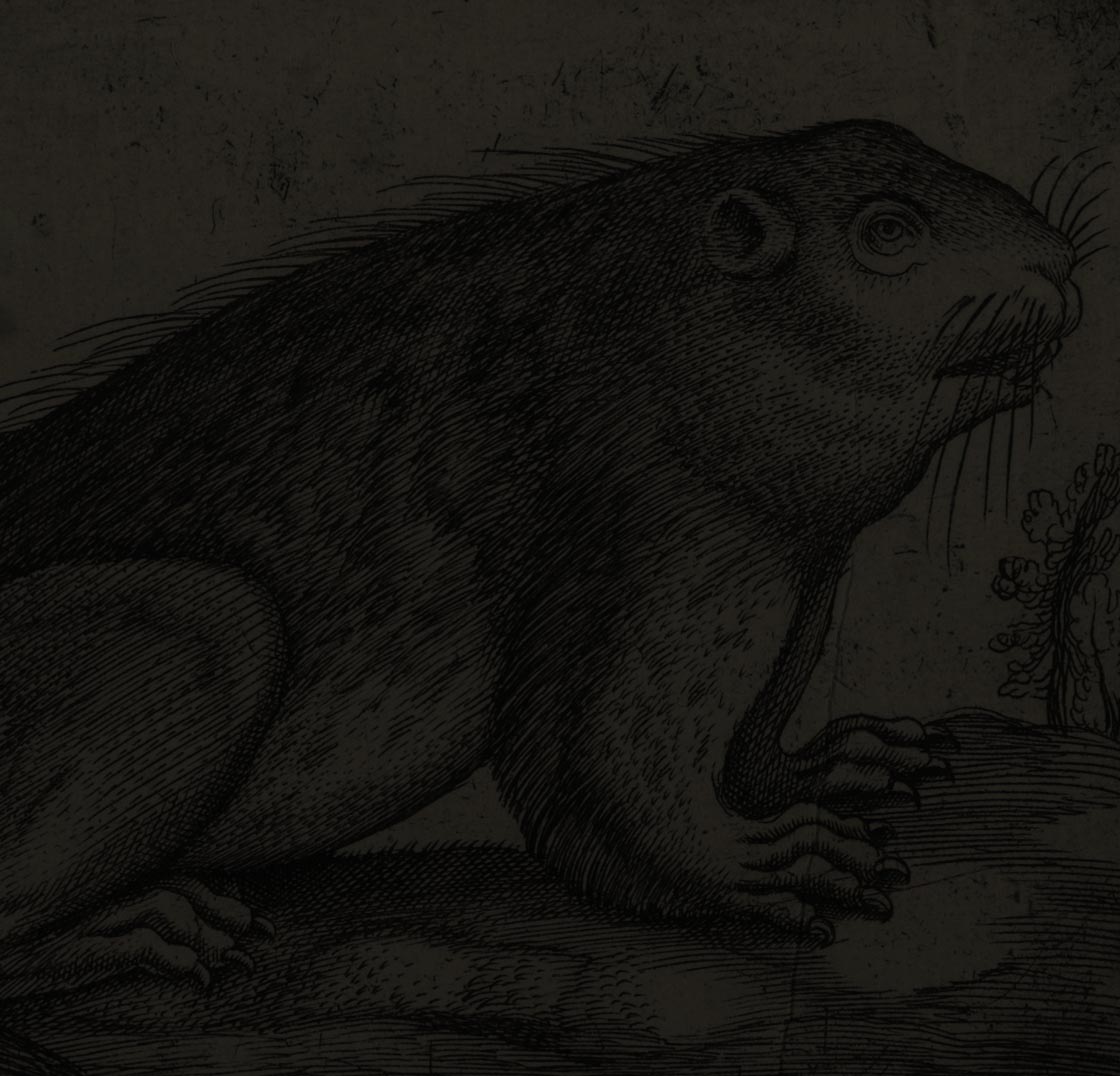
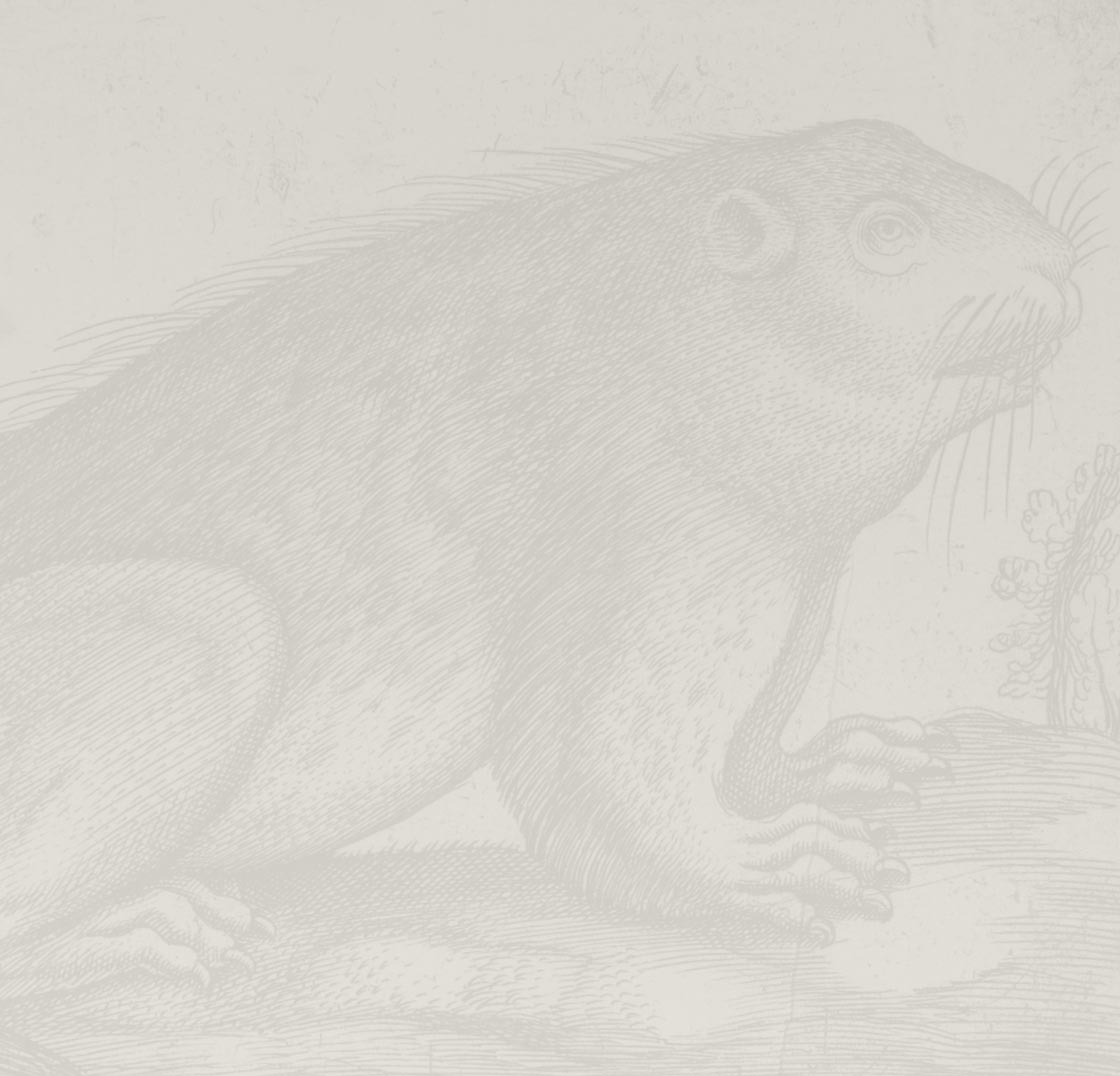
This emblem contemplates the marmot as a symbol of marital harmony. Pulter begins her poem by referring to Pliny’s description of the marmot piling grass and herbs on its mate’s belly and then drawing it by the tail into their den. She contrasts that image of shared wealth with human husbands who either neglect or subjugate their wives.
Compare Editions
i
1
The1
Marmottanes2
for Unitie’s Renownd
2And for Conjugall Love they may be Crownd
3That you may See noe Wisdome they doe lack
4They lye alternately upon their Back
5T’other with Grass and Herbs doth Load him well
6Then by the tayl
Shee3
draws him to their
Cell4
7They’r neat and Warm they Joyn to build their Nest
8In which all Winter they doe Sit and Feast
9With Corn and Fruits by them lay’d up in Store
10For till next Summer Comes they’l need noe more
11Surely they live by Farr more happie lives
12Then many Wealthy Husbands and their Wives
13Some Noble minds there bee I know will Share
14Their pleasure with their Wives as well as Care
15But most to Taverns or to Wors will
Rome5
16Or elce they’l alwais
Tirannise6
at home
17If you Should ask mee which of these is worss
18Trust mee (I know not) either is A Curss
19If Such doe Read these lines to them I Say
20The Rat of Pontus’s
Lovinger7
then they.
Macron symbol indicating the end of a poem.

Amplified Edition,

edited by Victoria E. Burkei

Editorial Note

This is a semi-diplomatic transcription in which original spelling and punctuation are retained, abbreviations (such as tildes) are expanded with added letters in italics, colons indicating abbreviations are removed, “ff” is modernized to “F,” and superscriptions are lowered. The retention of original spelling and punctuation has the potential to get us closer to the choices made by the poet and scribe, but some scribal details (such as abbreviations) do not seem substantive or meaning-bearing and run the risk of alienating a modern reader.
Macron symbol indicating the end of a poem.
  • Victoria E. Burke, University of Ottawa
  • The
    In the left margin is the note “or Rat of Pontus Plinie his 8 book chap 37.” Pontus is a region in what is now Turkey. Editions of Pliny the Elder’s The historie of the world: commonly called, The naturall historie of C. Plinius Secundus, translated by Philemon Holland, were printed in 1601, 1634, and 1635. Chapter 37 of the eighth book is headed, “Of the Rats of Pontus, and the Alps: also of Vrchins and Hedge-hogs” (pp. 216–217 in each edition). The chapter begins, “The Rats of Pontus, which be onely white, come not abroad all winter:[…] Those of the Alpes likewise, i. Marmottanes, which are as bigge as Brocks or Badgers, keepe in, during winter: but they are prouided of victuals before hand which they gather together and carry into their holes. And some say, when the male or female is loden with grasse and herbs, as much as it can comprehend within all the foure legges, it lieth vpon the backe with the said prouision vpon their bellies, and then commeth the other, and taketh hold by the taile with the mouth, and draweth the fellow into the earth: thus doe they one by the other in turnes: and hereupon it is, that all that time their backes are bare and the haire worne off. Such like Marmotaines there be in Ægypt; and in the same manner thay sit ordinarily vpon their buttocks, and vpon their two hinder feet they goe, vsing their fore-feet in stead of hands.”
  • Marmottanes
    Marmots are burrowing rodents from the squirrel family (OED 1a). The spelling chosen by Pulter is that which is used in Holland’s translation of Pliny.
  • Shee
    Holland suggests that the male and female marmot take turns being loaded with food and being dragged by the other; Pulter also makes the point that they “lye alternately upon their Back” (l. 4) but here she dramatizes the female marmot taking the more active role.
  • Cell
    the den of a wild beast (OED 1c)
  • Rome
    Pulter’s disparagement of husbands who roam to taverns or worse (presumably brothels) echoes This Poor Turtledove (Emblem 20)85 in which she criticizes husbands who follow a dissolute path. She writes, “Then if your Husbands Rant it high and Game” (line 23), but in that poem she urges wives to avoid following their spouses’ bad example: “Besure you Double not their Guilt and shame” (line 24). In that poem, Pulter advises wives, rather than husbands, not to “Roame … to plays and Taverns” (lines 32–34). She suggests that wives should “Chastly live and Rather Spend your dayes / In Setting Forth Your great Creator’s praise” and even to write “harmles Rimes” as she does (lines 42–45; my transcriptions from the manuscript). Her interest in this emblem on the marmots is to focus on the couple and the domestic happiness they can enjoy. Interestingly, in his discussion of the marmot (which he calls the alpine mouse), Edward Topsell depicts little marital cooperation between the male and female (The historie of foure-footed beastes [1607], p. 525; with thanks to one of this edition’s anonymous reviewers for this reference): “Now the female in this kind is crafty, and more apt to deuoure; the male on the other side more thirsty and sparing, wherefore he driueth his female out of the den in the winter time, and stopeth the mouth of his caue, to forbid hir entrance, but she getteth behind the same, and diggeth a secret hole, whilest the male lyeth at the mouth asleepe, she consumeth the whole store behind him, wherefore in the spring time she commeth forth very fat and comely, and he very leane. And therefore in my opinion, the makers of Emblems may very well discribe an vnthrifty wise [i.e., wife], that consumeth her husbands wealth, by the picture of this female.”
  • Tirannise
    The language of tyranny in the context of relations between husbands and wives is used by many women writers of the seventeenth century. While most writers acknowledge the authority of Adam over Eve, particularly post-Fall, they often object to an abuse of that power. Aemilia Lanyer, in Salve Deus Rex Judaeorum (1611), lines 825–830, addresses contemporary men with the bold request, “Then let us have our Libertie againe, / And challendge to your selves no Sov’raigntie;[…] Your fault beeing greater, why should you disdaine / Our beeing your equals, free from tyranny?” (The Poems of Aemilia Lanyer: Salve Deus Rex Judaeorum, edited by Susanne Woods, Oxford University Press, 1993, p. 87). The fault to which Lanyer is referring is that of Pilate ordering the crucifixion of Christ, which Lanyer argues has tainted all men by association, just as Eve eating the apple has tainted all women. In a tract of 1649 called A vision: wherein is manifested the disease and cure of the kingdome (which argues against King Charles’s execution), Elizabeth Poole uses metaphors comparing the king and his subjects to a tyrannical husband and his suffering wife. Poole writes, “For he is the Father and husband of your bodyes, as unto men, and therefore your right cannot be without him …. Onely consider, that as she [i.e., Abigail, the virtuous wife of cruel Nabal] lifted not her hand against her husband to take his life, no more doe yee against yours …. For know this, the Conquest was not without divine displeasure, whereby Kings came to reigne, though through lust they tyranized: which God excuseth not, but judgeth; and his judgements are fallen heavy, as you see, upon Charles your Lord” (pp. 4–5; with thanks to one of this edition’s anonymous reviewers for the Poole reference). In a digression on the implications of Eve’s punishment that her desire shall be for her husband (Genesis 3:16), Lucy Hutchinson discusses the way that wives choose the shackles of marriage out of love for their husbands. In Order and Disorder (1679), canto 5, lines 139–143, she writes, “Now though they easier under wise rule prove, / And every burden is made light by love, / Yet golden fetters, soft-lined yokes, still be / Though gentler curbs, but curbs of liberty, / As well as the harsh tyrant’s iron yoke” (Lucy Hutchinson, Order and Disorder, edited by David Norbrook, Blackwell, 2001, p. 69).
  • Lovinger
    more loving
The Pulter Project

Copyright © 2023
Wendy Wall, Leah Knight, Northwestern University, others.

Except where otherwise noted, this site is licensed
under a Creative Commons CC BY-NC-SA 4.0 License.

How to cite
About the project
Editorial conventions
Who is Hester Pulter?
Resources
Get in touch