• No results
ElementalAmplified
Manuscript
Notes
#
The Pulter Project
pulterproject.northwestern.edu
Poem 73

The Indian Moose
(Emblem 7)

Edited by Millie Godfery and Sarah C. E. Ross

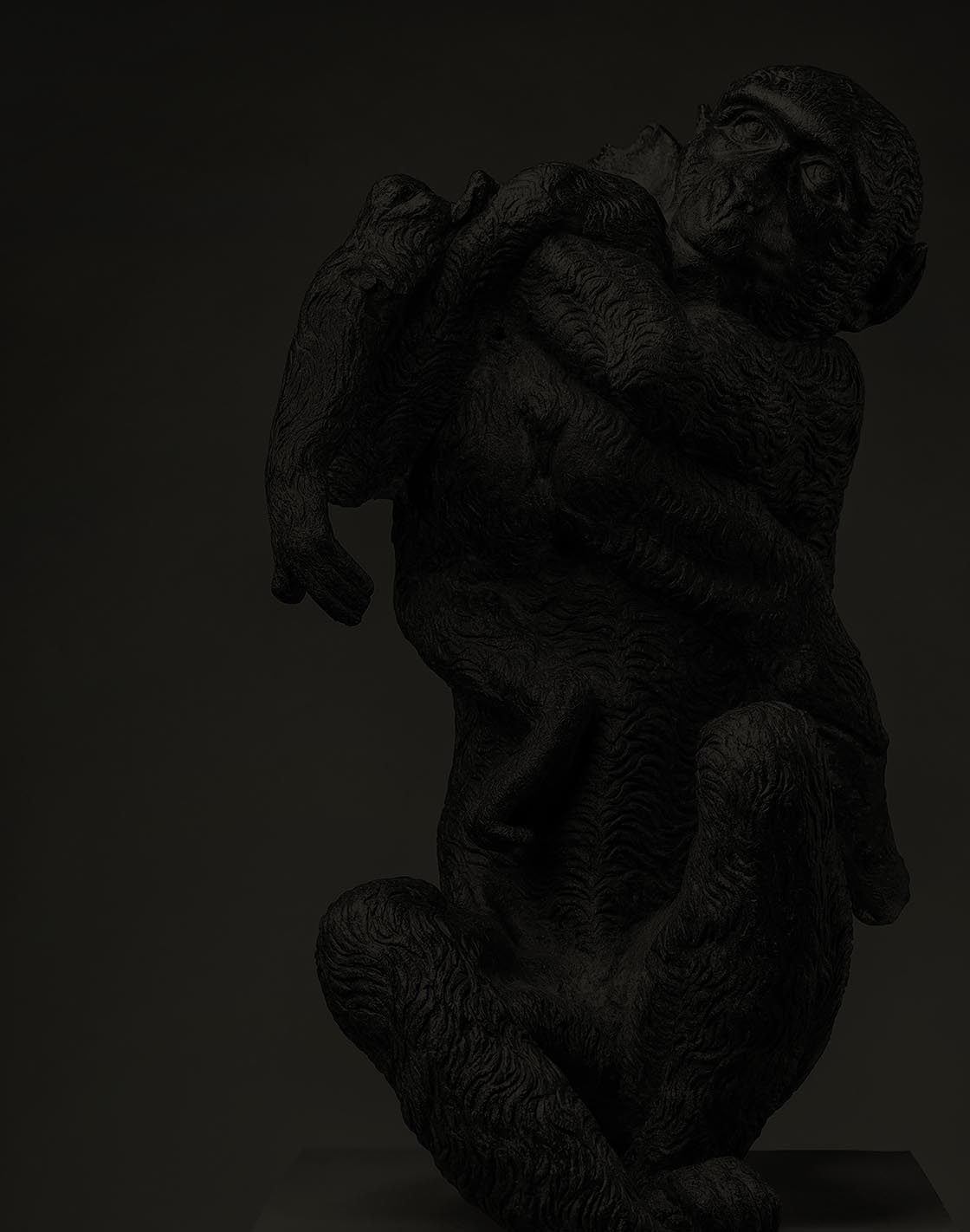
Pulter’s focus in this poem is on parental love and the equal “manifest[ation]” of this to one's children (line 16). She draws on William Wood’s depiction of the Indian moose in his New England’s Prospect, commending the animal’s equal division of “comforts” and “care” between her “three young” offspring ([1635], 16-19, esp. 18; lines 1-2). Utilising the moose as her predominant emblem in the poem, Pulter proceeds to compare the moose’s parental strategies with those of other animals, including the ape and the eagle, beasts that she criticises for their unequal division of affection between their young. Engaging in the discourses of Wood, Pliny, and Aesop, this emblem is indicative of the ways in which Pulter's emblems draw on esteemed literary, philosophical, and classical texts for her own didactic purposes.

Pulter’s message of equal love develops and modifies slightly at line seven of the poem, as she emphasises the more strategic aspects of the “policy” by which the moose distributes her children as an act of preservation (line 7). Pulter salutes this unbiased act of separation as she observes the way that parenthood is at the mercy of chance. Several of her occasional lyrics indicate Pulter’s own struggle as mother of children who lived elsewhere, suggesting that Pulter champions the moose as an example of parental sacrifice; see The Invitation into the Country2 and To My Dear Jane, Margaret, and Penelope Pulter, They Being at London, I at Broadfield38 for examples of Pulter’s occasional lyrics addressing her separation from her children. Her own experience of maternal loss—13 of her 15 children having pre-deceased her—must also have made her particularly sensitive to the devastating role chance could play in parenting.

The poem itself acts as an instructive emblem aimed at parents, a divergence from the audience of children often addressed in her emblem collection; see, for instance, Come, My Dear Children (Emblem 2)68 and Doves and Pearls (Emblem 36)101. “The Indian Moose” therefore illustrates the multiple layers of moral address Pulter achieves throughout her emblem collection. Pulter directly acknowledges her intended audience in line 15, stating “Let parents learn by what is writ above”. This imperative appears similarly in The Manucodiats (Emblem 5)71, which evokes the emblem of manucodiats—birds-of-paradise—as “transcend[ent]” examples of parental love; here, Pulter employs a similar command, stating “Let parents then learn here indulgency” (lines 10, 16).

Despite her instruction to parents, the final line of Emblem 7 takes a “psalmic” turn inward, as Pulter appeals (indirectly) to God, desiring her own edification as a good protestant mother (Rachel Dunn [Zhang], “Breaking a Tradition: Hester Pulter and the English Emblem Book”, The Seventeenth Century, 30.1 [2015], 55-73, 64). This is a significant feature of Pulter’s emblem collection as she often begins by providing a description of the emblem, followed by an explication of the moral, and then a conclusion of self-reflection, as characterised by an inward turn, to reflect upon her own mortal position as a virtuous protestant mother, wife, and royalist. For more on this aspect of Pulter’s emblem collection and a clear example, see Mighty Nimrod (Emblem 1)67, esp. note to line 21 of our Amplified Edition.

Compare Editions
i
1
The Indian moose three young at once doth bear,1
2Which
trebles2
both her comforts and her care;
3Them equally she loves, none worst or best
4(
Not like the ape3
which doth her love
attest4
5By
hugging5
that she loves until it
die6
;
6The other,
wrawling7
, at her back hangs by).
7To see her
policy8
would make one wonder,
8In placing
every one9
a
mile asunder10
,
9That if her
foes11
on one of them should
light12
,
10The other two are saved by this
sleight13
.
11
The patriarch so divided his three bands14
12To save them from his
cruel brother’s hands15
;
13So merchants will not
venture16
all they have
14Within
three inches of the swelling wave17
.
15Let parents learn by what is writ above
16To manifest to children equal love.
17Not like
the eagle18
, who her young doth
try19
18By the transcendent brightness of her eye;
19Those which can’t stare at
Sol’s20
refulgent21
face,
20She
disesteems22
as
bastard brats and base23
;
21These, wanting then her noble education,
22Degenerate to
kites24
and keep their fashion.
23So ’tis when parents do a difference make;
24Then O! That counsel let me ever take.
Macron symbol indicating the end of a poem.

Amplified Edition,

edited by Millie Godfery and Sarah C. E. Rossi

Editorial Note

Our priority in editing these poems has been to modernise, and to achieve interpretative and visual clarity, in order to make the poems as accessible as possible to as wide a modern audience as is possible. Spelling is modernised, as is punctuation. Modernising the latter, in particular, often involves a significant act of editorial interpretation, but in our view this is one of the most productive areas of editorial intervention, particularly for a manuscript text such as Pulter’s where the punctuation is erratic compared to modern usage (and, indeed, compared to early modern printed texts). 1 All biblical references are to the King James Version (1612).
  • 1. See Alice Eardley, “‘I haue not time to point yr booke … which I desire you yourselfe to doe’: Editing the Form of Early Modern Manuscript Verse”, in The Work of Form: Poetics and Materiality in Early Modern Culture, ed. Ben Burton and Elizabeth Scott-Baumann (Oxford: Oxford University Press, 2014), pp. 162-178.
Macron symbol indicating the end of a poem.
  • Millie Godfery
  • Sarah C. E. Ross, Victoria University of Wellington
  • The Indian moose three young at once doth bear,
    Pulter’s source for this emblem is William Wood’s New England’s Prospect, a text aimed at giving a “true, lively, and experimental description” of the New England colony in the north-eastern region of America. Wood writes of moose that “They have generally three at a time, which they hide a mile from another, giving them sucke by turnes; thus they doe, that if the Woolfe should finde one, he might misse of the other” (New England’s Prospect [1635], 16-19, esp. 18). See also The Stately Moose (Emblem 27)92 for another description of the moose by Pulter, as she again draws on Wood’s description of the animal to highlight God as the only constant within the “frail” and “casual” aspects of life (line 39).
  • trebles
    triples; increases threefold (OED 1)
  • Not like the ape
    in Aesop’s fable “Ape and her two Cubs”, apes are said always to give birth to twins, one of which the mother loves and cares for, while the other she neglects. The consequence of this is that the one attended to is suffocated to death by the loving clasp of its mother’s arms, while the neglected one is “safe as safe could be” (Aesop improved, or, Above Three Hundred and Fifty Fables, mostly Aesop’s [1673], 67). Pliny also gives an account of apes in his Natural History, describing them as being “wondrous[ly] fond of their little ones … that in the end with very little clasping and clipping they kill them many times” (The Historie of the World: Commonly Called, the Naturall Historie of C. Plinius Secundus. Trans. Philemon Holland. Vol. 1 [1635], 231).
  • attest
    use as evidence(OED); demonstrate
  • hugging
    MS = “hugling”
  • die
    MS = a single illegible letter follows this word; “Die[?]” which has been blotted over
  • wrawling
    inarticulate bawling, squalling (OED 1). MS = “wraleing”. Note that the Elemental Edition of this poem modernises this to “railing”, meaning complaining. Our edition aligns itself with Eardley’s, who proposes “wrawling” as the modernised form of “wraleing” (Poems, Emblems, and The Unfortunate Florinda [Toronto: Iter and Centre for Reformation and Renaissance Studies, 2014], 195 n. 53.
  • policy
    a stratagem (OED 3); also meaning principle, or course of action (OED 4). Pulter is referring to the moose’s strategy of separating her children to prevent multiple deaths; see note to line 1.
  • every one
    each one of the moose’s three calves
  • mile asunder
    a mile apart (OED 1)
  • foes
    specifically wolves, as outlined by William Wood (see note to line 1)
  • light
    see, notice
  • sleight
    cunning strategy employed to deceive (OED 1)
  • The patriarch so divided his three bands
    “The patriarch” is the biblical Jacob, who was regarded as the Patriarch of Israelites after being blessed with the name Israel following his fight with a divine being on his way home to Canaan; see Gen. 32. Jacob famously tricks his older twin Esau out of his father’s blessings, fulfilling God’s prophecy that “the elder shall serve the younger” (KJV Gen.25:23). To escape Esau’s murderous jealousy, Jacob flees to Harran where he creates his own family. On their return to his homeland of Canaan where Esau is leader, and upon hearing his brother is approaching with an army of four hundred, Jacob divides his children between his two wives and handmaids, hoping that if Esau attacks one group, the others will be saved; see Gen. 33. Pulter draws parallels between this biblical narrative and Wood’s account of the Indian moose, demonstrating how both use a similar strategy of dividing their children into groups in the hope that not all will be attacked. Pulter’s approval of the practice of separating children may also have had royalist implications: the plot to remove Charles’s younger brother James to France in April 1648 was crucial to the survival of the royal family (W. A. Speck. “James II and VII.” Oxford Dictionary of National Biography [2004]).
  • cruel brother’s hands
    Esau, Jacob’s brother, who desires murderous revenge after Jacob tricks him out of his father’s blessings; see note to previous line.
  • venture
    an act or occasion of trying one’s chance or fortune (OED 3); gamble; play with chance
  • three inches of the swelling wave
    Lines 13-14 refer to the wariness merchants feel in placing all their fortune in one ship, given the unpredictable nature of the sea. For a representation of this, see Antonio and Salarino’s opening conversation in Shakespeare’s The Merchant of Venice, where Antonio makes it clear that “My ventures are not in one bottom trusted, / Nor to one place” (Edited by John Drakakis [London: Bloomsbury Publishing, 2011], 1.1.41-2). Pulter compares the strategies of merchants to those of good parents who do not place all their worth in one child.
  • the eagle
    In Pliny’s Natural History, the eagle is described as a violent mother: “she only before her little ones be feathered, will beat and strike them with her wings, and thereby force them to looke full against the sun beames: now if she see any one of them to winke, or their eies to water at the raies of the sun, she turns it with the head forward out of the nest, as a bastard, and not right, nor none of hers; but bringeth up and cherisheth that whose eye will abide the light of the sun, as she looks directly upon him” (The Historie of the World: Commonly Called, the Naturall Historie of C. Plinius Secundus. Trans. Philemon Holland. Vol. 1 [1635], 272). In keeping with her emblem’s thematic concern with parenting, Pulter draws on this depiction of the mother eagle to criticize her favoring of the stronger over the weaker, a policy which rejects the equal giving of love that Pulter encourages.
  • try
    test, put under trial (OED 2)
  • Sol’s
    the Latin word for sun, and the Roman god of the sun
  • refulgent
    shining with, or reflecting, a brilliant light; radiant, resplendent; gleaming, lustrous (OED 1).
  • disesteems
    regards lightly, thinks little (or nothing) of; slights, despises (OED 1a)
  • bastard brats and base
    Here, base means of lower, inferior quality (OED 7a). For the association of “bastard” and “base”, see Edmund’s soliloquy in Shakespeare’s King Lear, I.II.6, 10: “Why bastard? Wherefore base? ... “Why brand they us with base, base, bastardy”. Eardley punctuates this as “bastard, brats, and base”; however, in this context, both our edition and the elemental edition interpret “bastard” as an adjective for “brat” as opposed to a noun.
  • kites
    a term of reproach or destestation (OED 2). For another use of the term in this sense, see Antony’s address in Shakespeare’s Antony and Cleopatra, III.VIII. 89: “Ah, you kite!” “Kites” are also birds of prey regarded as inferior to eagles (OED 1).
The Pulter Project

Copyright © 2023
Wendy Wall, Leah Knight, Northwestern University, others.

Except where otherwise noted, this site is licensed
under a Creative Commons CC BY-NC-SA 4.0 License.

How to cite
About the project
Editorial conventions
Who is Hester Pulter?
Resources
Get in touch