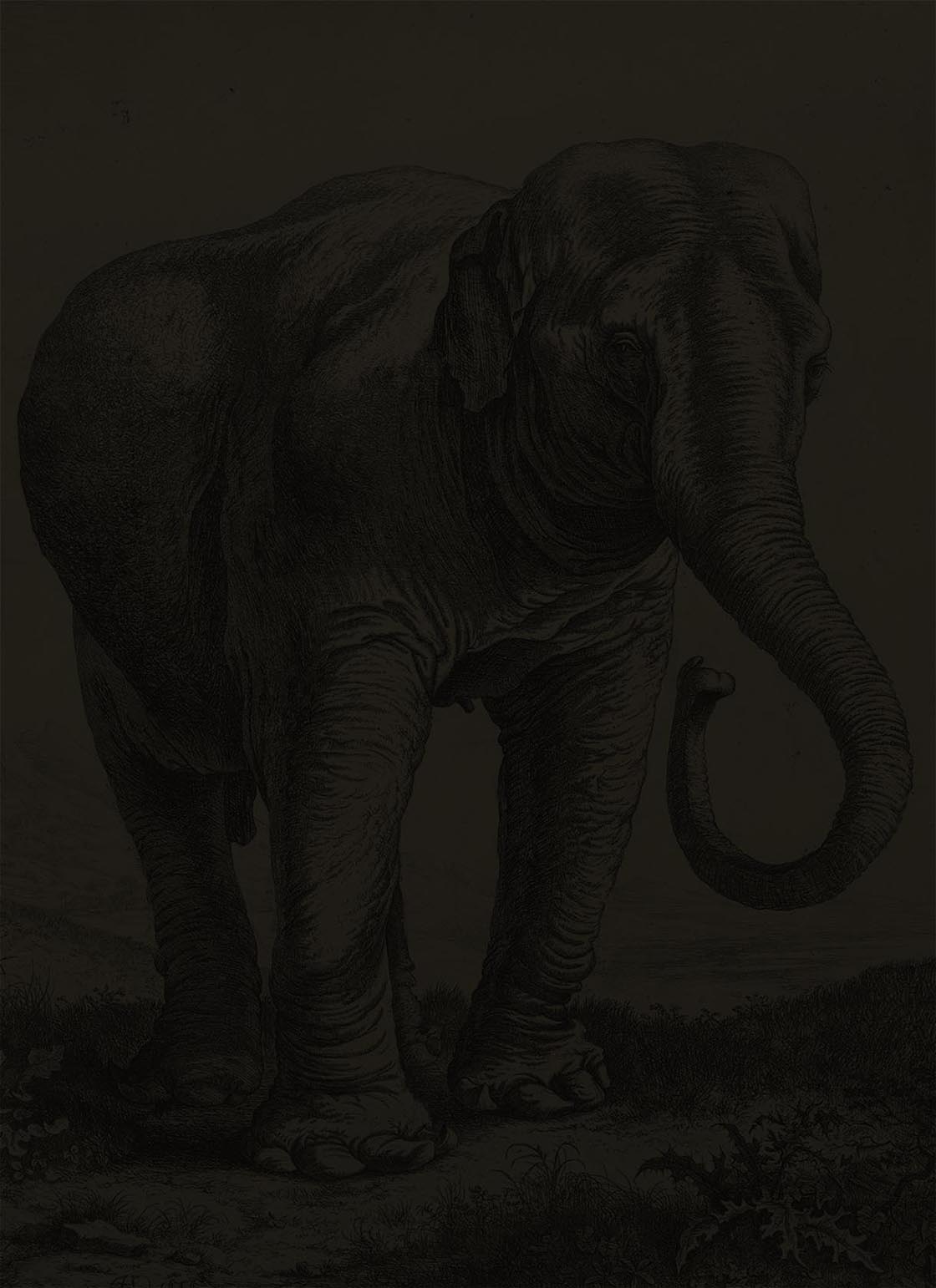
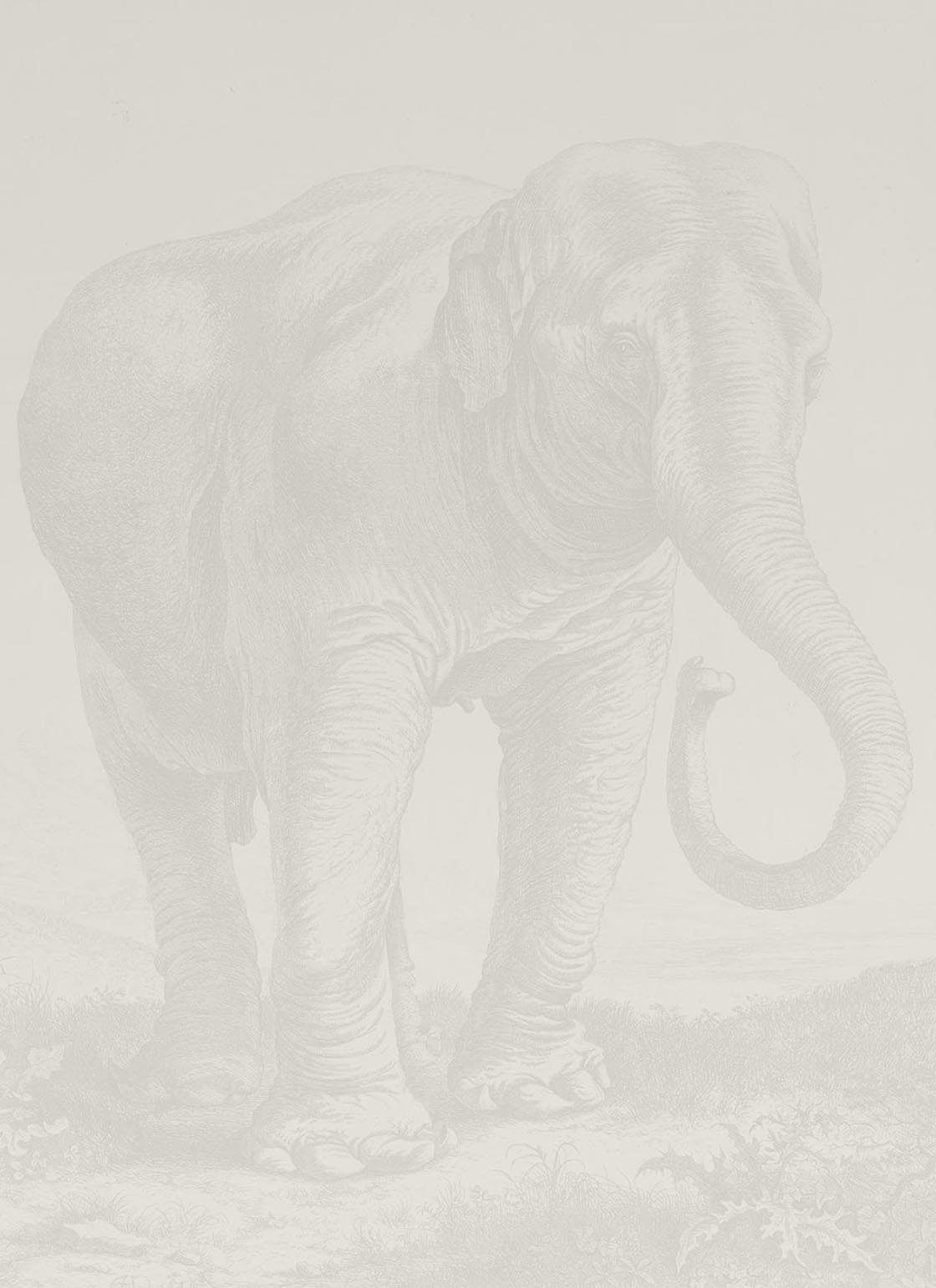
Emblem 19 uses the elephant as a counter-example to English men and women whose surrender to vice Pulter blames for the Civil War and regicide of King Charles I. Unlike elephants, which take pride in their prowess as great beasts of burden, demonstrate valor in war, and above all enforce absolute chastity in their marriages, the English—particularly those among the upper classes Pulter deems most responsible for the nation’s defense and good governance—have failed in their “breeding” and become drinking, gambling, play-going, “wanton” seekers of pleasure. Pulter implies that the hierarchy of God’s creation has thus been dismantled: humans, who should possess reason and be capable of self-restraint, have degenerated into fools and “wittols” (cuckolds) who surrender authority to those beneath them. Sexuality is a significant part of this failure, given that Pulter suggests her fellow English have ceased to value marriage and, if men, neglect their wives, or if women, act out as if they were lustful “city dames.” The emblem’s criticism of an eroded social hierarchy is directly linked to religious faith, the underpinning and guarantor of the scale of creation: even elephants know to worship something greater than themselves, while human “gallants” have become atheists (those who challenge the justification for monarchical rule as God’s design). The significance of religious faith is subtly conveyed by the poem’s rhyme scheme: all lines are rhymed couplets except the opening triplet, which ends with the word “sacrifice.” The opening two lines give the elephant’s perspective on the rising sun: there, reference to “Sol” or the sun carries the homophonic evocation of the “Son” as Christ; the fact that the Sun/Son is “rising” while the elephants bow to it establishes the image of a resurrected deity framing the remainder of the poem as it turns first to elephant virtue and then to human vice. The Son’s unique role in the salvation of humankind is indirectly affirmed by the third line’s inclusion of the word “sacrifice” when describing the elephants’ efforts to celebrate what they clearly recognize as a supreme being. The poem suggests that the monotheism that elephants in their natural and naïve way seem to practice, humans have abandoned.
Pulter’s chaste and religious elephants belong to a pre-modern tradition that saw elephants as distinctly noble creatures, different from other animals. In contrast to apes and other primates who were recognized as physically resembling humans but who were also regarded with anxious contempt for their perceived viciousness, elephants were imagined by early moderns to be closer in mind and spirit to humans than other mammals. In Giovanni Battista Gelli’s La Circe (1549), Ulysses debates with a series of humans that Circe has punished by magically transforming them into various animals. Circe gives Ulysses the chance to convince them to return to their original form if they so choose. The dialogue travels upward through the strata of animal complexity when Ulysses converses with an oyster, mole, hare, deer, goat, horse, dog, steer, and lion before arriving at the final animal, the elephant. Among all these creatures, only the elephant, at one time a philosopher named Aglafemos, agrees to be returned to his human state: he is convinced by the logic presented by Ulysses that humans are indeed superior to all other animals. Where the other animals stubbornly prefer the simplicity and safety of not being human (exposing the reader to intense critiques of human institutions and behavior), the elephant ultimately exercises his reason and, in his enlightened state, is transformed. Other classical and premodern sources of natural history including Pliny reported anecdotes illustrating elephants’ extraordinary merits: they were reputed to respond to art and music, honor and mourn their dead, punish sexual promiscuity, demonstrate pride in their achievements, and exhibit loyalty to humans. Pliny credits them with “wiseness and policy” (Natural History 8:12), while Topsell describes elephant death rituals that include strewing dust on the grave and covering it with green boughs. He notes that they seem to understand their own mortality (History of Four-Footed Beasts, 163). In other words, they display quasi-human political, religious, and intellectual capacities.
Emblem 19 thus confirms that what Aristotle proposed was the divinely ordained scala naturae, or “ladder of nature,” is a slippery ladder indeed. Pulter characterizes those who betrayed England’s “brave king” in terms that reflect the class and religious tensions that led to regicide. Like The Turtle (Emblem 8)74 and This Poor Turtledove (Emblem 20)85, Emblem 19 uses references to gallants who “rant” (an allusion to religious radicals) and fall prey to “temptations” like gambling, tavern-going, “fool[ing] away in licentious pursuits.” Yet if religious and political error, sexual promiscuity, marital strife, drinking, gambling, or merely going to plays and parties can render one “below a beast,” how secure can the position of humans be in God’s scala naturae?