• No results
ElementalAmplified
Manuscript
Notes
#
The Pulter Project
pulterproject.northwestern.edu
Poem 82

Emblem 16

Edited by Lara Dodds

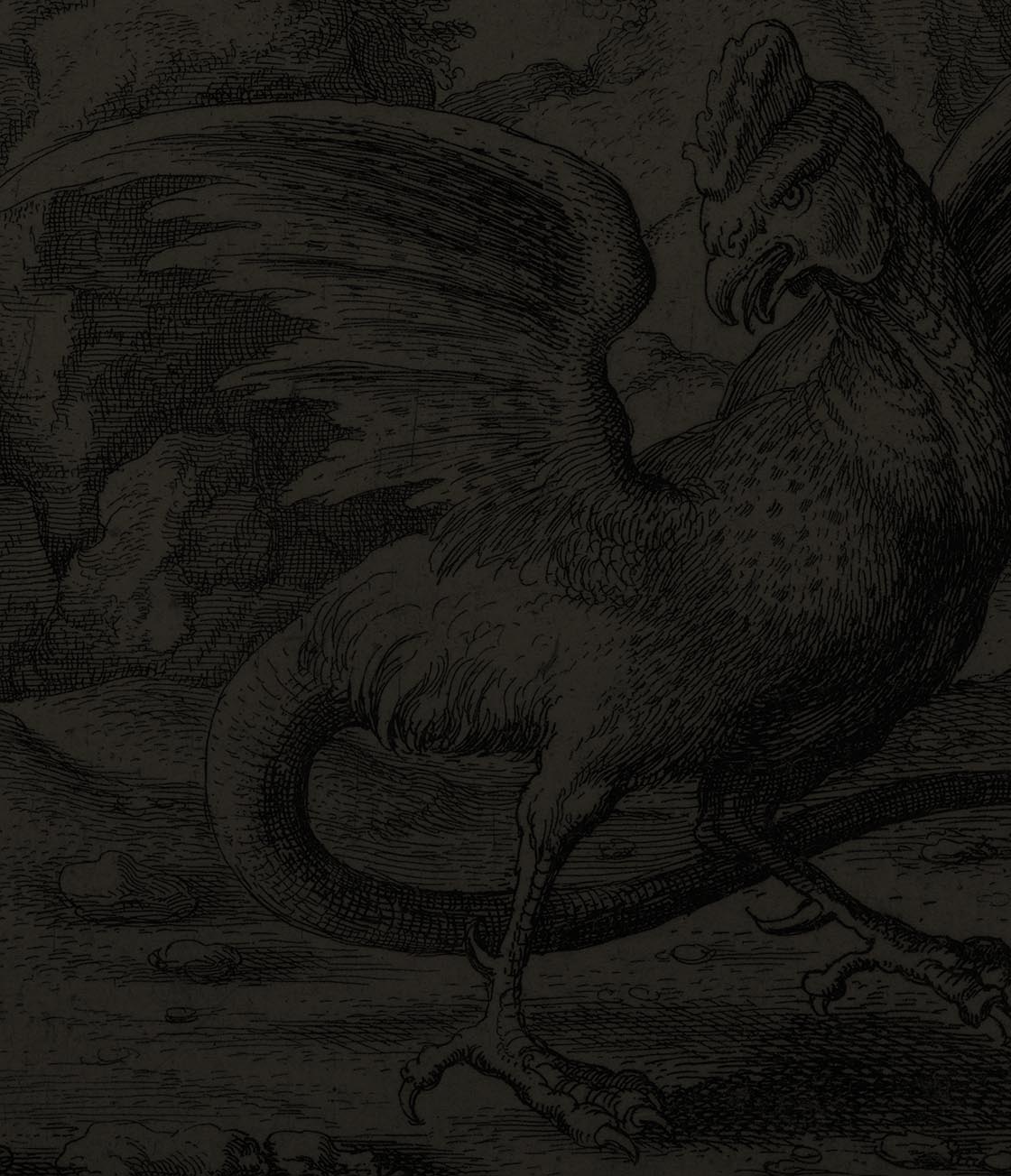
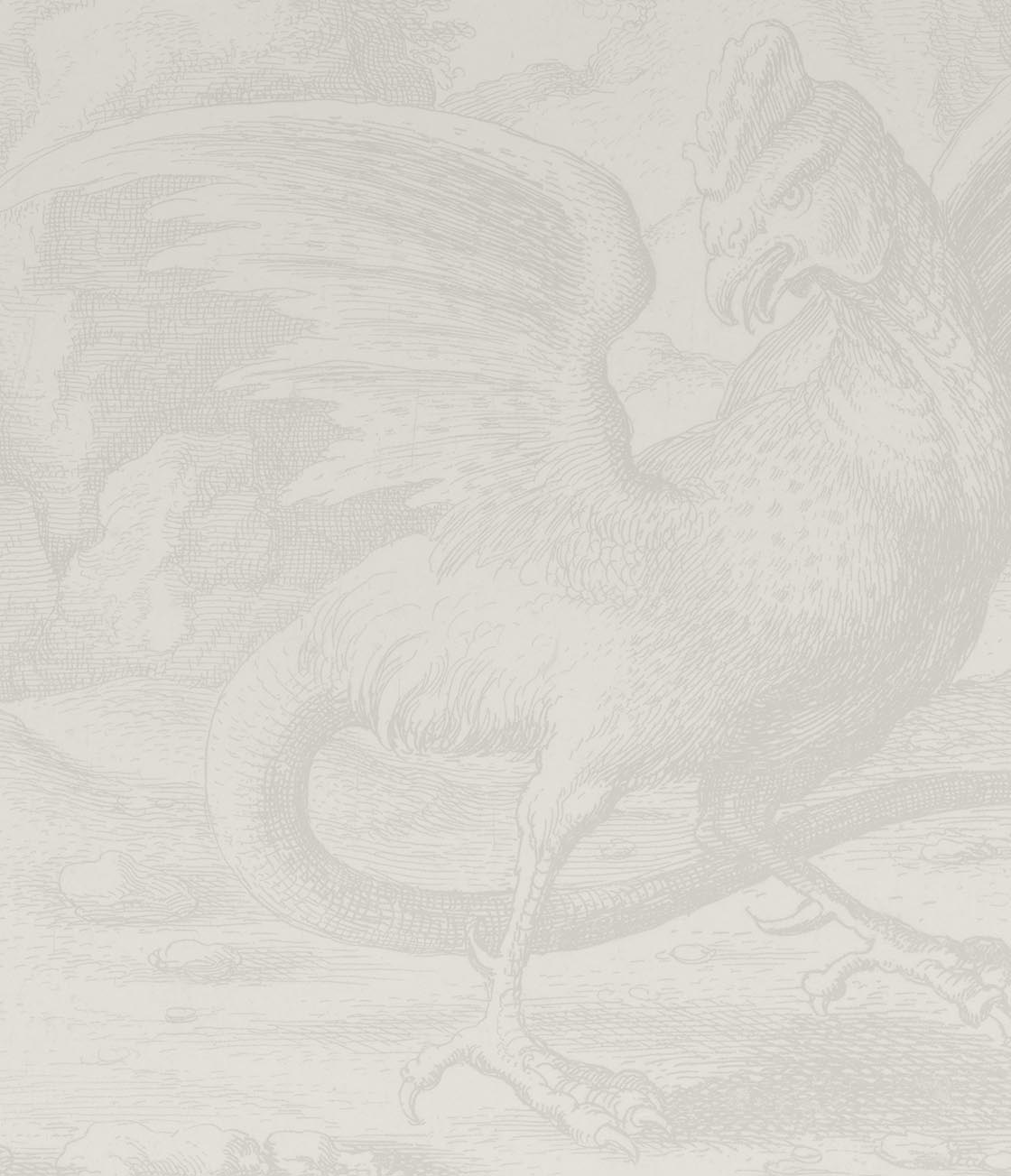
Pulter’s sixteenth emblem takes up the cockatrice, also known as the basilisk. The emblem focuses on the legendary weakness of the basilisk—it can be destroyed with a mirror that turns its poison back upon itself—in order to explore sin and the defenses humans may (or may not) have against it. Identifying the cockatrice as sin, the poem describes two different methods for defeating it: first, the active discovery of its “deceits” and, second, a reliance on the shield of faith.

Consider how this poem functions both as an emblem and also as a performance of the use of emblems. The first eighteen lines of the poem are addressed to an unnamed friend; the repetition of the second-person pronoun “you” suggests that readers should incorporate the lessons of the poem in their own lives. But in the final seven lines, the speaker intrudes into the poem and tests the applicability of the emblem to her own situation, questioning whether she will “crush” sin or rely upon the shield of faith.

Compare Editions
i
1
The cockatrice as vulgarly received1
2Is against nature by a cock conceived,
3Whose eggs a toad doth to perfection bring,
4Whence comes the basilisk, the serpent’s king.
5If this fierce animal doth first see you,
6Prepare, my friend, to bid this world adieu.
7But if you see him first, you are secure,
8If with this
crystal2
you yourself immure.
9The visual beams which issue from his eyes
10Reverberates his poison so he dies.
11So Perseus with his sister’s shining shield
12
Made proud Medusa and the Gorgons yield3
.
13Sin is this cursed killing cockatrice:
14If you discover its deceits it dies,
15But if you don’t, nought but the splendent shield
16
Of faith4
will make this hellish monster yield.
17Then with the Christian armor arm you,
18And all the powers of Hell shall never harm you.
19But O let me dispose my thoughts so well,
20That I may crush this
embryon5
in the shell.
21Yet if I do to sinful motions yield,
22Be thou to me, dear God,
a6
sun and shield.
23Then, as enslaved to sin and death I lie,
24I’ll on the
brazen serpent7
cast mine eye,
25Who conquered death and Hell on
Calvary8
.
Macron symbol indicating the end of a poem.

Amplified Edition,

edited by Lara Doddsi

Editorial Note

I have modernized spelling and punctuation in this poem with the aim of enhancing clarity and readability. The notes gloss unfamiliar words and provide cultural and literary contexts.
Macron symbol indicating the end of a poem.
  • Lara Dodds, Mississippi State University
  • The cockatrice as vulgarly received
    The cockatrice or basilisk is a mythical serpent believed to be hatched by a toad from the egg of a cock (“against nature. . .conceived”). The basilisk is extremely venomous and poisons its victims with its eyes unless the victim uses a glass or mirror to turn the poison back (“reverberates” (line 10)) upon the creature. Sir Thomas Browne reviews, and rejects, much of the lore of the basilisk in Book 3, Chapter 7 of Pseudodoxia Epidemica, or Enquiries into very many received tenets and commonly presumed truths (1646), also known as Vulgar Errors. Pulter’s poem participates in the same testing of received knowledge that is the subject of Browne’s popular work, eventually turning the cockatrice into an emblem of the relationship between sin and faith.
  • crystal
    i.e. the mirror that can be used to turn the basilisk’s poison back on itself.
  • Made proud Medusa and the Gorgons yield
    Analogously to the defeat of the basilisk, Perseus defeats the snake-headed Medusa, who turns enemies to stone with her gaze, with a polished shield provided by Athena, the goddess of wisdom
  • Of faith
    While Athena’s shield defeats Medusa, the “shield of faith” defeats Sin. See Ephesians 6:16: “Above all, taking the shield of faith, wherewith ye shall be able to quench all the fiery darts of the wicked” (AV). Pulter explores the analogies between three different types of lore: natural history, mythology, and Scripture.
  • embryon
    “The unborn, unhatched, or incompletely developed offspring of an animal” OED, embryo, n. 1b. The speaker asks for the power to “crush” the cockatrice, and hence sin, before it can be hatched.
  • a
    At this point in the manuscript there is an asterisk which points to a marginal note, “Psalms 84:11”: “For the LORD God is a sun and shield: the LORD will give grace and glory: no good thing will he withhold from them that walk uprightly.” (AV) The presence of this note suggests that Pulter wanted readers to see this verse as providing a resolution to the problem posed by the cockatrice.
  • brazen serpent
    Numbers 21: 8-9: “And the LORD said unto Moses, Make thee a fiery serpent, and set it upon a pole: and it shall come to pass, that every one that is bitten, when he looketh upon it, shall live. And Moses made a serpent of brass, and put it upon a pole, and it came to pass, that if a serpent had bitten any man, when he beheld the serpent of brass, he lived.” (AV) In John 3:14-15 the brazen serpent is identified as a type of Christ on the cross: “ And as Moses lifted up the serpent in the wilderness, even so must the Son of man be lifted up: That whosoever believeth in him should not perish, but have eternal life.” (AV) The speaker will “cast mine eye” upon this spectacle in the hope that it will release her from sin and death.
  • Calvary
    location of Christ’s death
The Pulter Project

Copyright © 2023
Wendy Wall, Leah Knight, Northwestern University, others.

Except where otherwise noted, this site is licensed
under a Creative Commons CC BY-NC-SA 4.0 License.

How to cite
About the project
Editorial conventions
Who is Hester Pulter?
Resources
Get in touch