
- No results


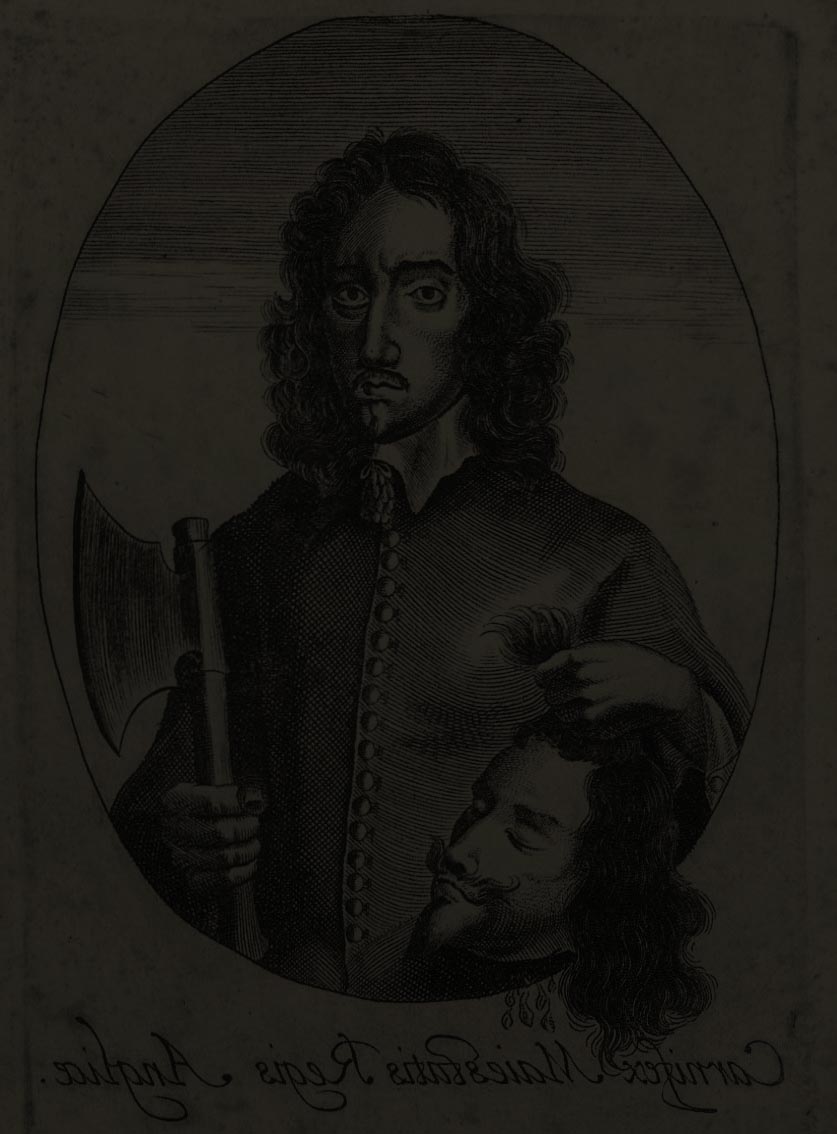
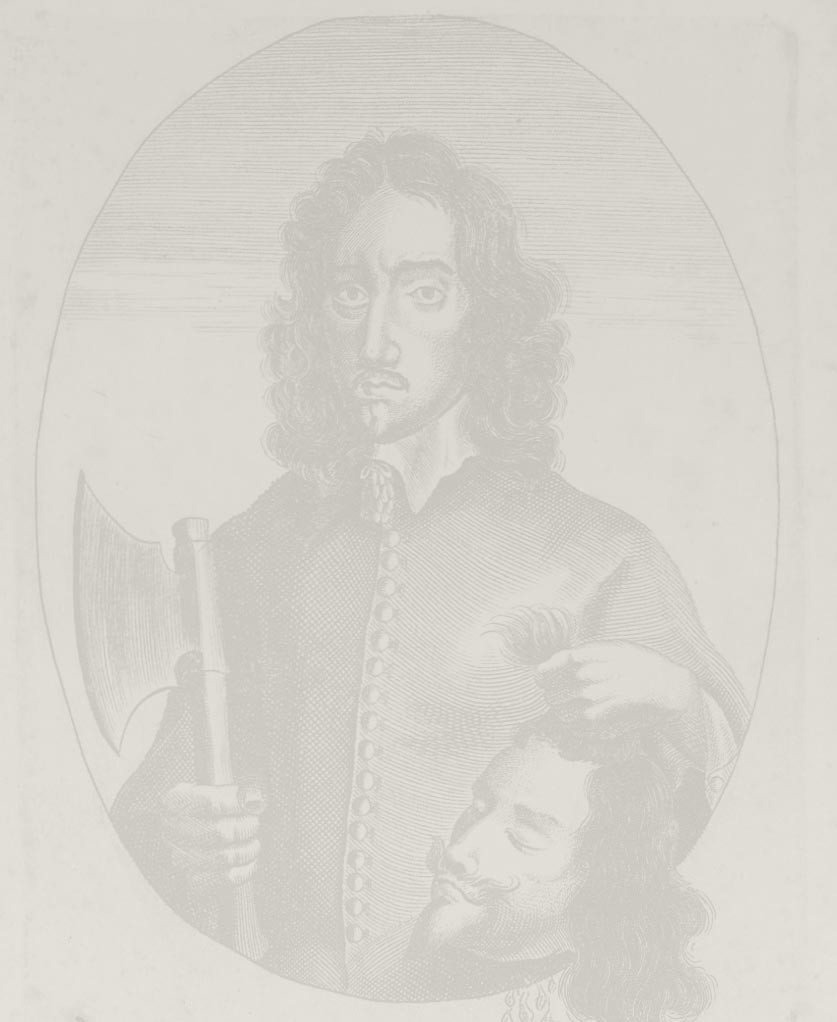
This poem is placed in the manuscript after Upon the Imprisonment of his Sacred Majesty, That Unparalleled Prince, King Charles the First13, which may have been written in early 1647 (See Ruth Connolly’s Headnote to the Amplified Edition13). The juxtaposition, whether intentional or not, calls attention to the dramatic changes in the king’s fate (see further Exploration: Pulter and Political Revolution). If Pulter was shocked by the rebels who had thrown their sovereign in prison, she now had to find words for the outrage of their putting him on trial and sentencing him to death. He was beheaded on 30 January 1649. While some earlier English monarchs had been put to death, now not only the monarch but the monarchy was destroyed, with the declaration of a republic. As the editors of the Elemental Edition put it: “The monstrous singularity of this event seems reflected in the volume’s preceding blank page, paired with another after the next poem: these two poems, in their efforts to grieve a beloved, murdered ruler, huddle together between visible, almost legible stretches of silence.” The change is reflected in the imagery of tears: from “ask no more why I’m in tears dissolv’d” (Poem 13, line 16) to “Let none presume to weep; tears are too weak…” (Poem 14, line 1). The word ‘unparall[ell]ed’ — which Pulter often used to comprehend a period of such radical changes — is now transferred from the king to his death (Let None Sigh More for Lucas or for Lisle [On the Same (2)]15, line 15). There was an outpouring of royalist rage and lament in poetry and prose, from women like Pulter and Katherine Philips writing in manuscript, to printed collections of verse rushed out in defiance of the republican government’s censorship, and above all the king’s own (ghost-written) testament, the Eikon Basilike, which compared his own fate to the crucifixion of Christ. After that extreme parallel, there was in effect nowhere for poets to go. Many of the elegies, especially a series of poems by John Quarles, reflected their authors’ grief in rambling and disjointed structures:
“On the Horrid Murder of that Incomparable Prince” reads as if Pulter has surveyed this material and decided to push in the opposite direction, towards extreme concentration, though her language remains hyperbolic. Two lines consist entirely of monosyllables. In this tightly structured poem, Pulter considers two forms of response, weeping and sighing, and in each half of the poem rejects them as too commonplace, with parallel final couplets offering an alternative; at the half-way point we are told to weep out our eyes, but the sighing “ay me” is immediately countered by a ban on sighing, and the second couplet-refrain adds that we should breathe out our souls. The “prince” of the earlier refrain becomes “king.” Comparable patterning is found within lines — “such a prince/king in such a manner,” “We do too little, if we do no more.” The concluding hyperboles gain new force from the constrained frame from which they emerge. Having forbidden sighs at line 7, in the final line Pulter calls on us to “suspire our souls.” The Latin-derived verb, which can mean both “sigh” and “breathe,” offers a reduplicated pattern of sibilants that reinforces the extreme sense: sighing so hard that breath leaves the body altogether. The image thus takes to an extreme a theme of the whole manuscript, whose title-page has the inscription “Poems Breathed forth By The Nobel Haddassas.” The line is then completed: “weep out our eyes.” Many Renaissance and baroque poems juxtaposed tears and eyes: Andrew Marvell would condense the tradition in “Eyes and Tears”:
But though Marvell rings the changes of eye imagery, he does not go to the extreme of having the weeper expel her own eyes. Some royalist elegies do link tears with the writing or publishing of elegies as a gesture of political defiance, and Pulter’s hyperbole takes on these connotations of resistance. Compare:
Strikingly, Pulter here opposes her own verse to that of village girls, plebeians, the vulgar. She often attacks the revolutionaries as plebeian monsters, but here, in her concern to cast her own poetry as rejecting stock responses, she seems to mark herself off from popular royalism. John Milton, attacking the people’s devotion to tyrants, complained that support for tyrannicide had to be “swett and labour’d out amidst the throng and noises of vulgar and irrationall men,” who “plead for him, pity him, extoll him, protest against those that talk of bringing him to the tryal of Justice, which is the Sword of God, superior to all mortal things, in whose hand soever by apparent signes his testified will is to put it” (The Tenure of Kings and Magistrates, London, 1649, p. 3). Pulter differentiates herself from vulgar royalism even as she tries to surpass it. She also rejects the uncontrolled emotionalism often associated with women, even though her conclusion also avoids a conventionally masculine stoicism.