• No results
ElementalAmplified
Manuscript
Notes
#
The Pulter Project
pulterproject.northwestern.edu
Poem 49

[Untitled]

Edited by Sarah C. E. Ross

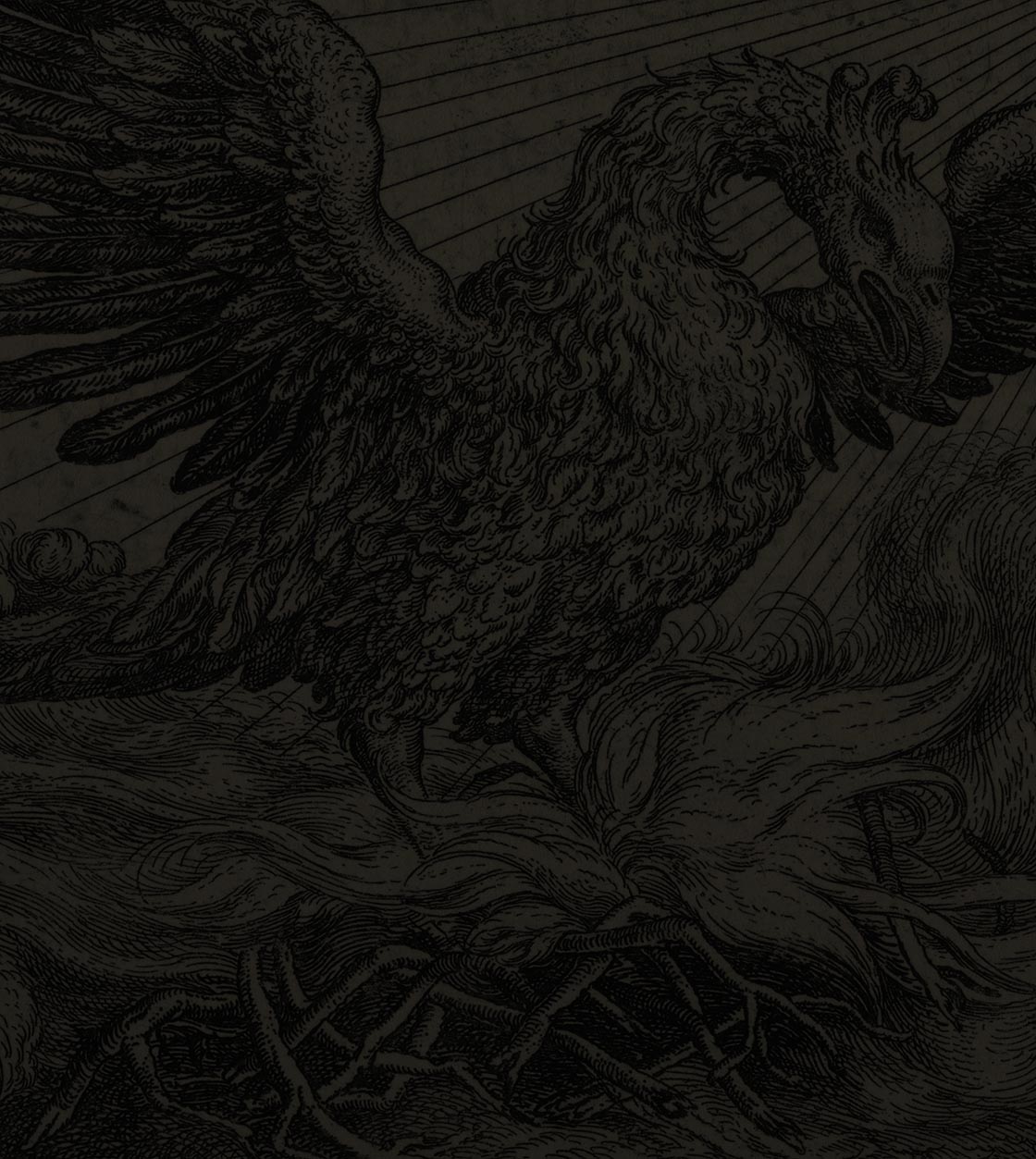
“My Heart Why Dost Thou Throb So in My Breast?” is one of Pulter’s brief devotional lyrics, in this case chastising her own heart and soul for their “sighs and sobs”, and comparing them to various creatures—the lark, the lamb, and the phoenix—who offer themselves up willingly for death. The “ail[ments]” and “unrest” of line 2 may be the generic woes that typically afflict the devotional speaker, who endures the earthly life, and who both longs for union with the divine and is unwilling to give up the human body. But the poem may also reflect more specifically on aging, as “thy sorrows with thy years increase” (line 8). The speaker “wouldst have the course of nature turn”, rather than offering herself up to the more sudden sacrifices of the lark, the lamb, and the phoenix. The lark, the lamb, and the phoenix all have associations with the praise of God or with Christ himself, willingly sacrificing themselves to death. Pulter’s use of these images owes much to the emblematic mode of thinking that is evident in the emblem poem series later in the manuscript.

Attempting to persuade the soul of the miraculous glory that would follow death, the concluding five lines rely on a cluster of images and words that recurs in Pulter’s devotional poetry: obliviation, calcination, and refinement. Her emphasis here is on the necessary calcination of the impure flesh, in death, and its “infinite” refinement, to achieve glory beyond. These lines are almost certainly indebted to George Herbert, who evokes a similar devotional concept in the opening stanza of “Easter”. Here, he describes the salvation of the believer made possible through Christ’s sacrifice: “as his death calcined thee to dust, / His life may make thee gold, and much more just” (lines 5-6). Herbert’s devotional lyrics are a clear influence on Pulter’s but in this poem, as is usual in the comparison between them, Pulter’s emphasis is more material and Herbert’s is more metaphorical and explicitly doctrinal.

Compare Editions
i
1My heart, why dost thou throb so in my breast?
2What dost thou
ail1
? What causeth thy unrest?
3Dost thou not know that as the flames ascend,
4So man in sorrow doth begin and end?
5The
spritely2
lark3
, how cheerfully she sings
6Until the hawk her little neck off wrings,
7Yet thou to sigh and sob dost never cease
8Because thy sorrows with thy years increase.
9The milk-white
lamb that on the altar lies4
10Yields himself up a quiet sacrifice,
11But thou wouldst have the course of nature turn
12Rather than in affliction’s furnace burn.
13The
phoenix5
doth assume her funeral pyre,
14And in those
flagrant6
odours doth expire,
15But thou, my soul, unwilling art to die
16And in thy grave
obliviated7
lie,
17Although it would thy
drossy part calcine8
18Away, and infinitely refine
19Thy flesh, that it more gloriously may shine.

Macron symbol indicating the end of a poem.

Amplified Edition,

edited by Sarah C. E. Rossi

Editorial Note

My priority in editing these poems has been to modernise, and to achieve interpretative and visual clarity, in order to make the poems as accessible as possible to as wide a modern audience as is possible. Spelling is modernised, as is punctuation. Modernising the latter, in particular, often involves a significant act of editorial interpretation, but in my view this is one of the most productive areas of editorial intervention, particularly for a manuscript text such as Pulter’s where the punctuation is erratic compared to modern usage (and, indeed, compared to early modern printed texts).1

  • 1. See Alice Eardley, “‘I haue not time to point yr booke … which I desire you yourselfe to doe’: Editing the Form of Early Modern Manuscript Verse”, in The Work of Form: Poetics and Materiality in Early Modern Culture, ed. Ben Burton and Elizabeth Scott-Baumann (Oxford: Oxford University Press, 2014), pp. 162-178.
Macron symbol indicating the end of a poem.
  • Sarah C. E. Ross, Victoria University of Wellington
  • ail
    “aild” in the manuscript
  • spritely
    lively, sportive.
  • lark
    in Latin, “aluda”, and so associated with praise (“laud”) of God (see Helen Wilcox (ed.), The English Poems of George Herbert (Cambridge: Cambridge University Press, 2007), p. 148). In a related aspect of its symbolism, the lark was known for singing as it rose in flight (see Herbert, “Easter Wings”, line 18).
  • lamb that on the altar lies
    The lamb has implications of Christ, as the Lamb of God, offering himself up as a sacrifice for humankind.
  • phoenix
    a mythical bird which burns itself to ashes on a funeral pyre ignited by the sun and fanned by its own wings (only to rise from its ashes to live again). Unsurprisingly, the phoenix was used by early Christian writers as a symbol of Christ’s resurrection.
  • flagrant
    blazing, burning. The phoenix was thought to build its funeral pyre from branches of cinnamon and aromatic spices, hence “flagrant odours”. See Philemon Holland’s translation of Pliny’s Natural History, p. 271.
  • obliviated
    forgotten, committed to oblivion
  • drossy part calcine
    “thy drossy part” is the “impure” part of one’s being; and “calcine” means to burn to ashes, consume; and also to purify or refine by consuming the grosser part (OED v. 2a and 1c). For a direct comparison to these final lines, see George Herbert, “Easter”: “as his death calcined thee to dust, / His life may make thee gold, and much more just” (lines 5-6). See also Pulter’s Dear God, from Thy High Throne Look Down63, which uses a similar image: “Though grief calcine my flesh to dust” (line 4).
    The manuscript reads “dropsie” in line 17, with the "p" obscured by an ink blot. I read this as a deliberate ink blot correcting an error, although “dropsie” would provide an alternative set of possible meanings: "dropsy” can mean “charged with water” (OED B.b), and “calcine” can mean “dessicate” (OED 1b). The Herbert allusion makes “drossy” a far preferable reading here, but the alternative set of meanings may contribute to the scribe’s apparent uncertainty.
The Pulter Project

Copyright © 2023
Wendy Wall, Leah Knight, Northwestern University, others.

Except where otherwise noted, this site is licensed
under a Creative Commons CC BY-NC-SA 4.0 License.

How to cite
About the project
Editorial conventions
Who is Hester Pulter?
Resources
Get in touch