• No results
ElementalAmplified
Manuscript
Notes
#
The Pulter Project
pulterproject.northwestern.edu
Poem 48

[Untitled]

Edited by Elizabeth Scott-Baumann

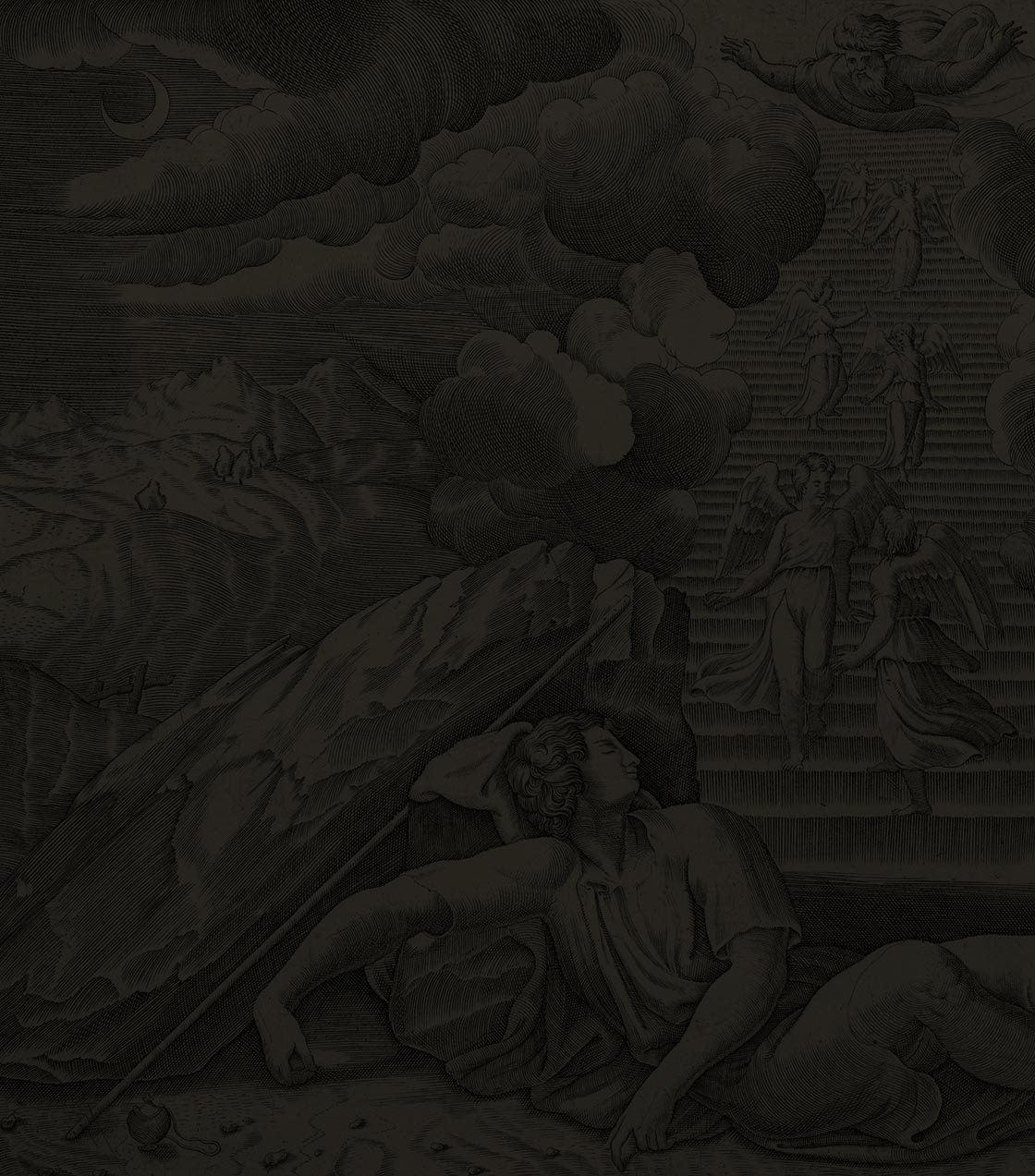
This poem explores one of Pulter’s key ideas, that life is circular (see The Circle [1]17, The Circle [2]21, The Circle [3]25, The Circle [4]36; The Revolution16). Renewed in death by God, we undergo a “revolution”, a transformation of body and soul. This use of “revolution” is fascinating in a period which saw the word appropriated politically by radicals, parliamentarians, and royalists. On the interconnected ideas, and rhymes, of revolution and dissolution, see also The Eclipse1, Universal Dissolution6, “The Revolution” (Poem 16), My Soul, Why Art Thou Full of Trouble40 and Why Art Thou Sad at the Approach of Night47. Pulter’s “stairs of revolution” is an unusual phrase and image. She imagines progress towards the Day of Judgment, when souls and bodies are reunited and can join God, as a kind of spiral staircase. Describing the stairs as “of revolution” suggests also an ongoing, or cyclical, transformation. The spiral staircase was already loaded with meanings related both to poetic form and faith. George Herbert used it to represent excessive ornamentation, “Is there in truth no beauty? / Is all good structure in a winding stair?” (“Jordan [1]”). Pulter’s usage is altogether more positive, though, imagining the winding stair as the path to resurrection and union with God. See also Pulter’s emblem poems where she uses the image of “steps” to represent both following in Christ’s footsteps and ascent to heaven (Mighty Nimrod (Emblem 1)67; Come, My Dear Children (Emblem 2)68).

While the poem is in couplets, its fourteen lines allude to sonnet form, and therefore the broader tradition of Petrarchan love poetry. Moreover, the promise of the final lines, to “magnify” the addressee’s name “Beyond the reach of all eternity”, evokes the promise (and boast) of immortality common to earlier sonnet sequences by Spenser and Shakespeare. In Sonnet 55, Shakespeare’s speaker had claimed “So, till the Judgement that yourself arise, / You live in this, and dwell in lovers’ eyes.” The beloved lives in “this”, the poem itself. While Shakespeare adopted the idea of the Day of Judgment for his secular love poem, Pulter places this theological concept at the heart of her poem. It is not the self-aggrandising poet who can “magnify” God’s name, but the resurrected believer: immortal, strong and glorious (1 Corinthians 15: 42-44).

Compare Editions
i
1
Immense Fount of truth1
, life, love, joy, glory,
2
Irradiate2
my soul in her
dark story3
;
3Let not the
erroneous4
shades of death and night
4Obscure Thy love and glory from my sight.
5Though this my
corpse5
(until my
dissolution6
,
6And then
but by7
the
stairs of revolution8
)
7Cannot attain Thy radiant throne above,
8Yet be Thou pleased to
infuse9
Thy love
9And light unto my sad deserted soul,
10That in Thy endless mercy I may
roll10
,
11And when death closeth up my mortal eye
12I then may live and only sin may die.
13And then Thy blessèd name I’ll magnify
14Beyond the reach of all eternity.
Macron symbol indicating the end of a poem.

Amplified Edition,

edited by Elizabeth Scott-Baumanni

Editorial Note

With an undergraduate and graduate student audience in mind, this poem has been modernised in spelling and punctuation. Where modernisation would affect form, priority has been given to the integrity of the poem’s formal features (so, for instance, verb endings -est and -eth have been retained unmodernised; where the meter requires it, the verb ending -ed is accented, e.g., “Then shall thy blessèd influence”). Nouns have been capitalized only when there is clear personification. The notes provide information essential to understanding the poem, while the Headnote aims to stimulate readers’ own interpretations through suggesting literary or historical contexts, possible influences, comparable poems (by Pulter and by her predecessors and peers) and relevant critical arguments.
Macron symbol indicating the end of a poem.
  • Elizabeth Scott-Baumann, King’s College London
  • Immense Fount of truth
    The syntax of Pulter’s first line nicely emphasizes its meaning: the phrase “Immense Fount of truth” initially seems to be a self-contained epithet for God, yet spills out (like God’s immensity) into a list of what he bestows: truth, life, love, joy, glory.
  • Irradiate
    to shine upon; to illuminate with spiritual light
  • dark story
    Pulter refers to her “story” in several poems, and here the adjective “dark” may relate to 1 Corinthians 13.12: “For now we see through a glass, darkly; but then face to face: now I know in part; but then shall I know even as also I am known.”
  • erroneous
    straying from the proper course; full of error
  • corpse
    body (not necessarily dead, though of course Pulter suggests that here)
  • dissolution
    dissolving, here used metaphorically to mean death. See also Headnote.
  • but by
    only by
  • stairs of revolution
    an unusual image of upward transformation. See also Headnote.
  • infuse
    pour in, instil
  • roll
    be enveloped; allow herself to be moved by, perhaps in the sense of a boat’s motion in the sea; rotate; to continue or go on; theologically, to hand over oneself, or a burden, to God.
The Pulter Project

Copyright © 2023
Wendy Wall, Leah Knight, Northwestern University, others.

Except where otherwise noted, this site is licensed
under a Creative Commons CC BY-NC-SA 4.0 License.

How to cite
About the project
Editorial conventions
Who is Hester Pulter?
Resources
Get in touch