The Pulter Project
Poet in the Making Comparison ToolComparison Tool
 Sources
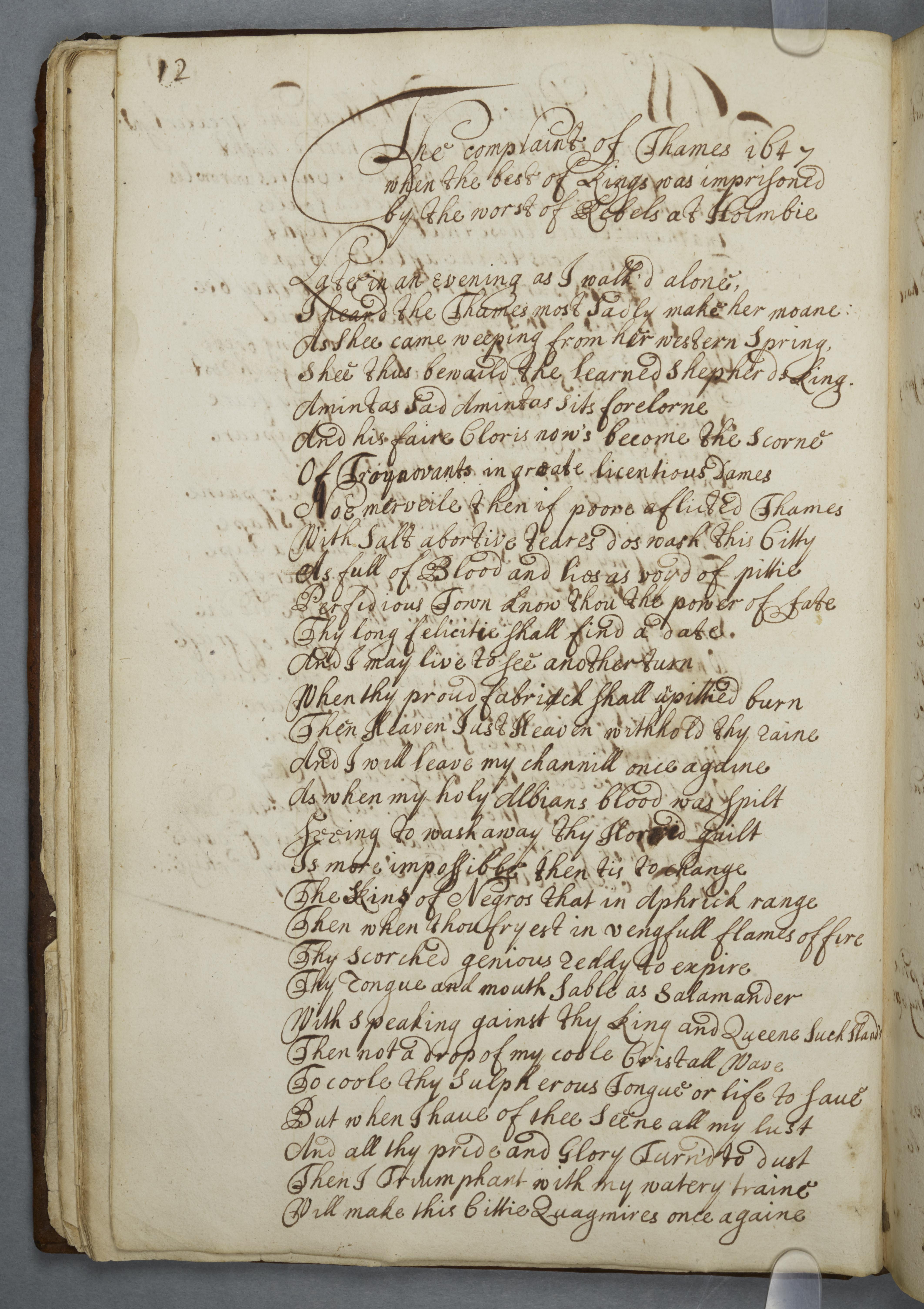
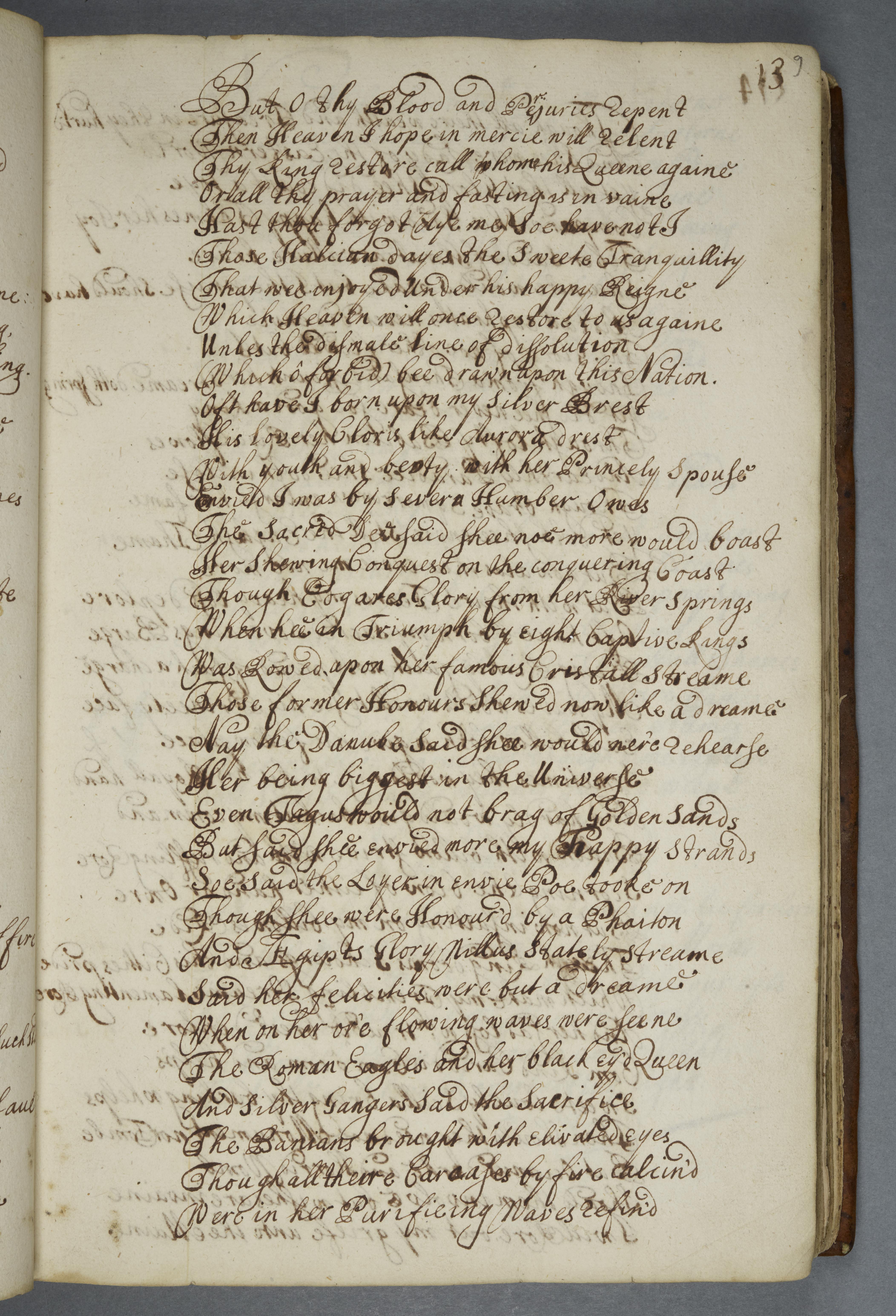
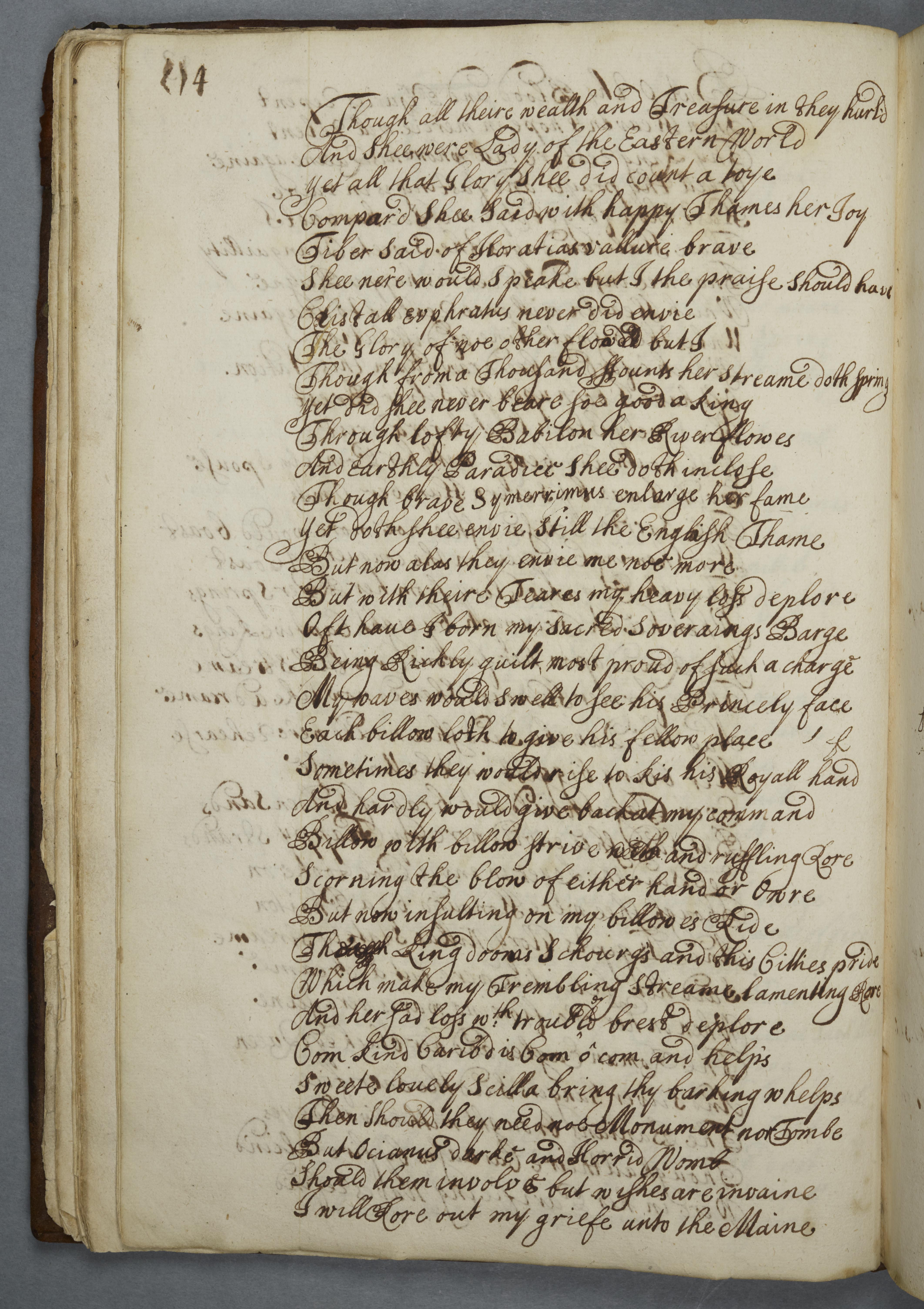
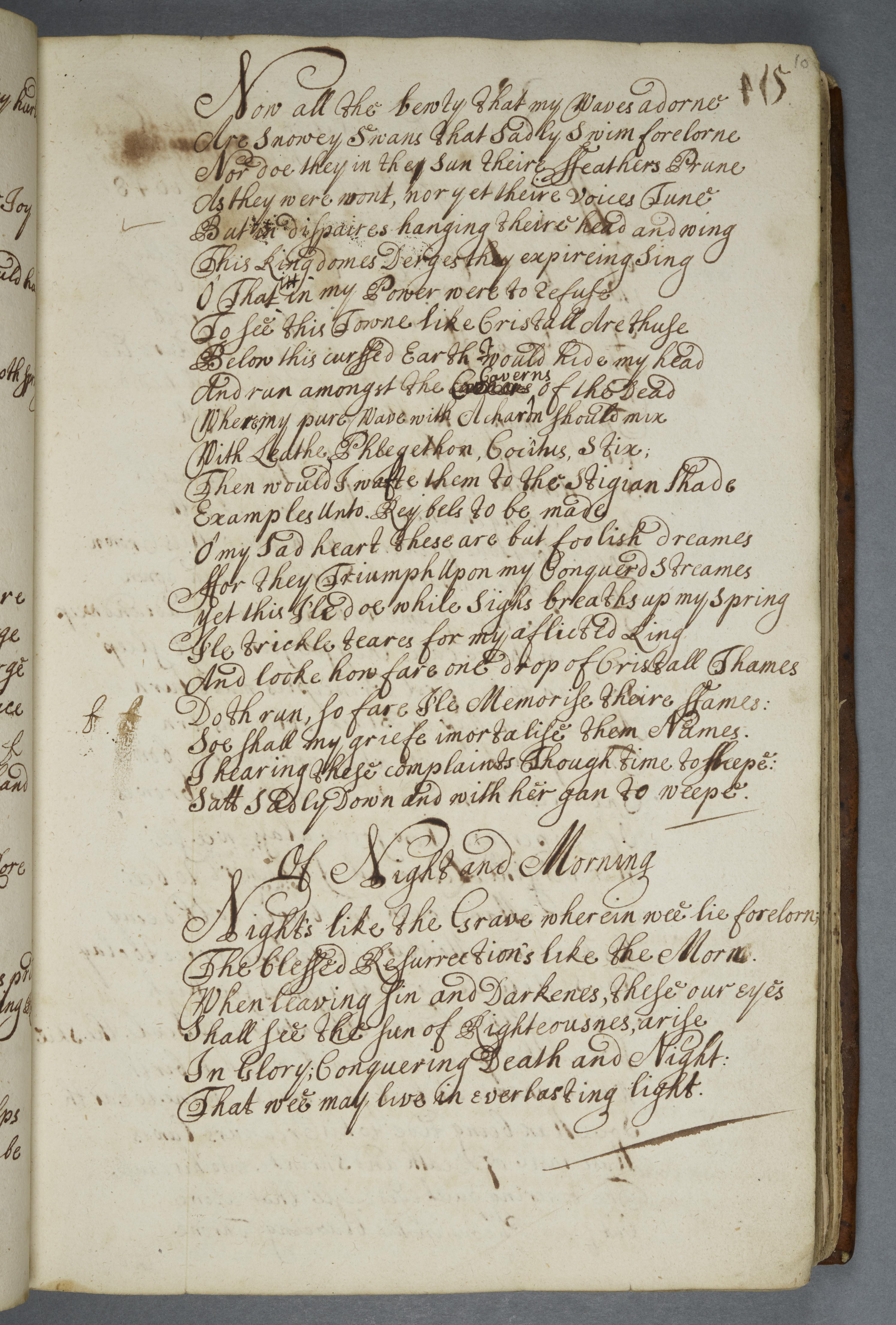
 Facsimile of manuscript: Photographs provided by University of Leeds, Brotherton Collection
Poem IndexNotes: TranscriptionTranscription
Pulter personifies the Thames as a feminized figure, thus drawing on the tradition of complaint poetry such as Samuel Daniel’s “The Complaint of Rosamund” and Spenser’s “The Ruines of Time.” In Spenser’s poem, the speaker stands by the river Thames and overhears the complaint of a woman who speaks as the spirit of Verulamium, an ancient Roman city. Some well known poems, such as Michael Drayton’s Poly-Olbion, identified the Thames as masculine. In John Denham’s popular “Cooper’s Hill” (1642), likewise, the Thames is personified as a “son” of the Ocean:
Following the invocations of the mythical Scylla and Charybdis, the Thames turns to a more naturalistic description of swans swimming on the river; however, they sing their own deaths and the death of the kingdom. With this image, Pulter refers to the belief that swans are silent until just before their deaths, when they sing a final song. Thomas Browne examines the origin of and evidence for this belief in Book 3, Chapter 27 of Pseudodoxia Epidemica (Sir Thomas Browne, Selected Writings. Ed. Geoffrey Keynes (University of Chicago Press, 1968), pp. 289-90). Compare Shakespeare’s Othello, where Emilia’s final speech begins:
Notes: Elemental EditionElemental EditionPulter personifies the Thames as a feminized figure, thus drawing on the tradition of complaint poetry such as Samuel Daniel’s “The Complaint of Rosamund” and Spenser’s “The Ruines of Time.” In Spenser’s poem, the speaker stands by the river Thames and overhears the complaint of a woman who speaks as the spirit of Verulamium, an ancient Roman city. Some well known poems, such as Michael Drayton’s Poly-Olbion, identified the Thames as masculine. In John Denham’s popular “Cooper’s Hill” (1642), likewise, the Thames is personified as a “son” of the Ocean:
Following the invocations of the mythical Scylla and Charybdis, the Thames turns to a more naturalistic description of swans swimming on the river; however, they sing their own deaths and the death of the kingdom. With this image, Pulter refers to the belief that swans are silent until just before their deaths, when they sing a final song. Thomas Browne examines the origin of and evidence for this belief in Book 3, Chapter 27 of Pseudodoxia Epidemica (Sir Thomas Browne, Selected Writings. Ed. Geoffrey Keynes (University of Chicago Press, 1968), pp. 289-90). Compare Shakespeare’s Othello, where Emilia’s final speech begins:
Notes: Amplified EditionPulter personifies the Thames as a feminized figure, thus drawing on the tradition of complaint poetry such as Samuel Daniel’s “The Complaint of Rosamund” and Spenser’s “The Ruines of Time.” In Spenser’s poem, the speaker stands by the river Thames and overhears the complaint of a woman who speaks as the spirit of Verulamium, an ancient Roman city. Some well known poems, such as Michael Drayton’s Poly-Olbion, identified the Thames as masculine. In John Denham’s popular “Cooper’s Hill” (1642), likewise, the Thames is personified as a “son” of the Ocean:
Following the invocations of the mythical Scylla and Charybdis, the Thames turns to a more naturalistic description of swans swimming on the river; however, they sing their own deaths and the death of the kingdom. With this image, Pulter refers to the belief that swans are silent until just before their deaths, when they sing a final song. Thomas Browne examines the origin of and evidence for this belief in Book 3, Chapter 27 of Pseudodoxia Epidemica (Sir Thomas Browne, Selected Writings. Ed. Geoffrey Keynes (University of Chicago Press, 1968), pp. 289-90). Compare Shakespeare’s Othello, where Emilia’s final speech begins:
Amplified EditionPulter personifies the Thames as a feminized figure, thus drawing on the tradition of complaint poetry such as Samuel Daniel’s “The Complaint of Rosamund” and Spenser’s “The Ruines of Time.” In Spenser’s poem, the speaker stands by the river Thames and overhears the complaint of a woman who speaks as the spirit of Verulamium, an ancient Roman city. Some well known poems, such as Michael Drayton’s Poly-Olbion, identified the Thames as masculine. In John Denham’s popular “Cooper’s Hill” (1642), likewise, the Thames is personified as a “son” of the Ocean:
Following the invocations of the mythical Scylla and Charybdis, the Thames turns to a more naturalistic description of swans swimming on the river; however, they sing their own deaths and the death of the kingdom. With this image, Pulter refers to the belief that swans are silent until just before their deaths, when they sing a final song. Thomas Browne examines the origin of and evidence for this belief in Book 3, Chapter 27 of Pseudodoxia Epidemica (Sir Thomas Browne, Selected Writings. Ed. Geoffrey Keynes (University of Chicago Press, 1968), pp. 289-90). Compare Shakespeare’s Othello, where Emilia’s final speech begins:
All Notes Pulter personifies the Thames as a feminized figure, thus drawing on the tradition of complaint poetry such as Samuel Daniel’s “The Complaint of Rosamund” and Spenser’s “The Ruines of Time.” In Spenser’s poem, the speaker stands by the river Thames and overhears the complaint of a woman who speaks as the spirit of Verulamium, an ancient Roman city. Some well known poems, such as Michael Drayton’s Poly-Olbion, identified the Thames as masculine. In John Denham’s popular “Cooper’s Hill” (1642), likewise, the Thames is personified as a “son” of the Ocean:
Following the invocations of the mythical Scylla and Charybdis, the Thames turns to a more naturalistic description of swans swimming on the river; however, they sing their own deaths and the death of the kingdom. With this image, Pulter refers to the belief that swans are silent until just before their deaths, when they sing a final song. Thomas Browne examines the origin of and evidence for this belief in Book 3, Chapter 27 of Pseudodoxia Epidemica (Sir Thomas Browne, Selected Writings. Ed. Geoffrey Keynes (University of Chicago Press, 1968), pp. 289-90). Compare Shakespeare’s Othello, where Emilia’s final speech begins: