Pigeon Houses of Cards
Seventeenth-century dovecotes resembled houses of cards.
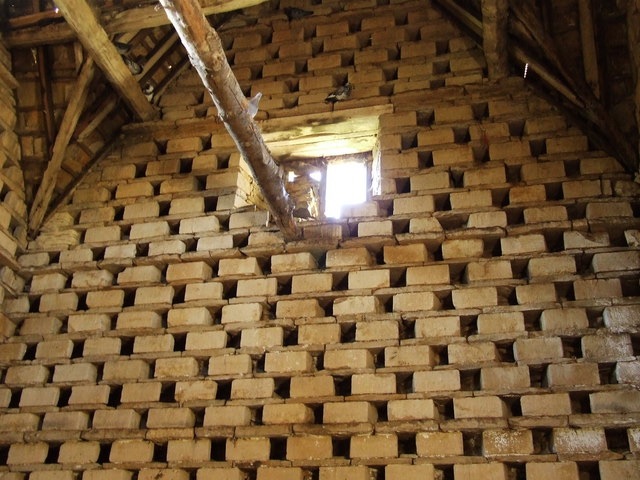
Norman Hyett, interior of a seventeenth-century dovecote, CC BY-SA 2.0.
"The consideration of the fickleness of life, and all earthly commodities"
The Remedy of Discontentment
Do we then, upon sad consideration, see and feel the manifest transitoriness of life, riches, honor, beauty, strength, pleasure, and whatever else can be dear and precious to us in this world, and can we dote upon them so, as to be too much dejected with our parting from them? Our savior bids us consider the lilies of the field. And he that made both tells us that Solomon in all his glory was not arrayed like one of these. Surely, full well are they worth our considering. But if those beauties could be as permanent as they are glorious, how would they carry away our hearts with them? Now, their fading condition justly abates of their value. Would we not smile at the weakness of that man that should weep and howl for the falling of this tulip or that rose, abandoning all comfort for the loss of that which he knows must flourish but his month? It is for children to cry for the falling of their house of cards, or the miscarriage of that painted gewgaw which the next shower would have defaced. Wise Christians know how to apprize good things according to their continuance, and can therefore set their hearts only upon the invisible comforts of a better life, as knowing that the things which are not seen are eternal.