Emblems of Phaeton and Icarus
This poem was inspired by the genre of the emblem. The emblem used images and adages to teach readers to read allegorically by finding the abstract concept (usually a virtue or vice) personified in the poem, and analogically, in its encouragement to apply the moral to their own situation. The poem alludes to two figures who were popularly used to illustrate recklessness, Phaeton and Icarus. Phaeton is ‘that boy’ (l. 8) who ‘almost set heav’n’s axle-tree on fire’ (l. 8) and Icarus is the ‘Cretan youth who flew so high’ (l.9), that the sun melted the wax holding his artificial wings together and he plunged to his death. Pulter is swift to draw analogies between these mythological figures and Essex’s own biography. In doing so she follows an established Renaissance practice of reading mythological figures allegorically for the purposes of teaching virtuous and moral behaviour.
Bellerophon, the other figure mentioned in the poem (line 5) typically appears in the emblem book tradition as the heroic figure who kills the chimera and the episode was usually interpreted as an allegory of the defeat of unruly passions by reason, inspired by the learning represented by Pegasus, the winged horse of the Muses that he rides. Pulter instead opts for a distinctive account of Bellerophon's death that describes him as killed by Zeus for his presumption in aspiring to reach the heavens (see Headnote: Sources). The emblem book tradition shows that her other two examples, Phaeton and Icarus, were similarly interpreted as warnings to the over-ambitious not to aspire to knowledge or power to which they were not entitled.
The story of Phaeton was retold in numerous Greek and Latin sources. The son of the Greek sungod Helios and the nymph Clemene, Phaeton’s arrogance led him to ask his father to let him drive the chariot of the sun for one day. Helios yields reluctantly and disaster ensues as Phaeton provies too weak to guide the chariot, and the horses bolt, causing the sun to leave its orbit, set part of the earth on fire and threaten heaven. Order is restored only when Zeus strikes Phaeton with a lightning bolt. Pulter was familiar with the account in Ovid’s Metamorphoses, probably from George Sandys’ well known translation, which emphasised Phaeton’s pride in his parentage and his need to prove himself his father’s son. Pulter exploits this to draw an ironic parallel with Essex and his father, the second Earl, who was beheaded on the orders of Queen Elizabeth for rebelling against her.
In European emblem books, Phaeton was a popular example to illustrate recklessness. One version, in a widely circulating, much translated and influential volume of emblems by the Italian writer Andrea Alciato, draws an explicit connection between Phaeton and the recklessness of over-ambitious kings who bring disaster on the world. Essex never made any claim towards the crown but a comparison to Phaeton connects him to the vices of excessive ambition, pride, and to the indulgence of destructive impulses.
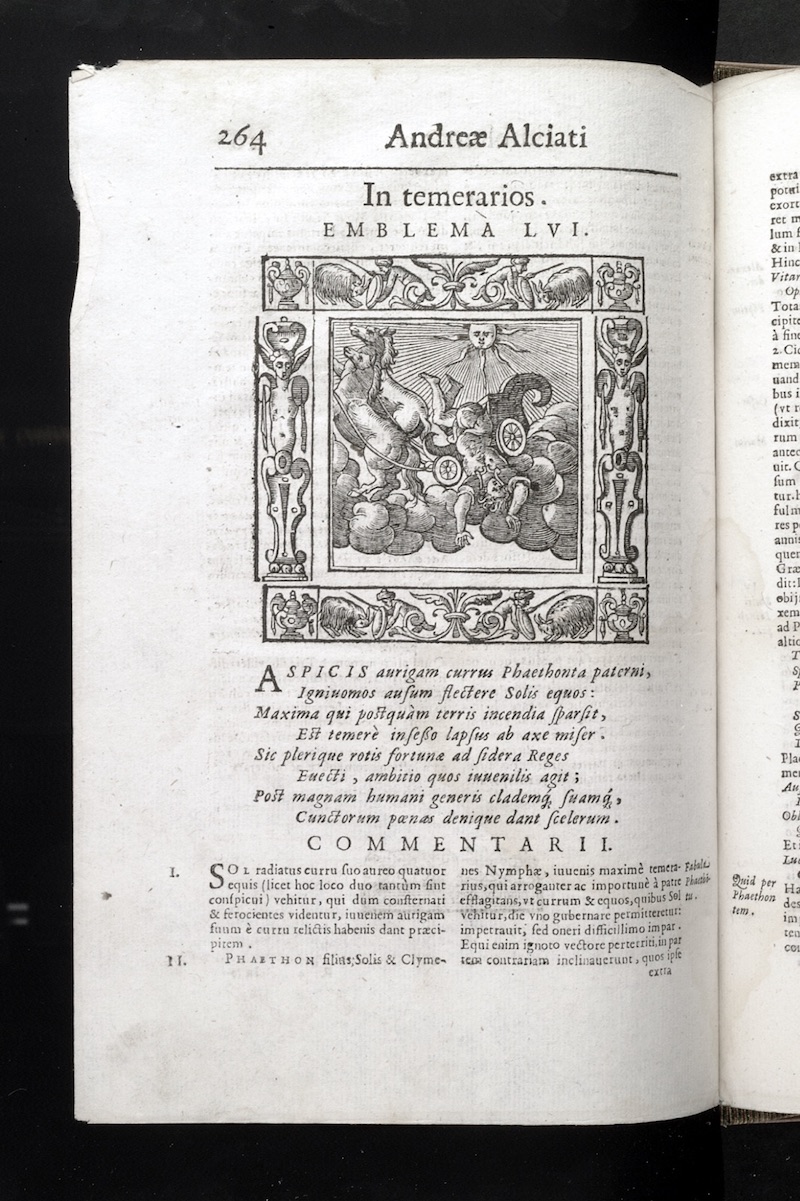
© Image courtesy of University of Glasgow Archives & Special Collections: SM 1226.
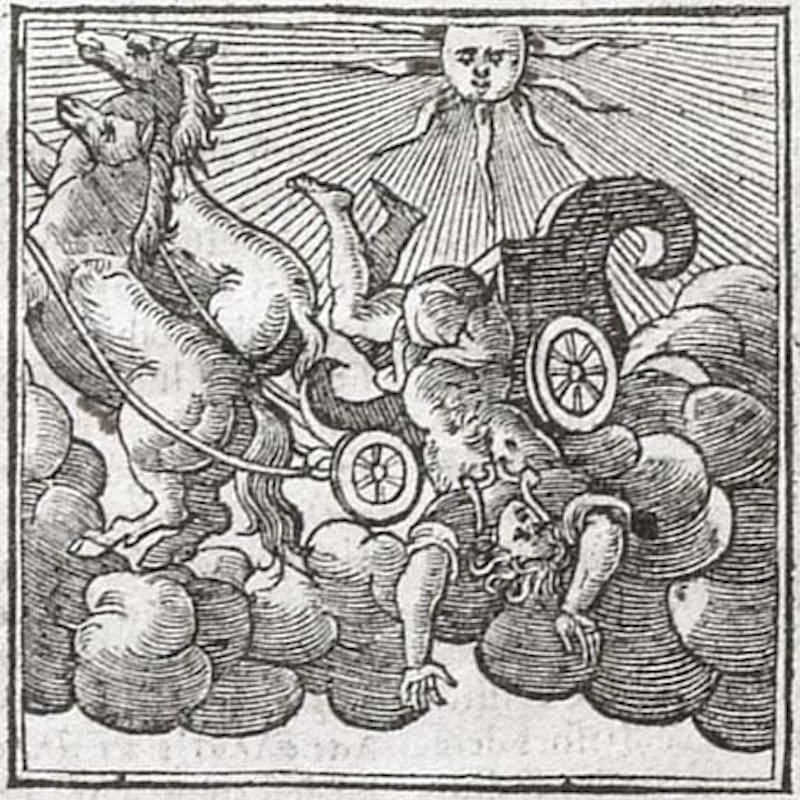
© Image courtesy of University of Glasgow Archives & Special Collections: SM 1226.
This image, taken from an edition of Alciato’s Emblems made at Padua in 1621 is accompanied by a Latin text that in translation reads:
You see here Phaethon, driving his father’s chariot, and daring to guide the fire-breathing steeds of the Sun. After spreading great conflagrations over the earth, the wretched boy fell from the car he had so rashly mounted. - Even so, the majority of kings are borne up to heaven on the wheels of Fortune, driven by youth’s ambition. After they have brought great disaster on the human race and themselves, they finally pay the penalty for all their crimes.
In the same edition there is also an emblem of Icarus. Another story retold in multiple Greek and Latin sources, Icarus was the son of Daedalus, an inventor and architect, who was held prisoner on the island of Crete by its king, Minos. Daedalus fashioned artificial wings from feathers, thread and wax so he and his son might escape. In the version composed by Ovid in Metamorphoses, Daedalus tells his son before he takes flight: ‘Be sure that in the middle course thou run. / Dank seas will clog the wings that lowly flye: / The Sun will burne them if thou for'st too high.’ (trans. Sandys, 1628, sig. K8r-v). But Icarus grew overly confident as he flew:
- And rauisht with desire of heauen, aloft
- Ascends. The odor-yeelding wax more soft
- By the swift Suns vicinitie now grew:
- Which late his feathers did together glew.
- That thaw'd; he shakes his naked armes, that bare,
- As then no saile, nor could containe the ayre.
- When crying, ‘Helpe, ô father!’, his exclaime
- Blew Seas supprest which tooke from him their name.
The account is of a young man handed the means of his destruction by his father, but whose own ‘desire of heauen’ it was that caused him to reach too high and feel the sun’s rays melt his wings. The figurative meaning of this episode as it applies to Essex relies initially on the connection between monarchs and the sun that Pulter also employs in other poems such as On that Unparalleled Prince Charles the First, His Horrid Murder8.
Alciato’s emblem of Icarus uses him as a warning against astrologers. ‘Astrological prediction,’ the historian Keith Thomas notes, ‘had long been associated with conspiracy and rebellion’ (Decline of Magic, p. 407). Publications by astrologers purporting to predict the future from the stars proliferated in the civil wars and the best-known astrologist of the day, William Lilly, was a prominent supporter of Parliament. The final line of the verse commentary in Alciato ‘Headlong will the imposter fall, as he flies beyond the stars’ is a pointed indictment of astrologers’ claims to knowledge that only the divine could possess. That view could equally apply to men who aspired to royal power. Behind this lies the political theory of divine right kingship which argued that kings received their authority to rule from God and attempts to take that power offered a challenge to the power of heaven.
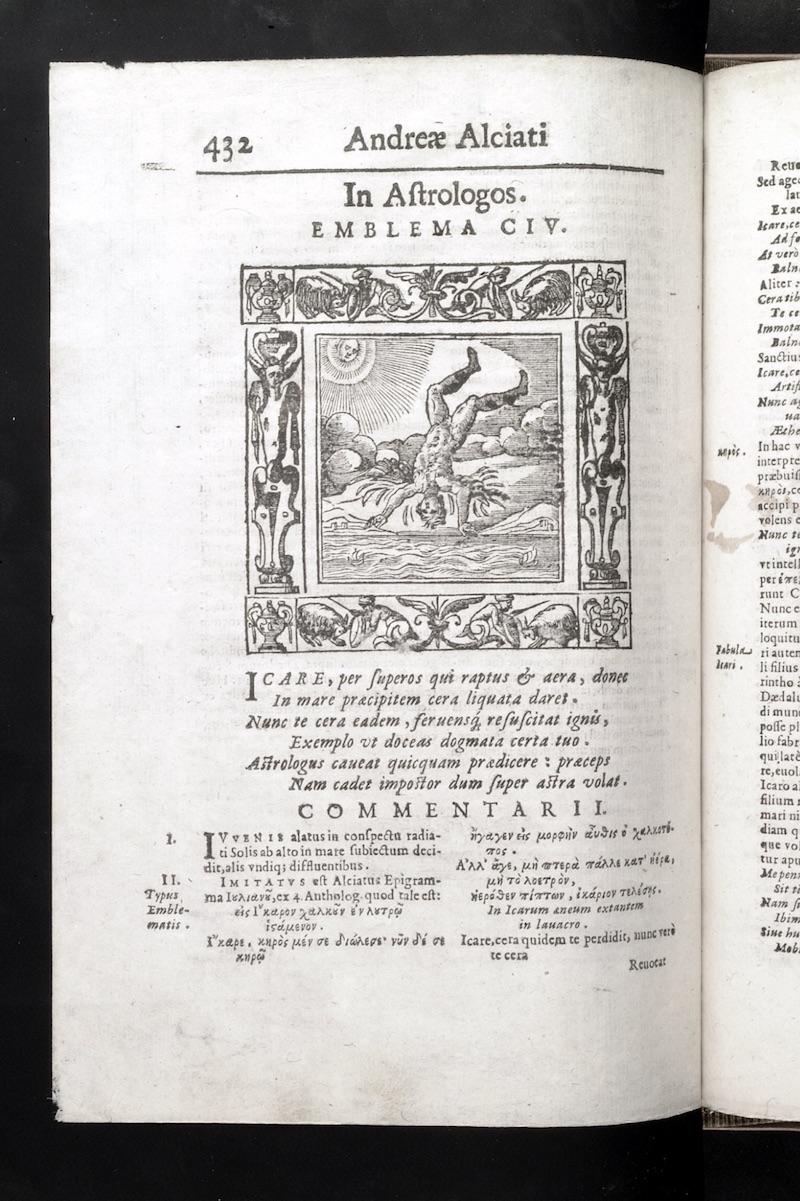
© Image courtesy of University of Glasgow Archives & Special Collections: SM 1226.
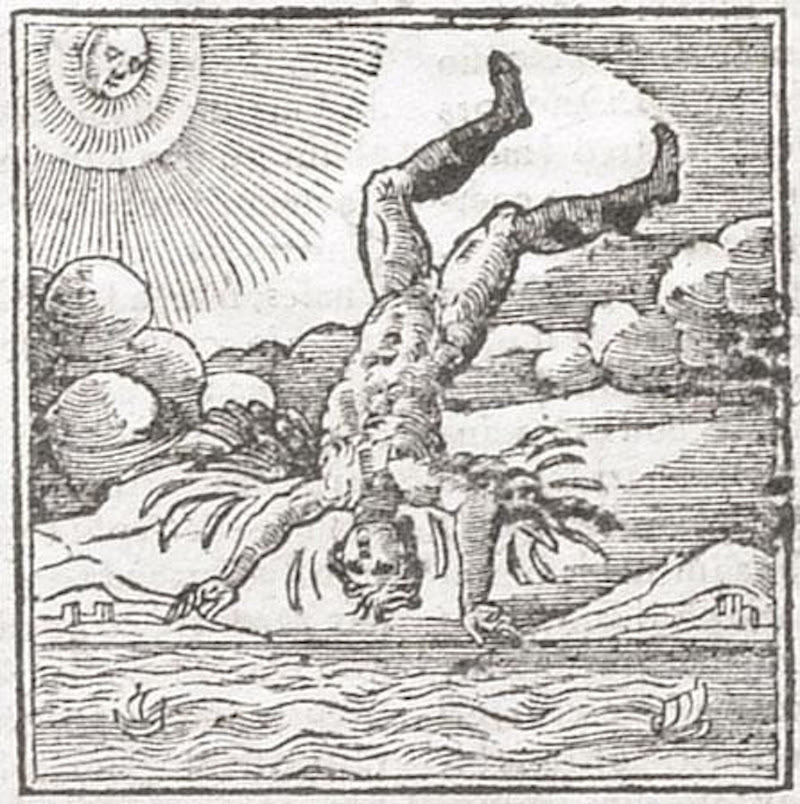
© Image courtesy of University of Glasgow Archives & Special Collections: SM 1226.
Its Latin text reads in translation:
Icarus, you were carried through the heights of heaven and through the air, until the melted wax cast you headlong into the sea. Now the same wax and the burning fire raise you up again, so that by your example you may provide sure teaching. Let the astrologer beware of prediction. Headlong will the imposter fall, as he flies beyond the stars.