The Crown Imperial in the Early Modern English Imagination
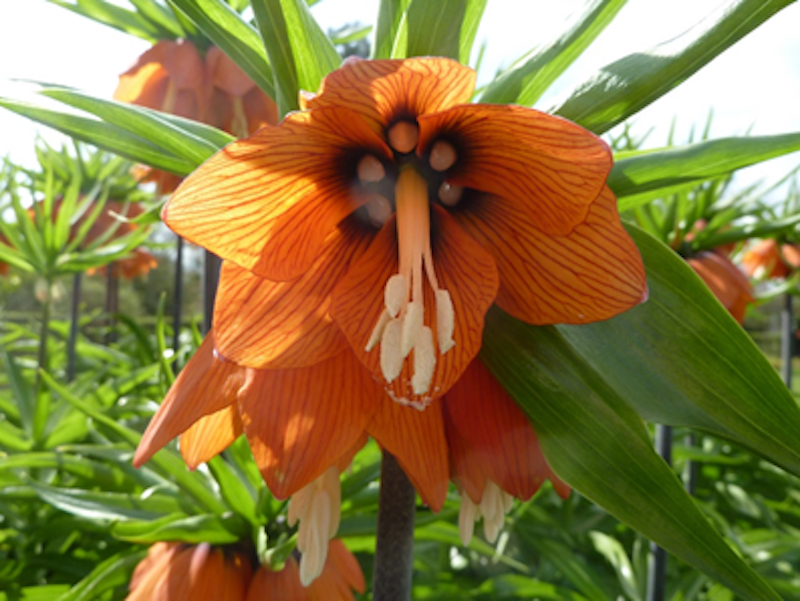
Although not endemic, the Corona imperialis (crown imperial) was a known and popular plant in seventeenth-century England. It is not clear precisely when the flower was introduced to Europe, but it was likely in the latter half of the sixteenth century, perhaps through Emperor Maximilian II or his son Rudolf II and their botanists, Rembert Dodoens (Dodoneus) and Charles de l’Ecluse (Clusius). By 1597, it was grown widely in England, according to John Gerard.1 The introduction of the crown imperial to England was part of a rapidly growing cultural interest in gardens and botany across Europe that resulted in what has subsequently been called “tulipmania”:2 “not almost one nobleman, gentleman, or merchant” in England was without “a great store of [foreign] flowers,” wrote William Harrison.3 Hester Pulter’s physical description of the flower may thus have been based on her own knowledge and experience, rather than on the descriptions provided by encyclopedic herbals, which had become a prominent genre by the time she was writing.
Early modern herbals reflect not only the botanical knowledge of the day, but also mythological and cultural understandings of plants, which were then thought of as highly emblematic. In some cases, herbals even prescribe interpretations, which are in turn reflected in literary culture. Scientific and literary narratives of plants were thus intertwined. The following are popular scientific and literary depictions of the crown imperial flower in early modern English print.
Gerard’s Herball—first published in 1597, then posthumously expanded in 1633—was the most influential herbal of seventeenth-century England. While Gerard offers an extensive physical description of the crown imperial, he is not able to offer its “vertues” (i.e., practical uses). This lack of knowledge may help explain why the plant appears as a symbol in English literature in the late-sixteenth and early-seventeenth centuries yet is not recorded in recipes until the late-seventeenth century, by which point other herbals describing its medical properties had been published.
The herball or Generall historie of plantes
Of the crowne Imperiall. Chap.96.
* The description.
II THe crowne Imperiall hath for his roote a thicke, firme, and solide bulbe, couered with a yellowish filme or skin: from the which riseth vp a great thicke fat stalke; two cubits high, in the bare and naked part of a darke ouerworne dustie purple colour. The leaues grow confusedly about the stalke, compassing it round about in forme of an Imperiall crowne, (whereof it tooke his name) hanging their heads downward as it were bels: in colour it is yellowish, or to giue you the true colour, which by words otherwise cannot be expressed, if you lay sap berries in steepe in faire water for the space of two houres, and mixe a little Saffron with that infusion, and laie it vpon paper, it sheweth the perfect colour to limne, or illumine the floure withall. The backside of the said flower is straked with purplish lines, which doth greatly set forth the beautie therof. In the bottome of ech of these bels there is placed sixe drops of most cleere shining sweete water, in taste like sugar, resembling in shew faire orient pearles; the which drops if you take away, there doe immediately appeere the like, as well in bignes as also in sweetenes: notwithstanding if they may be suffered to stande still in the flower according to his owne nature, they will neuer fall away, no not if you strike the plant, vntill it be broken: among these drops there standeth out a certaine pestell, as also sundrie small chiues tipped with small pendants, like those of the Lillie. Aboue the whole flowers there groweth a tuft of greene leaues like those vpon the stalks, but smaller. After the flowers be faded, there followe cods or seede vessels sixe square,in shape like the wheeles of a Iacke to turne the spit, or like the nut of a crosse-bowe, wherein is conteined flat seedes, tough and limmer, of the colour of the spice called mace. The whole plant, as well rootes as flowers do sauour or smell verie loathsomely like the foxe. As the plant groweth old, so doth it waxe rich, bringing foorth a crowne of flowers amongst the vppermost greene leaues, which some make a second kinde, although in truth they are but one and the selfe-same, which in time is thought to growe to a triple crowne, which hapneth by the age of the roote, & fertilitie of the soile; whose figure or type I haue thought good to adioine with that picture also which in the time of his infancie it had.
* The place.
This plant likewise hath been brought from Constantinople amongst other bulbous rootes, and made denizons in our London gardens, whereof I haue a great plentie.
* The time.
It flowreth in Aprill, and somtimes in March when as the weather is warme and pleasant.
* The names.
This rare and strange plant is called in Latin Corona Imperialis, and Lilium Byzantinum: the Turkes themselues Canale lale, and Tusai. And as diuers haue sent into these parts, of these rootes at sundry times, so haue they likewise sent them by sundry names, some by the name Tusai, others Tousai, and Tuyschiachi, and likewise Turfani and Turfanda.
* The nature and vertues.
The vertues of this admirable plant is not yet knowne, neither his faculties or temperature in working.
John Parkinson’s depiction of the crown imperial is very similar to Gerard’s; they both describe it favorably as beautiful and having a distinctive smell (that of a fox). However, Parkinson begins his book by describing plants as moral emblems, claiming that “many flowers haue a glorious shew of beauty and brauery, yet stinking in smell, or else of no other vse.” Parkinson names the crown imperial as so beautiful that it is worthy of the very first space in his “Garden of delight”; yet, while he is unable to name a single virtue beyond its “strong sent [i.e., scent],” he does not critique it beyond his introduction’s blanket critique of beautiful but useless plants.
THE GARDEN OF PLEASANT FLOWERS.
CHAP. I.
Corona Imperialis. The Crowne Imperiall.
Because the Lilly is the more stately flower among manie: and amongst the wonderfull varietie of Lillies, knowne to vs in these daies, much more then in former times, whereof some are white, others blush, some purple, others red or yellow, some spotted, others without spots, some standing vpright, others hanging of turning downewards, The Crown Imperiall for his stately beautifulness, deserueth the first place in this our Garden of delight, to be here entreated of before all other Lillies: but because it is so well knowne to most persons, being in a manner euery where common, I shall neede only to giue you a relation of the chiefe parts thereof (as I intend in such other things) which are these: The roote is yellowish on the outside, composed of fewer, but much thicker scales, than any other Lilly but the Persian, and doth grow sometimes to be as great as a pretty bigge childes head, but somewhat flat withal, from the sides whereof and not from the bottome, it shooteth forth thicke long fibres, which perish euery yeare, hauing a hole in the midst thereof, at the end of the yeare, when the old stalke is dry and withered, and out of the which a new stalke doth spring again (from a bud or head to be seen within the hollownesse, riseth vp three or foure foote high, being great, round, and of purplish colour at the bottome, but green aboue, beset from thence to the middle thereof with many long and broad greene leaues, very like to the leaues of our ordinary white Lilly, but somewhat shorter and narrower, confusedly without order, and from the middle is bare or naked without leaues, for a certain space vpwards, and then beareth foure, sixe, or tenne flowers, more or lesse, according to the age of the plant, and the fertility of the soyle where it growth: The buddes at the first appearing are whitish, standing vpright among a bush or tuft of greene leaues, smaller than those below, and standing aboue the flowers, after a while they turne themselues, and hand downewards euerie one vpon his owne footestalke, round about the great stemme or stalke, sometimes of an euen depth, and other while one lower or higher than another, which flowers are neare the forme of an ordinary Lilly, yet somewhat lesser and closer, consisting of sixe leaues of an Orange colour, striped with purplish lines and veines, which adde a great grace to the flowers: At the bottome of the flower next vnto the stalke, leafe thereof hath on the outside a certaine bunch or eminence, of a dark purplish colour, and on the inside there lyeth in those hollow bunched places, certain cleare drops of water like vnto pearles, or a very sweete taste almost like sugar: in the midst of each flower is a long white stile on pointell, forked or diuided at the end, and sixe white chiues tipt with yellowish pendents, standing close about it: after the flowers are past, appeare sixe square seede vessels standing vpright, winged as it were or welted on the edges, yet seeming but three square, because each couple of those welted edges are ioyned closer together, wherein are contained broad, flat, and thinne seeds, of a pale brownish colour, like vnto other Lillies, but much greater and thicker also. The stalke of this plant doth oftentimes grow flat, two, three, or foure fingers broad, and then beareth many more flowers, but for the most part smaller then when it beareth round stalkes. And sometimes it happeneth the stalke to be diuided at the top, carrying two or three tufts of greene leaues, without any flowers on them. And sometimes likewise, to beare two or three rowes or crownes of flowers one aboue another vpon one stalke, which is seldome and scares seene, and besides, is but mere accidentall: the whole plant and euery part thereof, as well rootes, as leaues and flowers, doe smell somewhat strong as it were the savour of a Foxe, so that if any doe but come neare it, he cannot but smell it, which yet is not vnwholsome.
I have not obserued any variety in the colour of this flower, more than it will be fairer in a cleare open ayre, and paler, or as it were blasted in a muddy or smoakie ayre. And although some haue boasted of one with white flowers, yet I could neuer heare that any such hath endured in one vniforme colour.
The Place.
This plant was first brought from Constantinople into these Christian Countries, and by the relation of some that sent it, growth naturally in Persia.
The Time.
It flowreth most commonly in the end of March, if the weather be milde, and springeth not out of the ground vntill the end of February, or beginning of March, so quicke it is in the springing: the heads with seed are ripe in the end of May.
The Names.
It is some called Lilium Persicum, the Persian Lilly: but because wee haue another, which is vsually called by that name, as shall be shewed in the next Chapter, I had rather with Alphonsus Pancius the Duke of Florence his Physician, (who first sent the figure thereof vnto Msr. Iohn de Brancion) call it Corona Imperialis, The Crowne Imperiall, then by any other name, as also for that this name is now more generally receiued. It hath been sent also by the name of Tusai, and Tuschai, and Turfani, or Turfanda, being, as it is like, the Turkish names.
The Vertues.
For any Physicall Vertues that are in it, I know of none, nor haue heard that any hath been found out: notwithstanding the strong sent would perswade it might be applied to good purpose.
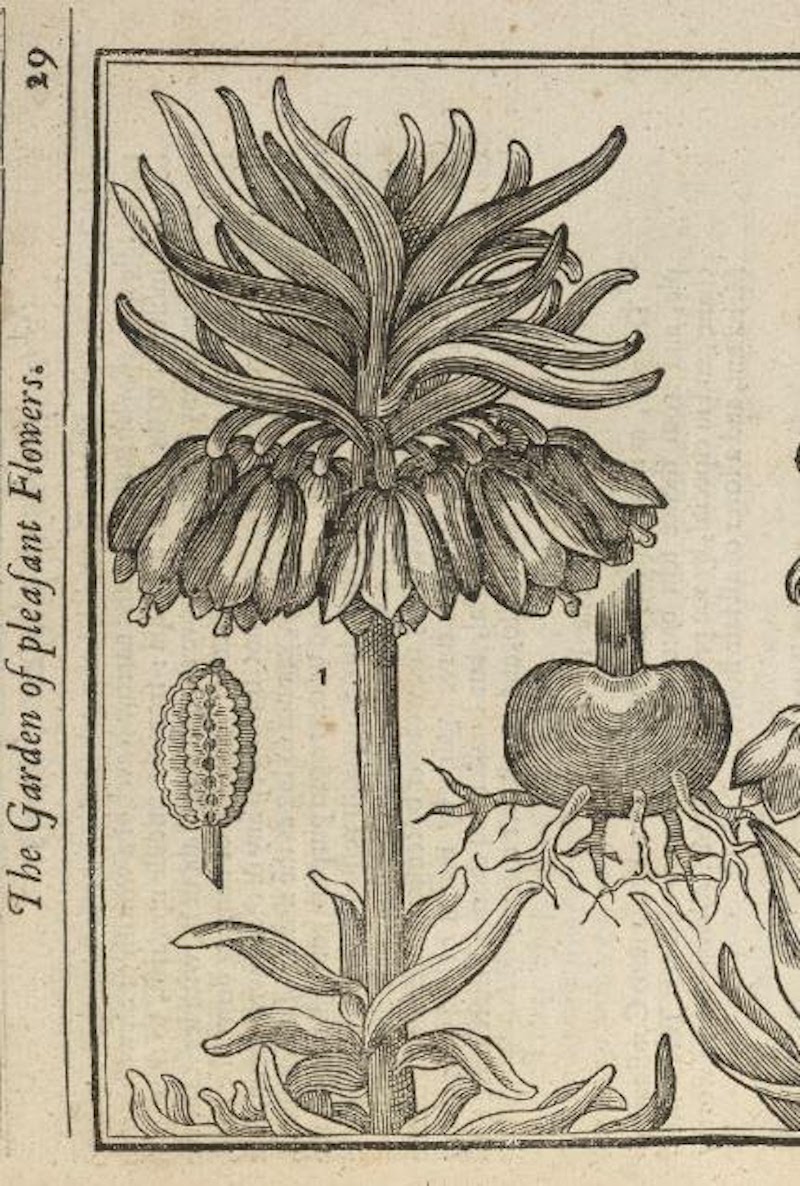
Fig 2. Woodcut of the Corona imperialis flower in John Parkinson’s Paradisi in sole paradisus terrestris (1656, Wing P495, C3r or p.29)
Image courtesy of the Folger Shakespeare Library.
While Pechy’s Herbal offers only a brief description of the crown imperial flower, it mentions its medical uses, which include inducing vomiting and labour.
The Compleat Herbal of PHYSICAL PLANTS
Crown=Imperial, in Latin Corona Imperialis. It came from Constantinople, but it grows now frequently in our Gardens here in England, and flowers in April, and sometimes in March, if that Season of the Year be warmer than ordinary. The Turks use the Drops in the Flower to make them vomit: And some use them to hasten Delivery.
Chapman’s poem cataloguing the senses (sight, hearing, smell, touch) as a bodily education for the soul is perhaps the earliest use of the crown imperial flower in English literature. In stanzas 9 and 10, he describes flowers in a field as the emblems of Chloris, a nymph of ancient Greek mythology who transformed classical characters into various flowers.
The OED lists this poem as the first recorded example of not only the crown imperial flower but also merry, myrtle-spray, nepenthe; the only example of melliphill; and the second earliest examples of melanthion and Rumex. Chapman’s poem thus would have introduced English readers to an exceptional bouquet of flowers, plants, and botanical phrases. The novelty of these plants—each known for their beauty, aroma, and/or medical applications—heightens the multi-faceted engagement of the senses that the poem evokes.
- A soft enflowered banck embrac’d the founte;
- Of Chloris ensignes, an abstracted field;
- Where grew Melanthy,1 great in Bees account,
- Amareus,2 that precious Balme dooth yeeld,
- Enameld Pansies, vs’d at Nuptials still,
- Dianas arrow, Cupids crimson shielde,
- Ope-morne, night-shade, and Venus nauill,
- Solemne Violets, hanging head as shamed,
- And verdant Calaminth,3 for odor famed.
- Sacred Nepenthe,4 purgatiue of care,
- And soueraine Rumex that doth rancor kill,
- Sya, and Hyacinth, that Furies5 weare,
- White and red Iessamines,6 Merry,7 Melliphill:8
- Fayre Crowne-imperiall, Emperor of Flowers,
- Immortall Amaranth,9 white Aphrodill,j
- And cup-like Twillpants, stroude in Bacchus11 Bowres,
- These cling about this Natures naked Iem,
- To taste her sweetes, as Bees doe swarme on them.
1. Melanthion (i.e., black cumin). (OED)
2. Possibly amaracus (i.e. Dittany of Crete), an aromatic plant known for its medical virtues. (OED)
3. Calamint (OED)
4. A plant supposed to act as a drug to bring forgetfulness of trouble or grief. (OED)
5. Avenging goddesses (OED)
6. Jasmine, a shrub with fragrant white flowers grown in England since the 16th century. (OED)
7. Merry, the gean or wild cherry. (OED)
8. The herb lemon balm. (OED)
9. An imaginary plant reputed to never fade. (OED)
10. Affodill (OED)
11. The god of wine.
The crown imperial flower is mentioned only once in Shakespeare’s plays, when Perdita lists various spring flowers in The Winter’s Tale. Nevertheless, as it is found in a scene in which “horticulture really matters” and within the Shakespearean play with “horticulture at its heart,” the crown imperial’s appearance is notable (Myers p. 171). The association of Perdita with both the crown imperial (emblematic of Emperor Rudolf, in whose gardens the flower may have made its European debut) and the fleur de lys (the emblem of the kings of France, also included in her list of flowers) “marks her inherently royal quality” (Myers p. 183).
- Perd. Out alas:
- You’ld be so leane, that blasts of Ianuary
- Would blow you through and through. Now Friend,
- I would I had some Flowres o’th Spring, that might my faust
- Become your time of day: and yours, and yours,
- That weare vpon your Virgin-branches yet
- Your Maiden heads growing: O Proserpina,
- For the Flowres now, that (frighted) thou letst fall
- From the Dysses Waggon: Daffadils,
- That come before the Swallow dares: and take
- The windes of March with beauty: Violets (dim,
- But sweeter than the lids of Iuno’s eyes,
- Or Cytherea’s breath) pale Prime-roses,
- That dye vnmarried, ere they can behold
- Bright Phœbus in his strength (a Maladie
- Most incident to Maids:) bold Oxlips, and
- The Crowne Imperiall: Lillies of all kinds,
- (The Flowre-de-Luce being one.) O, these I lacke,
- To make you Garlands of) and my sweet friend,
- To strew him o’re, and ore.
In Jonson’s masque, the crown imperial flower appears “as an emblem of royal power able to provide peace and protection” (Young p. 89).
Loues triumph through Callipolis
Her [i.e. Venus’s] song ended, and she rising to goe vp to the Queene, the Throane disappeares: in place of which there [shooteth] vp a Palme tree [with an] imperiall crowne on the top, from the roote whereof, Lillies and Roses, twining together and imbracing the stem, flourish through the crowne, which she in the song, with the Chorus describes.
- Beauty and Loue, whose story is mysteriall,
- In yonder Palme-tree, and the Crowne imperiall
- Doe from the Rose, and Lilly so delicious,
- Promise a shade, shall euer be propitious
- To both the Kingdomes. But to Brittaines Genius
- The snaky rod, and serpents of Cyllenius
- Bring not more peace, then these, who so united be
- By Loue, as with it Earth and Heauen delighted be.
- And who this King, and Queene would well historify,
- Need onely speake their names: Those them will glorify.
- MARY, and CHARLES, CHARLES, with his MARY, named are
- And all the rest of Loues, or Princes famed are.
- After this they dance their going out, and end.
The third stanza of Herbert’s poem uses the image of the crown imperial to critique the monarchy by suggesting that, in spite of its attractive exterior, its roots are infested with worms.
- Sweet Peace, where dost thou dwell? I humbly crave,
- Let me once know.
- I sought thee in a secret cave,
- And ask’d, if Peace were there.
- A hollow winde did seem to answer, No:
- Go seek elsewhere.
- I did; and going did a rainbow note:
- Surely, thought I,
- This is the lace of Peaces coat:
- I will search out the matter.
- But while I lookt, the clouds immediately
- Did break and scatter.
- Then went I to a garden, and did spy
- A gallant flower,
- The crown Imperiall: Sure, said I,
- Peace at the root must dwell.
- But when I digg’d, I saw a worm devoure
- What show’d so well.
- At length I met a rev’rend good old man,
- Whom when for Peace
- I did demand; he thus began:
- There was a Prince of old
- At Salem dwelt, who lov’d with good increase
- Of flock and fold.
- He sweetly liv’d, yet sweetnesse did not save
- His life from foes.
- But after death out of his grave
- There sprang twelve stalks of wheat:
- Which many wondering at, got some of those
- To plant and set.
- It prosper’d strangely, and did soon disperse
- Through all the earth:
- For they that taste it do rehearse,
- That virtue lies therein,
- A secret virtue bringing peace and mirth
- By flight of sinne.
- Take of this grain, which in my garden grows,
- And grows for you;
- Make bread of it: and that repose
- And peace which ev’ry where
- With so much earnestnesse you do pursue,
- Is onely there.
Footnotes
1. John Gerard, The herball or Generall historie of plantes. London, 1597: p. 155.
2. While the “tulipmania” financial bubble occurred in the Dutch Low Countries, similar frenzied demands for foreign plants were seen in London and France (Knight, 7).
3. William Harrison, The Description of England (1587), ed. George Edelen. Ithaca, New York: Cornell University for the Folger Shakespeare Library, 1968, p. 265.
Bibliography
- Goldgar, Anne. Tulipmania: Money, Honor, and Knowledge in the Dutch Golden Age. University of Chicago Press, 2007.
- Knight, Timothy. “Tulip Madness.” Panic, Prosperity, and Progress: Five Centuries of History and the Markets. Hoboken, New Jersey: Wiley, 2014: 1-7.
- Myers, Katherine. “‘Men as plants increase’: Botanical Meaning in Shakespeare’s The Winter’s Tale.” Studies in the History of Gardens & Designed Landscapes, 40:2 (2019), 171-190.
- Oxford English Dictionary Online.
- Smith, Hallett Darius. Elizabethan Poetry: A Study in Conventions, Meaning, and Expression. Cambridge: Harvard University Press, 1952: 96-99.
- Young, R.V. “A Note on the ‘Crown Imperiall’ in Herbert’s ‘Peace.’” George Herbert Journal, 21.1-2 (Fall 1997/Spring 1998), 89-92.